Huawei’s Mate X Hits Barcelona: A High-Stakes Bet on Foldables and 5G
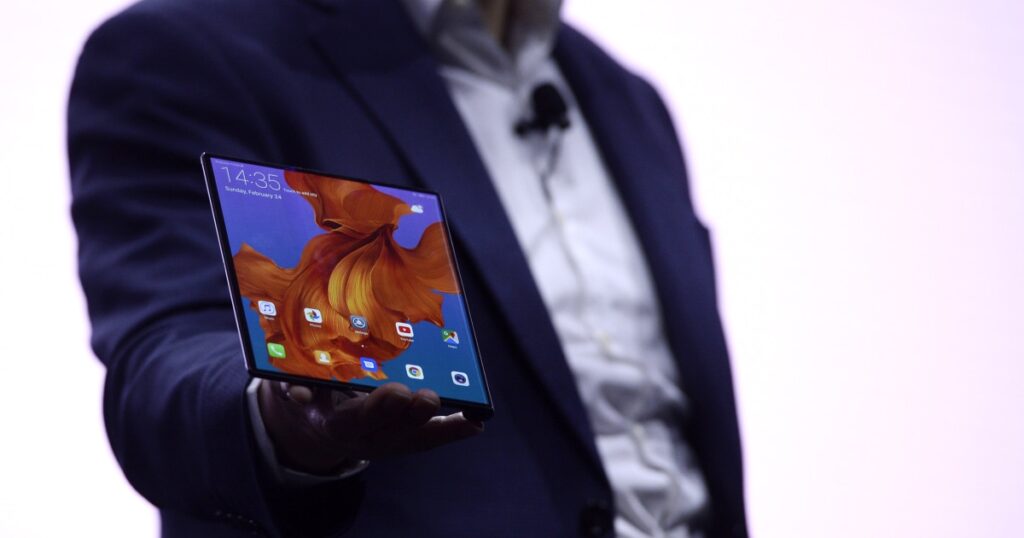
Table of Contents
A New Form Factor for a New Era
On the eve of Mobile World Congress (MWC) in Barcelona, Huawei officially pulled back the curtain on the Mate X, a folding-screen device that signals the company’s ambition to pivot from a hardware challenger to a primary innovator in the global smartphone market. The device enters a landscape where Apple and Samsung have long enjoyed a virtual duopoly, but the industry is currently grappling with an innovation plateau that has consumers holding onto their devices longer than ever before.
The Mate X represents a distinct architectural departure from its closest competitor, the Samsung Galaxy Fold. While Samsung’s device employs a screen that folds shut, the Mate X utilizes a wrap-around display. This allows users to interact with the device while it is closed, effectively bridging the gap between a standard smartphone and an 8-inch tablet when fully unfolded. According to Richard Yu, CEO of Huawei’s consumer business group, the device is the culmination of three years of engineering focus, specifically regarding the hinge mechanism designed to eliminate the gap typical of early foldable prototypes.
The Cost of Innovation
The price point for the Mate X is aggressively high, set at 2,299 euros (approximately $2,600). This positions it as a luxury vanguard, comfortably exceeding the nearly $2,000 price tag of the Galaxy Fold. For Huawei, the cost is less about mass-market penetration and more about establishing “technological leadership”—a critical signal to the industry that the company can outpace the incumbents in R&D execution.
However, the commercial viability of these devices remains a point of contention among industry analysts. Thomas Husson of Forrester suggests that while the technology is impressive, the path to a critical mass of consumers is steep. The challenge for Huawei is not just the hardware, but the brand identity; the company must transition from being a “technology challenger” to a brand that offers a distinct value proposition beyond simply mimicking or slightly improving upon existing trends.
The 5G Race and the Geopolitical Shadow
The launch of the Mate X is inextricably linked to the rollout of 5G. The device is engineered to leverage the superfast next-generation mobile networks that are poised to redefine data consumption. But as Huawei pushes its hardware, it is simultaneously fighting a complex diplomatic battle. The company is currently embroiled in a high-profile clash with the U.S. government over cybersecurity concerns, with Washington alleging that Huawei’s infrastructure could be used for state-sponsored espionage.
This political friction has created a fragmented market. While Huawei has successfully expanded its footprint in Europe—with Gartner estimating a 13% market share in the region—its presence in the U.S. remains marginal. The scarcity is not a result of a lack of demand, but a concerted effort by U.S. regulators to label the company a security risk, a move that has influenced several European allies to reconsider their 5G infrastructure partnerships.
Legal Turmoil and Market Momentum
The timing of the Mate X launch is particularly fraught, coming shortly after U.S. criminal charges were filed against the company and its CFO, Meng Wanzhou. Allegations of fraud and the theft of trade secrets—specifically technology used by T-Mobile for smartphone testing—have cast a shadow over the company’s corporate governance.
Despite these headwinds, Huawei’s growth trajectory remains formidable. According to data from International Data Corp (IDC), Samsung held the top spot in global sales last year, followed by Apple, with Huawei firmly in third—though occasionally surging into second place during specific quarters. This growth has been fueled by a dual-pronged strategy: dominating the entry-level market with affordable devices while siphoning high-end users from Apple and Samsung through luxury models in China and Europe.
As Tuong Nguyen of Gartner notes, the barrier to entry in the U.S. is no longer just about product quality or pricing, but about the overarching narrative surrounding Chinese technology. For Huawei, the Mate X is a statement of technical capability, but its global success will depend on whether the company can outrun the geopolitical narrative currently defining its brand in the West.


