Google’s Fitbit Air is Less a Watch and More a Trojan Horse for a New AI Health Ecosystem
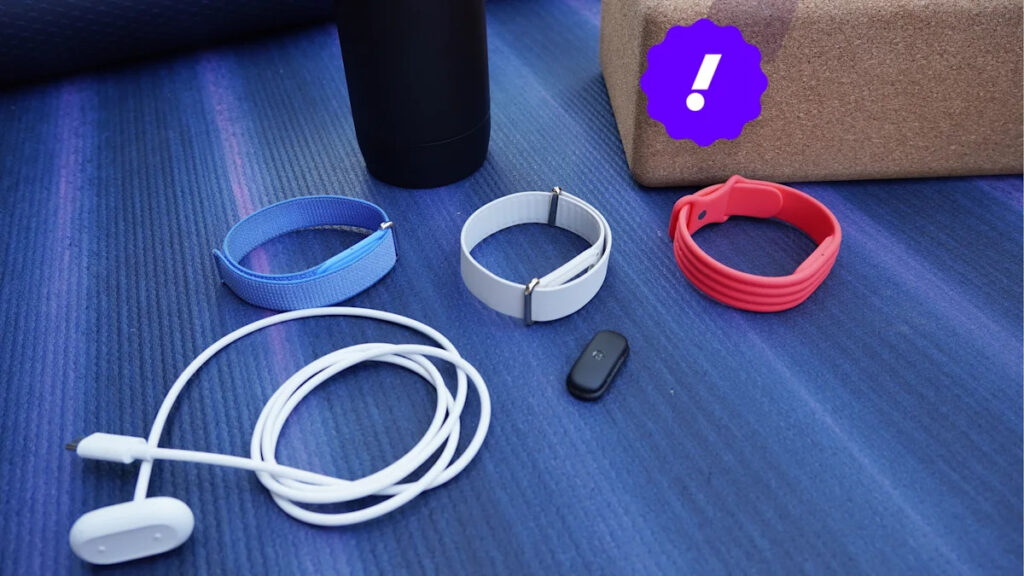
Table of Contents
The Death of the Fitbit Watch
For years, the tension between Google’s acquisition of Fitbit and the continued existence of the Pixel Watch has been evident. With the release of the Fitbit Air, that tension has resolved in a definitive direction: the traditional Fitbit smartwatch is effectively dead. The Air isn’t just a new product; it’s a pivot. By stripping away the display, Google has moved away from trying to compete with the Apple Watch’s utility and instead doubled down on the data-collection side of the health equation.
The Fitbit Air is a minimalist, screen-free tracker that weighs in at roughly 12 grams. In a market crowded with bulky sensor pucks from the likes of Whoop and Polar, the Air manages a slim 8.3mm profile. This design choice solves the primary friction point of wearables: the discomfort of sleeping in a computer. During two weeks of testing—covering everything from high-intensity bike rides to deep-sleep monitoring—the device remained virtually imperceptible on the wrist, regardless of whether I used the fabric Performance Loop or the silicone Active Loop.
Hardware Minimalism, Data Maximalism
Without a screen, the Air loses the ability to provide glanceable notifications or wrist-based timers. For some, the loss of a digital crown or a notification vibration may be a dealbreaker. However, for many, this is a liberation from the constant noise of the smartphone. The trade-off is a total reliance on the companion app for every single interaction.
Under the hood, the Air utilizes a standard but refined array of sensors. Optical sensors track heart rate and heart rate variability (HRV), while infrared sensors monitor blood oxygen levels. A skin temperature monitor provides the baseline data necessary for fertility predictions and early illness detection. Because it lacks onboard GPS, the device relies on a tethered smartphone to map jogging routes or cycling paths. In comparative testing, the data accuracy for steps and calorie burn aligned closely with other industry-standard trackers, suggesting that Google hasn’t compromised on the sensor quality to achieve the slim form factor.
The AI Coach: Google’s Real Ambition
The hardware is merely the delivery mechanism for the star of the show: the Google Health app. This is where the “Air” experience actually happens. The app is organized into four intuitive pillars—Today, Fitness, Sleep, and Health—but the connective tissue is a new AI-fueled Coach.
This isn’t a simple chatbot; it’s an attempt to synthesize disparate health data into actionable intelligence. The AI Coach can interpret PDF lab results, define complex metrics like VO2 max in plain English, and even analyze photos of meals to estimate caloric intake. During my testing, the AI provided a startlingly accurate explanation for a bout of morning grogginess, tracing it back to a disruption in deep sleep caused by a restless pet—a level of contextual analysis that traditional sleep scores usually miss.
However, this ambition comes with a cost. While the first three months are free, the AI Coach requires a $10 monthly subscription. Furthermore, the AI is still in its adolescence; it occasionally hallucinates or misinterprets specific dietary data, reminding the user that this is a beta-like experience scaled to millions.
Battery and Logistics
Battery life is where the screenless design truly wins. I achieved a full seven days on a single charge, a feat nearly impossible for a traditional smartwatch. When the battery hits 20%, a subtle vibration alerts the user. The device also supports a silent wake-up alarm, which uses the vibration motor to nudge the user during their lightest sleep stage, though this requires the phone to remain within proximity.
At $100, the Fitbit Air is an affordable entry point into Google’s new health paradigm. It isn’t trying to be a watch; it’s trying to be a biological sensor that feeds an AI brain. For those who find the modern smartwatch distracting or uncomfortable, the Air is a compelling, if slightly expensive (via subscription), alternative.