Google Gives Users a Dial to Fight the Feed: How ‘Preferred Sources’ Changes Search Discovery
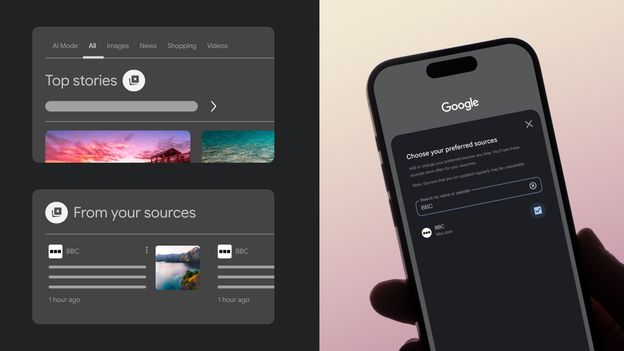
Table of Contents
The Fight for the First Page
For years, the battle for the ‘top of the page’ on Google Search has been fought by SEO specialists and algorithmic updates. But for the average user, the experience has recently shifted from a list of links to a dense layer of AI-generated summaries and sponsored content. In an effort to restore some agency to the user, Google is rolling out a feature called “Preferred Sources,” allowing individuals to manually curate which publishers they trust most.
The tool is a pragmatic response to the growing friction between AI-driven discovery and traditional journalistic trust. As Google’s AI Overviews increasingly synthesize information from across the web, the original source of a news story can sometimes feel buried. By designating a specific publication—such as the BBC or other reputable news outlets—as a preferred source, users can essentially tell the algorithm to prioritize specific editorial voices over the general noise.
How the Mechanism Works
Preferred Sources do not replace the Google algorithm, but they act as a weighting signal. When a user selects a site in their settings, Google is more likely to surface articles, videos, and updates from that specific domain. The most visible impact of this setting occurs within the “Top Stories” carousel, a high-traffic area of the search engine results page (SERP).
Specifically, users will notice a new “from your sources” section nested within the Top Stories results. This creates a personalized lane for trusted content on both desktop and mobile versions of Google Search. It is a subtle but significant shift: instead of Google deciding what is “authoritative” based on global metrics, the user defines authority based on their own preferences.
Setting Up Your Preferred Sources
There are two primary ways to implement this customization. The first is through a direct settings menu where users can browse and tick boxes next to specific domains. Because this is tied to a user profile, a Google account is required to save these preferences across devices.
The second method is more intuitive and happens during the act of searching. When a user performs a search and sees the “Top Stories” section, a starred card icon appears. Clicking this icon allows the user to immediately add the current publisher to their list of Preferred Sources. Once the page is reloaded, the search results are re-indexed to reflect this preference, and the setting persists for all future queries.
The Strategic Shift in Search
This move signals a nuanced change in how Google views its relationship with publishers. By creating a formal mechanism for users to “follow” publishers within the search interface, Google is acknowledging that brand loyalty still matters in an era of fragmented content. For publishers, this represents a potential lifeline—a way to maintain a direct connection with a loyal audience even as AI summaries threaten to keep users on the search page rather than clicking through to the original site.
However, the effectiveness of Preferred Sources depends entirely on user adoption. While the tool provides a solution for those who consciously seek out specific news brands, the vast majority of users continue to rely on the default algorithmic sort. Whether this is a genuine attempt to empower users or a strategic move to appease publishers facing dwindling referral traffic remains to be seen.