Getty Images Uses Composite Photography to Map the Expanding Scale of the 2026 World Cup
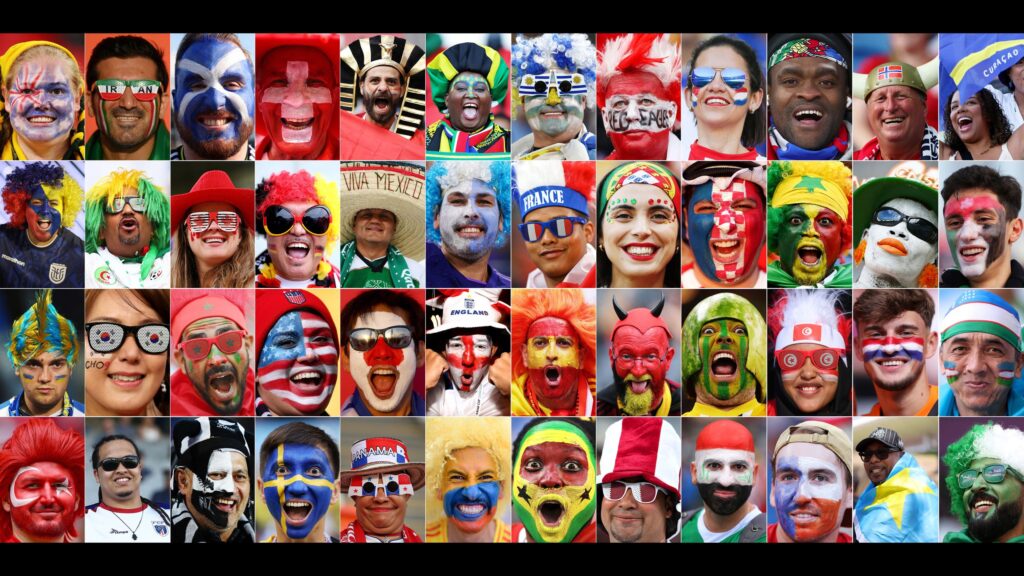
Table of Contents
The Technical Art of the Global Composite
In the lead-up to the 2026 FIFA World Cup, Getty Images has released a striking visual exercise in scale and identity. By utilizing composite photography—a technique where multiple independent images are blended into a single frame—Getty staff photographers have managed to condense the diversity of 48 different national fanbases into one singular, high-impact portrait.
While the image functions as a celebration of fandom, it is fundamentally a technical achievement in consistency and curation. To create a composite that feels cohesive rather than chaotic, photographers must maintain strict control over lighting, focal length, and subject positioning across dozens of different shoots. The result is a tapestry of face paints, wigs, and cultural signifiers that mirrors the unprecedented expansion of the tournament itself.
From a technical perspective, this approach allows the viewer to perceive a ‘global average’ of passion. The composite doesn’t just showcase the aesthetic differences between a fan in Mexico City and one in Seoul; it highlights the universal emotional language of sports—the wide-eyed anticipation, the manic joy, and the focused intensity—all aligned within a single geometric grid.
Visualizing the 48-Team Shift
The decision to highlight 48 distinct fans is not arbitrary. The 2026 tournament represents a seismic shift in the FIFA World Cup format. For the first time in the modern era, the competition has expanded from 32 teams to 48, a move that has sparked significant debate regarding the dilution of quality versus the democratization of the sport.
This expansion translates to a massive increase in logistical and broadcast complexity. The tournament will feature 104 total matches, a jump from the 64 matches seen in previous cycles. For agencies like Getty, this means a proportional increase in the demand for real-time imagery and a need for more sophisticated digital asset management to handle the sheer volume of content flowing from 16 different host cities across the United States, Canada, and Mexico.
The scale of the event is further amplified by the hosting arrangement. This is the first time three nations have jointly hosted the championship, creating a geographically dispersed footprint that will culminate in the final at MetLife Stadium in East Rutherford, New Jersey, on July 19.
The Role of Imagery in Modern Sports Diplomacy
Beyond the pixels, the Getty composite serves as a piece of visual sociology. By stripping away the stadium backgrounds and focusing solely on the portraits, the imagery removes the noise of the game and focuses on the human element of the ‘entity.’
In an era of AI-generated imagery, the reliance on genuine, captured portraits from staff photographers provides a layer of authenticity that is becoming increasingly valuable. The imperfections—the smudge of a face-paint line or the candidness of a scream—serve as a verification of the human experience that synthetic media often fails to replicate with nuance.
As the tournament approaches its June 11 kickoff, the intersection of high-end photography and sports logistics will be on full display. For the photographers on the ground, the challenge will be capturing the intimacy of the fan experience against the backdrop of the largest sporting event in human history.