France Seizes Sanctioned Russian Tanker Tagor in Atlantic Push Against ‘Shadow Fleet’
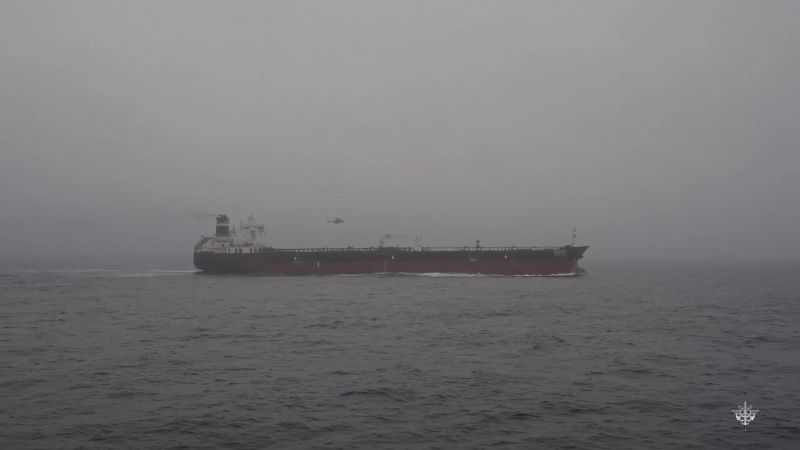
Table of Contents
A Strategic Interception in the North Atlantic
In a coordinated effort to stifle the financial arteries of the Kremlin’s war machine, the French Navy has intercepted the Tagor, a sanctioned oil tanker carrying Russian crude. The seizure took place in the North Atlantic, marking the third high-profile interception of its kind in recent months. The operation, which President Emmanuel Macron confirmed on Monday, was conducted with tactical support from the United Kingdom and other partners.
The Tagor had recently departed from the Russian port of Umba, tracking through the North Atlantic before being stopped in international waters. While the vessel is registered in Madagascar, it has been explicitly sanctioned by the European Union, the United States, and the UK. This specific vessel is a prime example of what Western intelligence agencies call the “shadow fleet”—a sprawling network of aging, often poorly maintained tankers used by Russia to bypass price caps and export bans on crude oil.
The Logistics of Sanctions Evasion
The seizure of the Tagor highlights the increasing technical difficulty of monitoring global oil flows. The shadow fleet operates through a complex web of shell companies, frequent name changes, and the use of “flags of convenience” from nations with lax oversight, such as Madagascar. By utilizing these tactics, Russia can move millions of barrels of oil without the transparency required by traditional maritime insurance and safety standards.
President Macron emphasized that these vessels are not merely a legal nuisance but a systemic risk. “These vessels, which fail to adhere to the most basic rules of maritime navigation, also pose a threat to the environment and to everyone’s safety,” Macron stated. The lack of valid insurance and safety certifications for shadow fleet ships means that a single collision or leak could result in an ecological catastrophe with no clear party held financially responsible for the cleanup.
Diplomatic Friction and Legal Grey Zones
The Kremlin has reacted sharply to the interception, with spokesperson Dmitry Peskov describing the French action as “illegal” and “bordering on international piracy.” The Russian embassy in Paris has further complicated the situation by noting that the captain of the Tagor is a Russian citizen, though they claim French authorities have yet to provide full details on the status of the crew.
The legal tension centers on the interpretation of the “law of the sea.” While France asserts that the seizure was conducted in strict compliance with international law to prevent the funding of the conflict in Ukraine, Russia views the boarding of a vessel in international waters as a violation of sovereign maritime rights. This friction reflects a broader trend where maritime law is being weaponized as a tool of economic warfare.
A Pattern of Escalation
This operation is not an isolated event but part of a targeted campaign. In March, the French Navy seized another tanker in the Mediterranean, and in January, another vessel was stopped between Spain and Morocco. Belgium also intercepted a tanker suspected of using false documents in March, supported by French intelligence.
The UK government has mirrored France’s aggression, stating that “disrupting, deterring and degrading Russia’s shadow fleet” is a top priority. However, the strategy is not uniform across the West. The United States has occasionally eased sanctions on Russian oil already at sea to prevent global price shocks and disruptions caused by volatility in the Middle East—a pragmatism that Europe has largely resisted in favor of a more stringent blockade.
As the shadow fleet continues to grow in size and complexity, the reliance on naval interceptions underscores the limits of digital sanctions. When financial systems are bypassed, the only remaining lever for enforcement is physical seizure on the high seas.