Framework Laptop 13 Pro Delayed: Haptic Touchpad and Display Bugs Force Production Halt
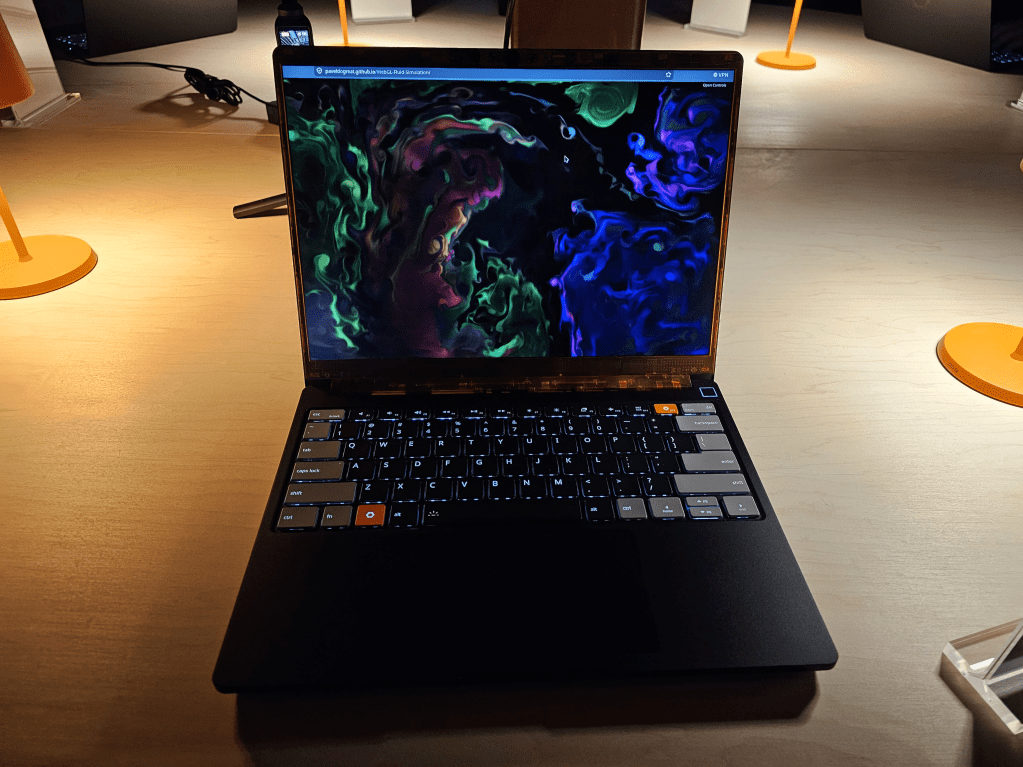
Table of Contents
Quality Control Over Speed: Framework’s Transparent Pivot
Framework has announced a shipping delay for the highly anticipated Framework Laptop 13 Pro, pushing delivery timelines from late June into late July and early August. The decision comes after the company identified two critical hardware and firmware bugs during the final mass production ramp-up: one affecting the new haptic touchpad and another impacting the custom display’s ability to initialize.
For a company that has built its brand on transparency and the right to repair, this admission is a calculated move. Rather than shipping flawed units and relying on post-purchase replacements—a common practice among larger OEMs—Framework is halting production to implement a physical hardware revision. This move ensures that the first wave of users receives a product that meets the technical specifications promised during the April unveiling.
- Shipping Shift: Original late June window moved to late July/early August.
- Hardware Fix: A full PCB spin for the haptic touchpad to resolve grounding issues.
- Firmware Patch: Collaborative fix with CSOT to resolve display initialization failures.
- Mainboard Status: Modular Mainboards, including those with Intel Core Ultra Series 3 (Panther Lake), remain on schedule.
The Technical Breakdown: Why the Haptic Touchpad Failed
The most significant hurdle is the haptic touchpad. Unlike traditional mechanical clickpads, haptic touchpads use actuators to simulate the feel of a click. During the development process, Framework worked extensively with suppliers Lite-On and Boras to fine-tune the force feedback and uniformity. However, during the transition to mass production, a specific electrical anomaly emerged.
According to internal communications sent to pre-order customers, Framework discovered “spurious bugs” that triggered rarely on some units. The symptom was a recurring reset of the touchpad after repeated clicking. The root cause was identified as an electrical issue in the Printed Circuit Board (PCB) design, specifically centered around the grounding. While firmware mitigations were explored, Framework determined that a new PCB spin—a physical redesign of the board’s circuitry—was the only way to guarantee long-term stability.
This decision is technically significant because it demonstrates a commitment to hardware integrity. A firmware “band-aid” might have masked the issue, but by revising the PCB, Framework eliminates the electrical noise and grounding instabilities at the source.
Display Initialization and the CSOT Partnership
Parallel to the touchpad issues, Framework encountered a bug where the custom high-resolution display would occasionally fail to initialize. This essentially means the screen would remain black upon booting, rendering the device useless despite the system being powered on.
The company worked with its supplier, CSOT, to diagnose the problem. The issue was identified as a firmware bug within the display controller. Unlike the touchpad, which required a physical board change, the display issue is being resolved via an updated firmware flash. This ensures that the display logic correctly handshakes with the system BIOS and OS during the power-on self-test (POST) sequence.
The LPCAMM Transition: A New Era for Laptop Memory
Despite the chassis delays, Framework is moving forward with its modular Mainboards. A key highlight here is the integration of LPCAMM (Low Power Compression Attached Memory Module). For those unfamiliar, LPCAMM is a new memory standard designed to replace the bulkier SO-DIMM slots while maintaining the replaceability that LPDDR5x (soldered) memory lacks.
LPCAMM offers a middle ground: it provides the high speed and power efficiency of soldered RAM but allows users to swap modules if a stick fails or if they need an upgrade. Currently, retail availability for LPCAMM modules is nearly non-existent for the average consumer. Recognizing this barrier to entry, Framework is offering to bundle replaceable LPCAMM memory directly with Mainboard orders.
By absorbing the sourcing burden, Framework is not just selling a part; they are seeding a new ecosystem. If LPCAMM becomes the industry standard for thin-and-light laptops, Framework’s early adoption positions them as the primary authority on modular high-performance memory.
What This Means for the Consumer
For the end-user, this delay represents a trade-off between patience and reliability. In the current laptop market, “Day One’ patches are standard for software, but hardware revisions are usually handled via expensive RMAs (Return Merchandise Authorizations). Framework’s approach prevents the RMA cycle before it starts.
For Early Adopters: All orders are fully refundable, which mitigates the risk for those who cannot wait until August. However, the fact that the Intel Core Ultra Series 3 (Panther Lake) Mainboards are still shipping means that users with existing Framework chassis can still upgrade their internals without waiting for the Pro chassis.
For the Modular Community: The move toward LPCAMM is the real story. It signals a shift away from the trade-off where you either had “fast but soldered” RAM or “slow but upgradable” RAM. We are entering an era where high-bandwidth memory can actually be user-serviceable.
Comparing the Framework Approach to Industry Standards
| Feature | Typical OEM Approach | Framework Approach | |
|---|---|---|---|
| Hardware Bug Discovery | Ship and patch via replacement/RMA | Halt production and redesign PCB | |
| Communication | Vague “shipping delays” or silence | Detailed blog posts and technical emails | |
| Memory Strategy | Soldered LPDDR5x (Non-upgradable) | LPCAMM (Modular & High-Performance) | |
| Transparency | Proprietary internals | Open sourcing and repair guides |
FAQ: Understanding the Framework Laptop 13 Pro Delay
Why is the Laptop 13 Pro delayed if the Mainboards are shipping?
The delays are specific to the chassis components—specifically the haptic touchpad and the custom display. The Mainboards are separate modular components that do not utilize the problematic haptic PCB, allowing them to ship on schedule.
What exactly is a “PCB spin”?
A PCB spin occurs when a company discovers an error in the physical layout of the circuit board. They must redesign the traces and grounding paths and manufacture a new batch of boards. This is a more time-consuming process than a software update because it involves physical fabrication.
Is the Framework Laptop 13 Pro still refundable?
Yes, Framework has explicitly stated that all pre-orders for the Laptop 13 Pro are fully refundable if the new shipping window (late July to early August) is unacceptable to the customer.
What is LPCAMM memory, and why is it better than SO-DIMM?
LPCAMM (Low Power Compression Attached Memory Module) provides the power efficiency and speed of LPDDR5x memory but in a removable form factor. It is significantly smaller than traditional SO-DIMMs, allowing for thinner laptops without sacrificing the ability to upgrade RAM.
Will these bugs affect the performance of the Intel Core Ultra processors?
No. The issues are related to the input peripherals (touchpad) and the output peripheral (display). The processing power and efficiency of the Intel Core Ultra Series 3 (Panther Lake) remain unaffected.
Final Assessment of the Delay
While a one-month delay is frustrating for consumers, the technical justification provided by Framework is sound. Grounding issues on a haptic PCB can lead to ghost touches, erratic cursor movement, or total input failure—problems that are nearly impossible to fix without a physical replacement. By opting for a PCB redesign now, Framework avoids a potential PR disaster and a wave of defective units in the wild.
The inclusion of LPCAMM memory further reinforces Framework’s role as an industry agitator, pushing the rest of the laptop market toward a more sustainable, modular future. For those who can wait until August, the Laptop 13 Pro promises to be a more stable and forward-thinking machine because of these delays.