Fragile US-Iran Maritime Deal Fractures as Drone Strikes Hit Bahrain and US Targets
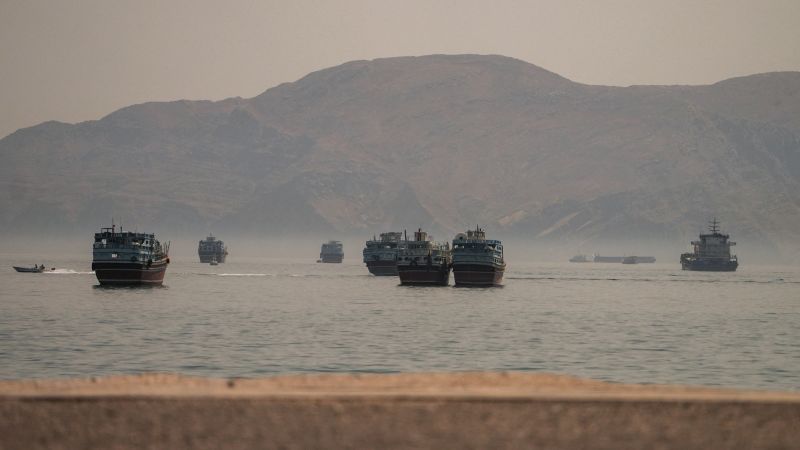
Table of Contents
A Precarious Peace Under Fire
The tentative peace established by a recently signed memorandum of understanding between the United States and Iran is already fracturing. On Saturday, Iran’s Revolutionary Guards claimed to have struck US military positions across the Middle East, signaling a rapid deterioration of the diplomatic efforts intended to stabilize one of the world’s most volatile maritime chokepoints: the Strait of Hormuz.
The escalation follows a sequence of events that began Thursday with an Iranian attack on a commercial vessel. That incident prompted a sharp response from the US military on Friday, with CENTCOM reporting that US aircraft targeted Iranian missile and drone storage facilities as well as coastal radar sites. In a statement, CENTCOM characterized the Iranian aggression against commercial shipping as a clear violation of the ceasefire, justifying the precision strikes as a necessary corrective measure.
Collateral Damage and Regional Spillover
The conflict has quickly expanded beyond the immediate US-Iran bilateral friction. Bahrain, which hosts a critical US naval presence, reported drone attacks on its territory early Saturday morning. The Bahraini foreign affairs ministry condemned the strikes as a “flagrant violation” of its national sovereignty. While Tehran has not officially claimed responsibility for the Bahraini strikes, the timing suggests a coordinated effort to exert pressure on US allies in the region.
The instability is also manifesting in the commercial sector. The United Kingdom Maritime Trade Operations (UKMTO) reported that a tanker in the Strait of Hormuz was struck by an unidentified projectile on Saturday. While the crew remained uninjured, the vessel sustained damage, prompting the UKMTO to issue a cautionary advisory for all ships transiting the area.
The Technicality of the ‘Toll’ Dispute
At the heart of this instability is a vague memorandum of understanding signed earlier this month. The agreement was designed to restore normal marine traffic and ensure the safe passage of commercial vessels. However, the lack of granular detail in the document has left significant room for interpretation—and conflict.
The primary point of contention is the financial control of the waterway. The Trump administration has insisted that the Strait of Hormuz remain toll-free for international shipping. Conversely, Tehran maintains that it possesses the sovereign right to charge passing ships. This fundamental disagreement over maritime “fees” has turned a technical administrative detail into a geopolitical trigger.
Strategic Pivots in the Waterway
In response to the rising threat, the Joint Maritime Information Center (JMIC), overseen by the US Navy, upgraded the threat level in the strait to “substantial.” This move follows the repeated targeting of merchant vessels, which the US views as a tactic to destabilize global energy markets.
To counter Iranian influence over the waterway, the JMIC announced the expansion of a specific transit route near Oman. This tactical shift is intended to allow a greater, simultaneous flow of marine traffic in both directions, effectively reducing the leverage Iran holds over the narrowest points of the strait. While a US official told CNN that these exchanges do not yet signal a return to full-scale combat operations, the rhetoric from the administration remains stern. Vice President JD Vance, a key architect of the agreement, stated Friday that “violence will be met with violence,” suggesting that the US is prepared to maintain a policy of kinetic deterrence if the memorandum continues to be ignored.