Fragile Truce: Israeli Strikes in Southern Lebanon Undercut Trump’s De-escalation Claims
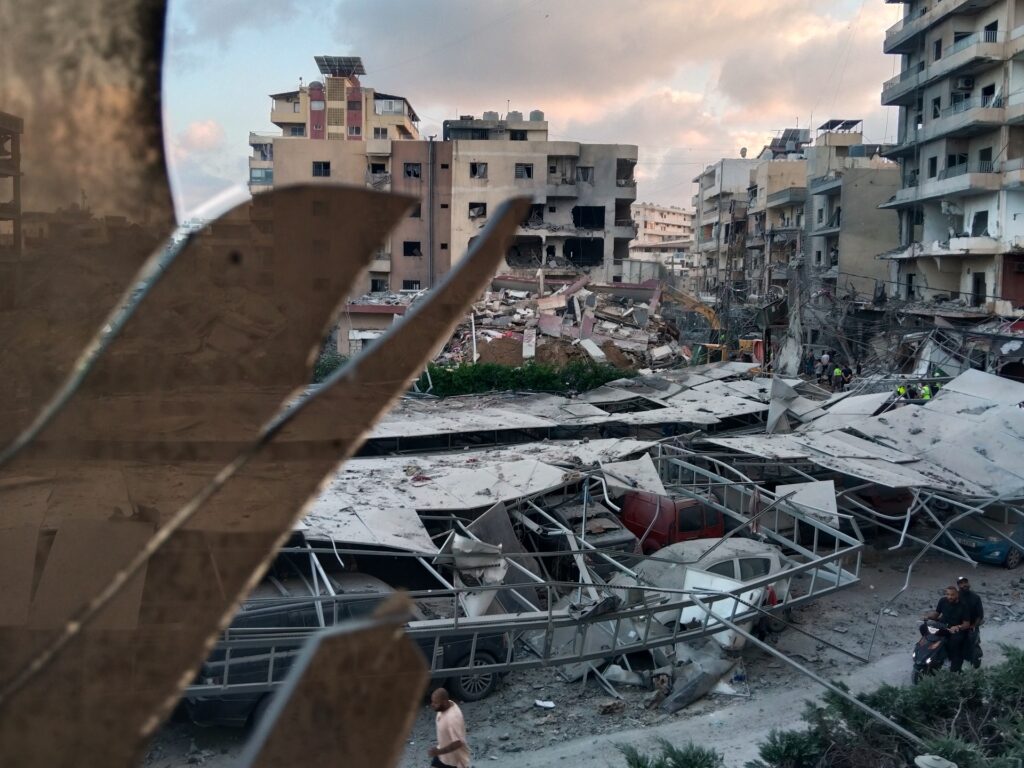
Table of Contents
A Contradictory Peace
Hours after U.S. President Donald Trump announced a breakthrough agreement to de-escalate hostilities between Israel and Hezbollah, the ground reality in southern Lebanon told a different story. At least five people were killed in a series of Israeli strikes on Tuesday, signaling a profound gap between Washington’s diplomatic optimism and the tactical aggression currently defining the border.
The Lebanese National News Agency (NNA) reported a chaotic sequence of attacks across the Nabatieh governorate. In the town of Jebchit, two Syrian nationals were killed while working at a plant nursery. Simultaneously, Israeli drone strikes targeted a motorcycle on Martyr Sabra Street in Toul and a vehicle in the Dhi’at al-Arab neighborhood of Ansar, claiming two more lives. A separate drone operation in Nabatieh killed a driver, bringing the immediate toll to five.
These strikes occurred in the wake of President Trump’s assertions that he had secured a verbal commitment for peace through separate phone calls with Israeli Prime Minister Benjamin Netanyahu and Hezbollah leadership. Trump, taking to Truth Social, expressed hope that the fighting would cease “for ETERNITY!” and claimed that any Israeli troops previously destined for Beirut had been turned back.
The Architecture of a Fragile Deal
The reported agreement, according to the office of Lebanese President Joseph Aoun, was predicated on a simple trade-off: Hezbollah would cease rocket fire into Israeli territory, and the Israeli military would halt strikes on the southern suburbs of Beirut. However, the lack of a formal, signed treaty has left the arrangement vulnerable to the instincts of military commanders on both sides.
The current volatility follows one of the deepest Israeli incursions into Lebanon in over two decades. The Israeli Defense Forces (IDF) recently seized the 900-year-old Beaufort Castle, a strategic hilltop position that provides a commanding view of the region. While the seizure was intended to create a buffer zone, it has instead become a flashpoint. Reports indicate that at least two Israeli soldiers were killed near the castle in the last 24 hours, proving that despite the IDF’s territorial gains, Hezbollah retains the capability to conduct lethal guerrilla operations.
This tactical stalemate is complicated by the broader regional conflict involving Iran. Hezbollah’s entry into the war on March 2—triggered by the killing of Iran’s supreme leader—has tied Lebanon’s fate to Tehran’s strategic calculations. According to Iran’s Tasnim News Agency, Tehran has grown increasingly skeptical of Washington’s mediation, citing the ongoing Israeli offensive as a reason to stall direct negotiations.
The Cycle of Violation
The current crisis is not a new escalation but a failure of a previous one. A ceasefire established on April 17 has been effectively dead on arrival, with both parties engaging in a cycle of “retaliatory” strikes. Each side claims the other breached the agreement first, using these violations to justify further aggression.
The human cost of this attrition is stark. Lebanon’s Ministry of Public Health reports that at least 3,433 people have been killed in Lebanon since March 2. On the Israeli side, the military confirms 27 soldier deaths since early March, including two casualties over the most recent weekend.
As military delegations prepare for a fourth round of US-hosted direct negotiations this Tuesday and Wednesday, the window for a sustainable peace is narrowing. The disconnect between Trump’s public declarations of success and the continued drone strikes in Nabatieh suggests that the U.S. may be overestimating its leverage over Netanyahu’s security objectives or Hezbollah’s willingness to decouple from Iranian directives.


