First Apache Loss Reported Near Strait of Hormuz Amid Escalating Iran-Israel Tensions
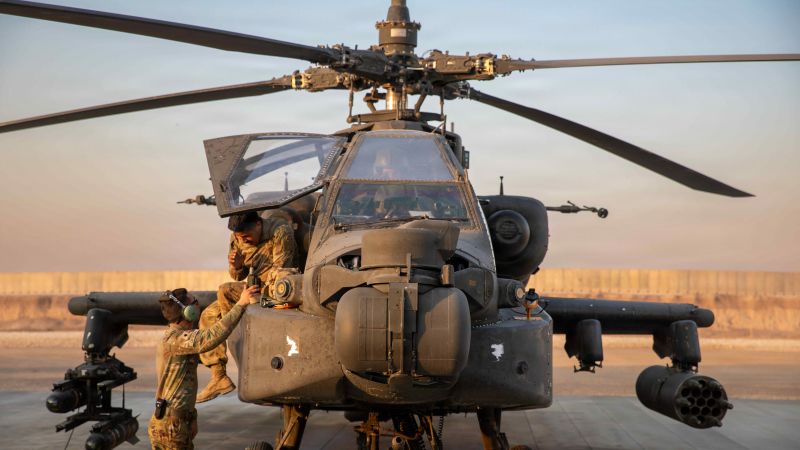
Table of Contents
A Rare Loss for the Apache Fleet
President Donald Trump confirmed that two crew members survived the downing of a U.S. Army AH-64 Apache attack helicopter near the Strait of Hormuz, marking a significant escalation in the operational risks facing U.S. aviation assets in the Middle East. Speaking to reporters in New York following an NBA Finals game on Monday, Trump stated that “the pilots are fine” and that no injuries were reported, though he declined to provide a detailed account of the incident, promising a formal report would be issued the following day.
The incident, first reported by The New York Times, occurred against a backdrop of heightened volatility in the region. Over the previous weekend, Iran and Israel exchanged their first direct strikes in several months, creating a high-tension environment for U.S. forces operating in the Central Command (CENTCOM) area of responsibility. While the exact cause of the Apache’s descent remains unconfirmed, the location—one of the world’s most contested maritime chokepoints—suggests a high probability of operational or hostile interference.
The Strategic Role of the AH-64 in the Gulf
The loss of an Apache is particularly noteworthy given the aircraft’s specialized role. According to CENTCOM, the AH-64 is deployed for precision strikes, air reconnaissance, and close air support. In the specific context of the Persian Gulf, these gunships have been instrumental in enforcing U.S. blockades of Iranian ports, frequently targeting Iranian small boats and fast-attack craft to maintain maritime security.
If the loss is officially confirmed, this would be the first AH-64 Apache downed since the onset of the current conflict with Iran. Until now, the Apache’s combination of agility and heavy firepower had kept it largely out of the reach of Iranian regional defenses, making this incident a potential shift in the tactical landscape of the conflict.
A Pattern of Aviation Attrition
The incident is not an isolated event but rather the latest entry in a growing list of U.S. military aviation losses since the conflict began in late February. Data from a May report by the Congressional Research Service paints a stark picture of the attrition rates for U.S. aircraft in the region. To date, the military has lost dozens of platforms, including:
- At least five fighter jets and three F-15s mistakenly shot down by Kuwaiti air defenses.
- Seven KC-135 Stratotanker refueling aircraft, including a fatal crash in western Iraq in March that killed six crew members.
- Over two dozen unmanned aerial vehicles (UAVs).
- A search-and-rescue helicopter.
These losses underscore the increasing lethality of regional air defenses and the volatility of the airspace. The U.S. has also faced significant challenges in recovering personnel and hardware; in early April, a high-risk covert mission involving hundreds of intelligence and special operations personnel was launched to rescue an F-15E Strike Eagle pilot inside Iran. That operation was so sensitive that U.S. forces were forced to destroy two of their own special operations aircraft on the ground to prevent technology transfer to Iranian forces.
Regional Volatility and Airbase Vulnerability
Beyond the loss of individual aircraft in flight, U.S. assets on the ground have also been targeted. Iranian strikes on U.S. airbases in Saudi Arabia have resulted in numerous damaged aircraft, while others have sustained hits from Iranian fire while airborne. The intersection of these events—the Apache downing, the F-15E recovery, and the ongoing airbase attacks—suggests that the U.S. is facing a sophisticated, multi-layered threat environment in the Strait of Hormuz and surrounding provinces.
As the military prepares its official report, the focus remains on whether the Apache was brought down by a mechanical failure or a new Iranian tactical capability. For now, the White House maintains that the primary objective—the safety of the aircrew—was achieved.