U.S. Military Helicopter Down in Strait of Hormuz Amid Escalating Iran-Israel Tensions
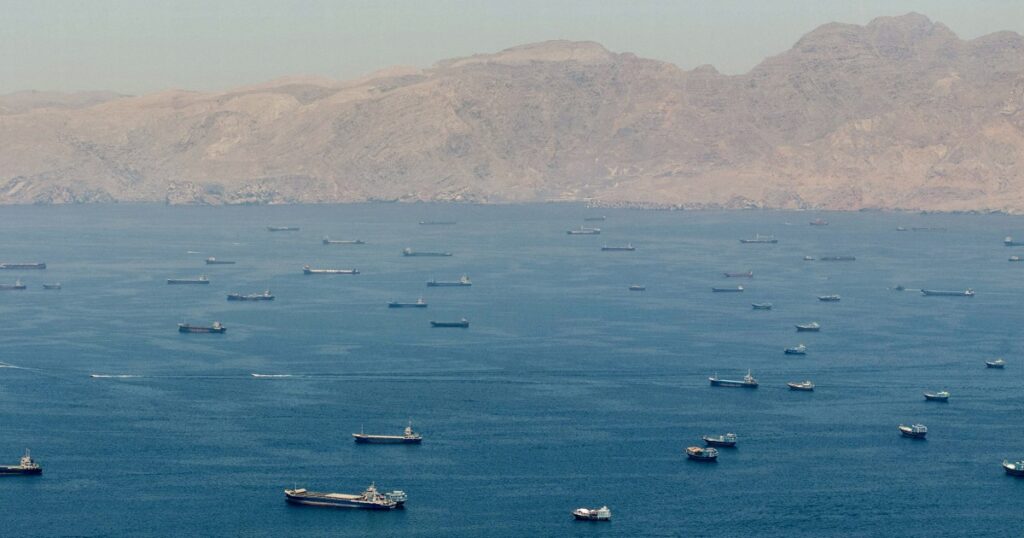
Table of Contents
Incident Over the World’s Most Volatile Waterway
A U.S. military helicopter went down over the Strait of Hormuz on Monday, marking a precarious moment in a region already teetering on the edge of full-scale conflict. President Donald Trump confirmed Tuesday morning that both pilots on board the aircraft were rescued and are “fine,” stating that no injuries were reported in the incident.
The crash occurred in one of the most strategically sensitive corridors of global trade. The Strait of Hormuz, a narrow waterway connecting the Persian Gulf with the Gulf of Oman, serves as the primary artery for approximately one-fifth of the world’s total oil consumption. For months, it has remained a primary flashpoint between Washington and Tehran, with Iran maintaining a restrictive grip on transit following the onset of hostilities involving the U.S. and Israel.
Speaking to reporters before boarding Air Force One, the President remained brief about the specifics of the crash, though he promised more transparency shortly. “We are going to issue a report tomorrow,” Trump said, attempting to downplay the severity of the event while emphasizing the safety of the crew.
A Timing of High Geopolitical Friction
The downed aircraft comes at a moment of extreme fragility. The incident follows a series of direct exchanges between Iran and Israel, which recently traded strikes for the first time since a fragile April truce. While both nations have since stepped back from the brink of an all-out war, the presence of a downed U.S. asset in Iranian-influenced waters adds a layer of tactical volatility to the situation.
Military analysts note that any aviation incident in the Strait—whether mechanical or hostile—is rarely viewed in a vacuum. The region is heavily monitored by both U.S. Navy assets and Iranian Revolutionary Guard Corps (IRGC) fast-attack craft, making the recovery of the pilots and the wreckage a high-stakes operation that requires precise coordination to avoid accidental escalation.
The Logistics of a Potential Deal
Despite the crash, the President continues to project confidence in a diplomatic breakthrough. Trump suggested that the U.S. is in the “final throes” of negotiating a comprehensive agreement with Iran, one that would explicitly prohibit the development of nuclear weapons and ensure the immediate reopening of the shipping lanes.
“The strait will open up right away,” Trump told reporters, claiming the agreement could be signed within the next two to three days. “It’ll open up immediately upon signing.”
However, these assertions contrast with the reality on the ground. While a ceasefire has been nominally in place for weeks, a formal, signed treaty has remained elusive. The continued instability in the Strait of Hormuz suggests that the “final throes” of these negotiations may be more complex than the White House is publicly admitting.
Technical and Strategic Implications
While the official report on the cause of the crash is pending, the incident highlights the inherent risks of operating rotary-wing aircraft in contested environments. The Strait is a congested airspace, filled with electronic warfare capabilities and surface-to-air threats, which increases the risk of both operational errors and targeted interference.
The recovery of the pilots, first reported by the New York Times via sources briefed on the matter, represents a successful tactical extraction, but the loss of the airframe provides Iran with a potential intelligence opportunity if any wreckage was not successfully recovered by U.S. forces.