Final Fantasy VII Revelation: Everything We Know About the Remake Trilogy’s Epic Finale
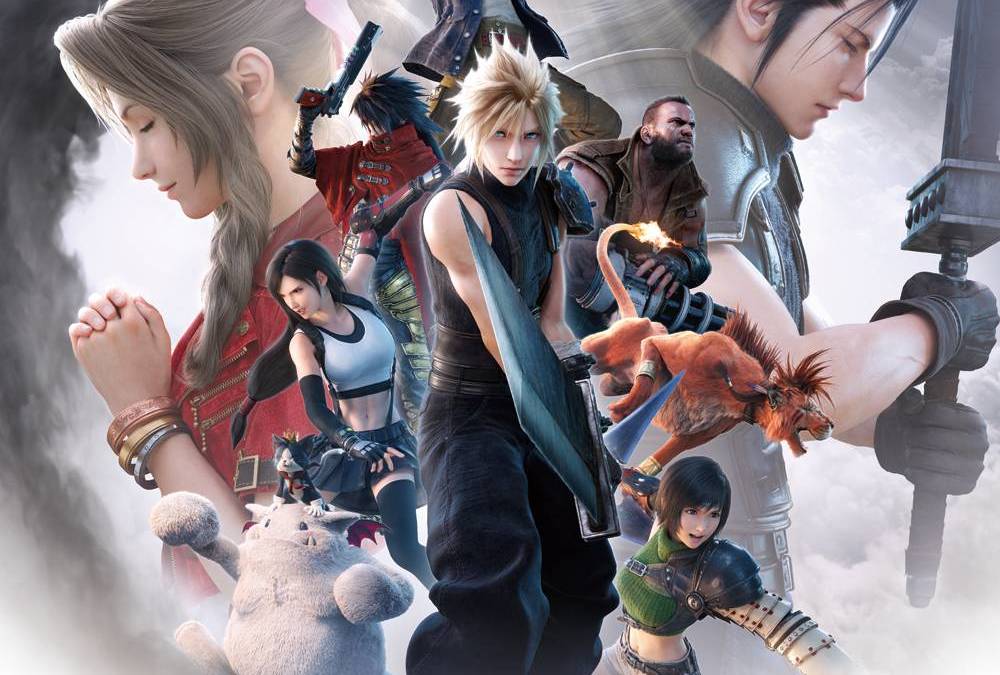
Table of Contents
The Final Piece of the Puzzle: Defining Final Fantasy VII Revelation
Final Fantasy VII Revelation is the third and concluding installment of the ambitious remake project by Square Enix. Designed to wrap up the narrative threads started in Final Fantasy VII Remake and Final Fantasy VII Rebirth, this title serves as the definitive resolution to the conflict between Cloud Strife’s party and the antagonist Sephiroth.
For those unfamiliar with the scale of this project, the Remake series isn’t a 1:1 port of the 1997 original. Instead, it is a reimagining that expands the lore, deepens character arcs, and introduces metaphysical elements regarding fate and parallel timelines. Revelation represents the convergence of these paths, focusing heavily on the Highwind airship as a central hub for a world that has grown significantly in scope compared to the previous two entries.
- Narrative Closure: Revelation concludes the Remake saga, resolving the fate of the planet and the cycle of rebirth.
- Hardware Reach: Confirmed for PC, PS5, Xbox Series X/S, and notably, the upcoming Nintendo Switch 2.
- Gameplay Shift: Expect a more open-world approach integrated with the Highwind airship for global traversal.
- System Refinements: New updates to the ‘Queen’s Blood’ card game and strategic combat tweaks to handle fully assembled parties.
The transition from Rebirth’s vast meadows to Revelation’s aerial dominance marks a shift in the game’s structural philosophy. While the first part was a focused urban exploration of Midgar and the second was a sprawling journey across the mainland, Revelation promises a ‘boundless world’ where the stakes are no longer local, but planetary.
Breaking Down the Technical Scope and Platform Strategy
One of the most significant revelations regarding the game’s distribution is the inclusion of the Nintendo Switch 2. While Square Enix has not officially detailed the hardware specs of Nintendo’s next-generation console, the decision to target it alongside the PS5 and Xbox Series X suggests a heavy reliance on scalable rendering and potentially DLSS-like upscaling technology to maintain the visual fidelity established in the Unreal Engine 4 (and potentially updated) pipeline.
For PC users, the focus remains on maximizing the high-fidelity assets seen in the PS5 version. Given the complexity of the ‘fully assembled party’ combat—where the game must track multiple AI companions and player-controlled characters simultaneously—optimization of CPU threading will be critical. We’ve seen in Rebirth that party synergy is central to the experience; Revelation will likely push this further, introducing complex group maneuvers and strategic depth that requires high-performance hardware to execute without frame-rate drops.
| Platform | Expected Performance Tier | Key Feature |
|---|---|---|
| PlayStation 5 | Native 4K / 60FPS (Performance Mode) | Haptic Feedback / Ultra-fast SSD |
| Xbox Series X | Native 4K / 60FPS | Quick Resume / Game Pass Potential |
| PC | Ultra / Ray Tracing Support | Customizable Resolution / Ultrawide |
| Nintendo Switch 2 | Dynamic 1080p / 30-60FPS | Handheld Portability / New NVIDIA Architecture |
Combat Evolution: From Synergy to Strategic Mastery
Combat in the Remake series has always been a hybrid of real-time action and command-based strategy. In Revelation, the ‘strategic and dynamic combat’ mentioned in official descriptions suggests a shift toward larger-scale encounters. Throughout the saga, the party has grown; Revelation is the first time players will be able to utilize a fully assembled party in a cohesive tactical environment.
According to recent interviews with the development team, including insights from Director Nick Rodriguez, the game is addressing ‘streamer crisis’—the tendency for high-level play to break the game’s difficulty—by implementing more reactive AI and evolving boss patterns. Sephiroth, in particular, is expected to undergo a significant mechanical change. Rather than acting as a static boss, he is poised to be a dynamic presence that alters the environment and combat rules in real-time.
Furthermore, the return of Queen’s Blood, the tactical card game introduced in Rebirth, is confirmed with ‘key changes.’ For the uninitiated, Queen’s Blood is not just a distraction; it is integrated into the world’s social fabric. In Revelation, this minigame is expected to serve as a tool for diplomacy or unlocking hidden narrative paths, mirroring the way side-quests in the previous titles expanded the world’s depth.
The Highwind and the Boundless World
The Highwind is more than just a vehicle; it is the narrative anchor for the third act. In the original 1997 game, the airship provided a sense of freedom and scale. In Revelation, Square Enix is leveraging this to create a ‘boundless world.’ This likely means a transition from the ‘region-based’ open world of Rebirth to a more seamless global map.
From a design perspective, this allows for non-linear progression. Players may be able to tackle certain objectives in different orders, provided they have the aerial capacity to reach them. This structural change prevents the game from feeling like a series of corridors and instead makes the planet feel like a living, breathing entity under threat.
“The scale has never been larger, and the stakes have never been higher. Everything leads here.” — Official Square Enix Announcement
This quote underscores the project’s intent: to synthesize the disparate plot lines of the multiverse, the Ancients, and the struggle for the Lifestream into a singular, climactic ending. The focus on ‘everything leading here’ suggests that player choices or discoveries from the first two games may have subtle echoes in the final chapter, adding a layer of continuity that rewards long-term engagement.
What This Means for the Player
For the average gamer, Final Fantasy VII Revelation is the final investment in a multi-year journey. Practically, this means players should ensure their save data from Rebirth is backed up, as the transition to the final act will likely depend on the state of the party and their relationships.
For the hardware enthusiast, the inclusion of the Switch 2 is a massive signal. It suggests that the ‘Remake’ aesthetic—characterized by high-poly models and lush environments—is now portable. This opens the door for a wider audience to experience the conclusion of the saga without needing a high-end console. Additionally, the mention of ‘cut content’ by James Ratcliff suggests that the developers are polishing the experience to ensure the narrative is tight, removing superfluous elements to make the ending more impactful.
Comparing the Trilogy’s Scope
To understand the trajectory of the series, one must look at the progression of the ‘World Map’ across the three titles.
- Remake: Focused on Midgar. High density, linear progression, urban environment.
- Rebirth: The vast mainland. Regional hubs, open exploration, diverse biomes.
- Revelation: Global/Aerial. Boundless world, Highwind-centric, planetary stakes.
This progression mirrors the emotional arc of the characters: from escaping a city, to discovering the world, to fighting for the survival of the entire planet.
Frequently Asked Questions
Will my save files carry over from FFVII Rebirth?
While Square Enix hasn’t explicitly detailed a direct save-transfer system, the narrative continuity suggests that the party’s growth and relationship levels will be fundamentally integrated into the start of Revelation.
Which platform offers the best experience for FFVII Revelation?
For maximum visual fidelity and frame rate, the PC and PS5 versions are recommended. However, the Nintendo Switch 2 version will offer the unique advantage of handheld play for a game that is traditionally bound to a television.
Is Final Fantasy VII Revelation a completely new story?
It is a reimagining. While it follows the core beats of the original 1997 story, it introduces new characters, altered plot points, and explores themes of fate and destiny that were not present in the original.
How does the combat differ from previous entries?
Revelation introduces a ‘fully assembled party’ system, allowing for more complex synergies and strategic maneuvers than the smaller squads seen in the first two games.
Will there be DLC for Revelation?
Director Nick Rodriguez has discussed the possibility of DLC similar to the ‘Intergrade’ expansion, which could potentially expand the lore or add new challenge modes post-launch.
Navigating the Conclusion of a Legacy
The weight of Final Fantasy VII Revelation lies in its need to satisfy two audiences: the nostalgic fans of the original and the new generation who entered through the Remake. By expanding the world via the Highwind and refining the combat to handle a full roster, Square Enix is attempting to create a finale that feels commensurate with the scale of the story.
Whether it can successfully tie together the complex metaphysical threads of the Remake series remains to be seen, but the technical ambition—spanning from the high-end power of the PS5 to the portable potential of the Switch 2—indicates a commitment to making this a universal gaming event. The journey that began in the slums of Midgar is finally reaching its destination, and the ‘boundless world’ of Revelation is where the fate of Gaia will be decided.