Ferrari’s First EV, the Luce, Trades Traditional Curves for Jony Ive’s Minimalism
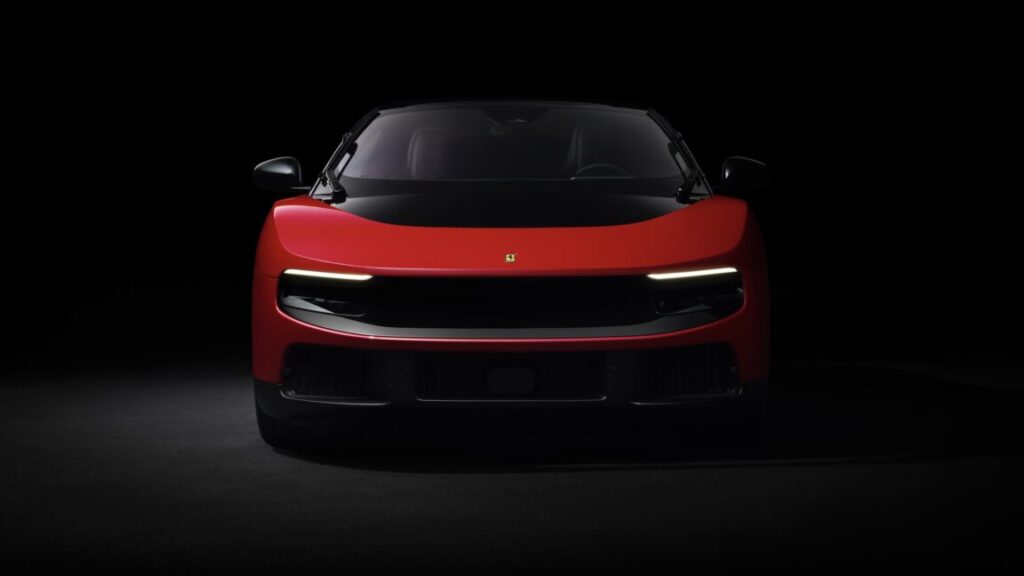
Table of Contents
A Departure from the Prancing Horse Norm
For decades, the Ferrari brand has been defined by a very specific set of constraints: two seats, a screaming internal combustion engine, and a silhouette that prioritizes aggression over utility. The arrival of the Luce disrupts every single one of those pillars. Not only is the Luce Ferrari’s first battery-electric vehicle (BEV), but it is also the marque’s first four-door, five-seater sedan.
While the move may alienate purists, it is a strategic necessity. For Ferrari to maintain its relevance in critical high-growth markets like China and the tech hubs of Silicon Valley, an emissions-free flagship is no longer optional. The result is a vehicle that feels less like a traditional supercar and more like a manifesto for the company’s next era.
The LoveFrom Influence
The Luce’s aesthetic is the product of an unlikely partnership. Ferrari tapped LoveFrom, the design firm led by former Apple chief designer Jony Ive and Marc Newson. The influence of Ive is unmistakable; the car possesses a clinical, reduced geometry that some observers suggest could easily swap the prancing horse for an Apple logo. The cab-forward glasshouse and minimalist surfacing echo elements of the Lotus Etna concept, though Ferrari has sprinkled in nods to its own history, specifically the four round tail lights reminiscent of the 360 and 550 series from the 1990s.
In person, the design is more cohesive than it appears in press photography. While some of the launch colorways obscure the car’s volume, the physical presence of the Luce suggests a shift toward a “technological luxury” that prioritizes smoothness over the muscular creases found on the SF90 or Purosangue.
The Science of Sliperiness
The divisive exterior is driven by a rigorous obsession with efficiency. Ferrari began aerodynamic studies for the Luce seven years ago—two years before the project was even officially greenlit. The goal was to create the lowest-drag Ferrari in history without sacrificing the downforce required to keep the car stable at high speeds.
The engineering effort was immense, involving 6,000 computational fluid dynamics (CFD) simulations and over 300 hours of wind tunnel testing. The architecture utilizes a diving hood that funnels air over the roof and toward a rear deck wing. Active air vents manage cooling and airflow depending on whether the driver prioritizes range efficiency or raw performance.
While official range figures are pending, Ferrari is targeting 330 miles (530 km) under Europe’s WLTP cycle. Achieving this requires the use of aerodisc wheels—single-piece aluminum turbine designs intended to eliminate range-sapping eddies. For those opting for the more traditional five-spoke wheels, the company warns that efficiency will take a hit.
A Masterclass in Tactile Luxury
If the exterior of the Luce is a point of contention, the interior is an undisputed triumph. Rather than following the industry trend of installing massive, distracting tablets, Ferrari has created a cabin that celebrates materiality and precision.
The dashboard is machined from a single piece of brushed aluminum, a design choice that intentionally excludes a passenger-side screen. The steering wheel, door handles, and air vents are similarly executed in aluminum, with the vents featuring a tactile, valved feel that mimics a high-performance exhaust system.
The driver’s interface is a clever hybrid of digital and analog. The instrument binnacle is fixed to the steering column and consists of two OLED displays. However, the center speedometer uses a physical needle, providing a mechanical soul to a digital cockpit. To the side, a pivoting infotainment screen provides the primary interface, including full Apple CarPlay integration that spans the width of the display.
Perhaps the most distinct detail is the clock in the upper-right corner of the screen. At the touch of a button, it transforms into a 60-second stopwatch and then a compass, using physical needles that evoke a high-end Swiss timepiece. It is a level of detail that justifies the premium, positioning the Luce not just as an EV, but as a piece of industrial art.


