FAA Grounds Starship After V3 Booster Failure Complicates SpaceX’s Aggressive Timeline
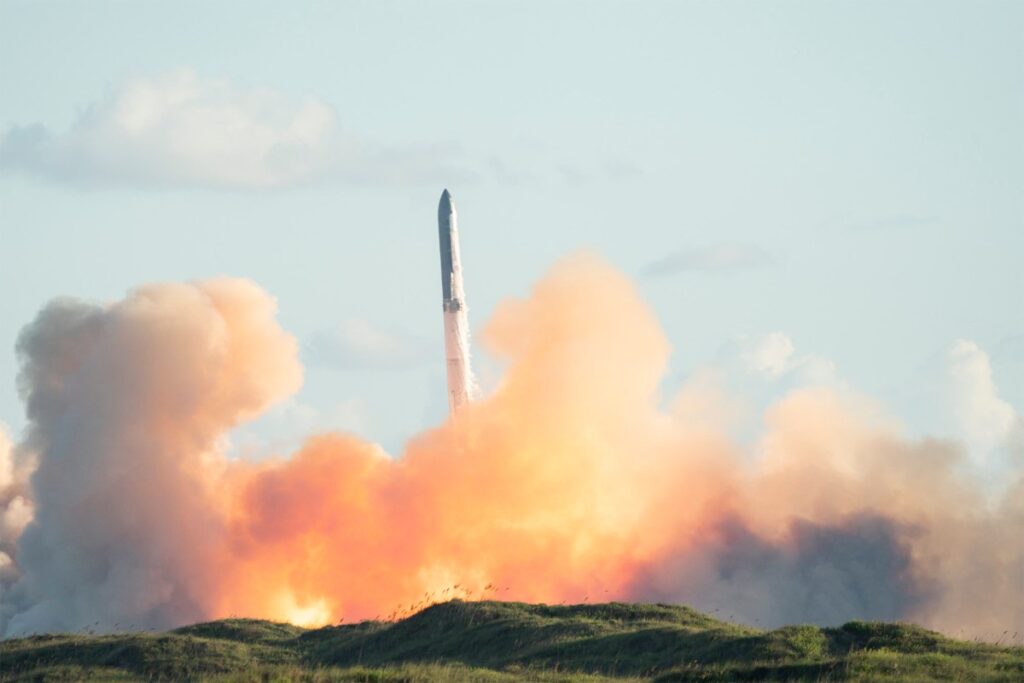
Table of Contents
A ‘Mishap’ in the Gulf
The Federal Aviation Administration (FAA) has officially designated the May 22 SpaceX Starship Flight 12 launch as a “mishap,” triggering a mandatory investigation into the failure of the Super Heavy booster. In a statement released Wednesday, the agency confirmed it will oversee a SpaceX-led probe to determine why the vehicle malfunctioned during its return trajectory over the Gulf of Mexico.
The grounding comes at a precarious moment for Elon Musk’s aerospace firm. By labeling the event a mishap, the FAA effectively freezes Starship’s flight cadence. SpaceX cannot return to the launch pad at Starbase in South Texas until the agency approves a final report and verifies that any corrective actions have been implemented to ensure public safety.
“The mishap involved the Super Heavy booster as it flew back to the Gulf of America after stage separation,” the FAA stated. “The FAA will oversee the SpaceX-led investigation, be involved in every step of the process, and approve SpaceX’s final report.”
While the FAA noted there were no reports of public injury or property damage, the technical failure was stark. The booster did successfully separate from the Starship upper stage, but the subsequent phase—the critical sustained burn intended to steer the rocket back toward the Texas coast—failed. Telemetry suggested an engine failure, or a cascade of failures, which sent the booster into a tumble before it disintegrated upon impact with the water.
The V3 Gamble
Flight 12 was supposed to be a proof-of-concept for the “V3” iteration of the Starship system. This version wasn’t just a minor tweak; it represented a significant leap in hardware, featuring third-generation Raptor engines and structural modifications designed to move the rocket away from the “test-and-fail” cycle of the previous 11 flights toward a regime of operational reliability.
The goal of V3 is full, rapid reusability. For SpaceX, this isn’t just about engineering prestige—it is a financial imperative. The company’s growth is currently tethered to the success of Starlink, its satellite internet constellation. To scale Starlink to a point of global dominance and maintain its profitability, SpaceX needs the massive payload capacity and low launch costs that only a fully reusable Starship can provide.
However, the V3 debut revealed cracks in the system. Beyond the booster’s collapse, the Starship spacecraft itself suffered a loss of one of its six Raptor engines. This failure forced the team to abandon a primary objective: a second sustained burn in orbit. The fact that both the booster and the ship experienced propulsion anomalies suggests that the third-generation Raptor engines may still be facing stability issues under the extreme stresses of flight.
Market Pressures and Regulatory Friction
The timing of the FAA’s intervention is particularly awkward given SpaceX’s anticipated IPO, rumored for mid-June. While SpaceX remains a private entity, any public offering would require a high degree of confidence in its primary growth driver—Starship. A prolonged grounding by the FAA could signal to investors that the path to reusability is more turbulent than the company has publicly acknowledged.
This regulatory scrutiny is not unique to SpaceX. The FAA has recently imposed similar mishap investigations on Blue Origin during the development of its New Glenn heavy-lift rocket. Interestingly, Blue Origin was cleared for flight just last week, with a fourth launch attempt expected shortly. This creates a contrasting narrative where SpaceX’s faster, “fail-fast” iteration style is colliding with a federal agency that requires a slower, more methodical verification of safety.
For now, the eyes of the aerospace industry remain on the FAA’s review process. If the investigation reveals a fundamental flaw in the V3 Raptor’s design, the delay could stretch from weeks into months, stalling the deployment of the next generation of Starlink satellites and delaying the company’s broader ambitions for lunar and Martian exploration.