FAA Grounds Starship After Super Heavy Booster ‘Mishap’ During Flight 12
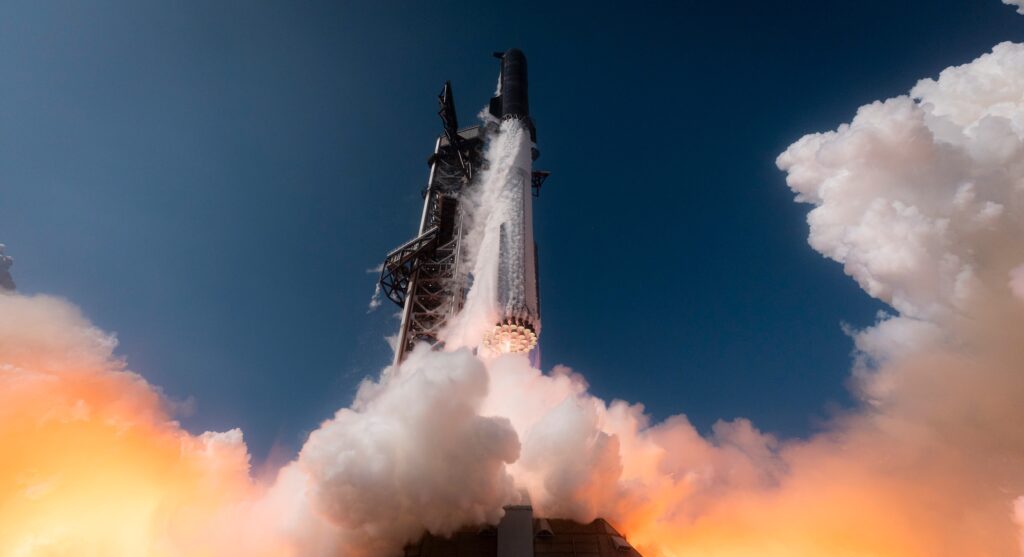
Table of Contents
A Formal Pause for the Super Heavy
The Federal Aviation Administration (FAA) has officially designated the May 22 launch of SpaceX’s Starship as a “mishap,” triggering a mandatory investigation process that effectively grounds the world’s most powerful rocket until the agency clears its return to flight. While SpaceX often treats its early test campaigns as iterative “failures” meant to provide data, the FAA’s regulatory framework treats any deviation from a planned flight path as a legal matter of public safety.
The mishap specifically centers on the Super Heavy booster’s behavior following stage separation. During Flight 12, SpaceX intended for the booster to execute a “boostback” burn—a critical maneuver designed to redirect the vehicle back toward a controlled landing zone. Instead, the maneuver collapsed. According to the FAA’s May 27 statement, the booster suffered multiple failures of its Raptor 3 engines shortly after ignition. The burn, which should have lasted approximately one minute, lasted less than 20 seconds before the booster entered an uncontrolled descent.
Telemetry data shared during the SpaceX webcast showed the booster striking the Gulf of Mexico at speeds approaching 1,500 kilometers per hour. While the vehicle landed within a pre-defined debris response area and caused no ground damage, the anomaly had a ripple effect on regional aviation. The FAA noted that several aircraft experienced departure delays and “airborne holding events” as a direct result of the booster’s unplanned trajectory.
The Raptor 3 Growing Pains
This failure is particularly notable because Flight 12 served as the debut for version 3 of the Starship system. The most significant upgrade was the introduction of the Raptor 3 engines, which boast a simplified architecture intended to increase thrust and reliability. However, the Flight 12 data suggests these efficiencies may have come with new instabilities.
Beyond the catastrophic failure of the boostback burn, the mission was plagued by smaller, yet significant, anomalies. One of the 33 Raptor engines on the Super Heavy booster shut down prematurely during the ascent phase, and one of the six engines on the Starship upper stage also failed. For SpaceX, these are likely seen as telemetry points for refinement; for the FAA, they are indicators of a system that has not yet achieved the stability required for routine commercial operations.
Despite the booster’s demise, the upper stage performed admirably, meeting several key mission objectives. The vehicle successfully deployed Starlink mass simulators and achieved a soft splashdown in its targeted landing zone in the Indian Ocean, proving that the primary ship is maturing even as the booster struggles with the complexities of the return trip.
Regulatory Friction vs. Iterative Speed
The requirement for a formal mishap investigation often clashes with Elon Musk’s “fail fast, fix fast” philosophy. In practice, SpaceX likely began analyzing the root cause of the Raptor 3 failures the moment the booster hit the water. However, the FAA’s oversight ensures that corrective actions are documented and verified, preventing the company from bypassing safety protocols in the race to reach orbit.
This regulatory dance is a familiar one in the current commercial space race. A similar situation recently unfolded for Blue Origin. Following an April 19 New Glenn launch where the upper stage malfunctioned and stranded its payload in an unrecoverable orbit, the FAA similarly declared a mishap. However, that process moved rapidly; by May 22, the FAA accepted Blue Origin’s findings, clearing the way for their next launch—a critical mission for Amazon’s Leo broadband constellation planned for early June.
If SpaceX can provide a convincing technical explanation for the Raptor 3 failures and a concrete plan to mitigate them, the grounding of Starship could be short-lived. But as the FAA tightens its grip on the increasingly crowded airspace over Texas and the Gulf, the margin for “experimental” errors is shrinking.


