FAA Clears Blue Origin’s New Glenn for Flight Following Upper-Stage Failure
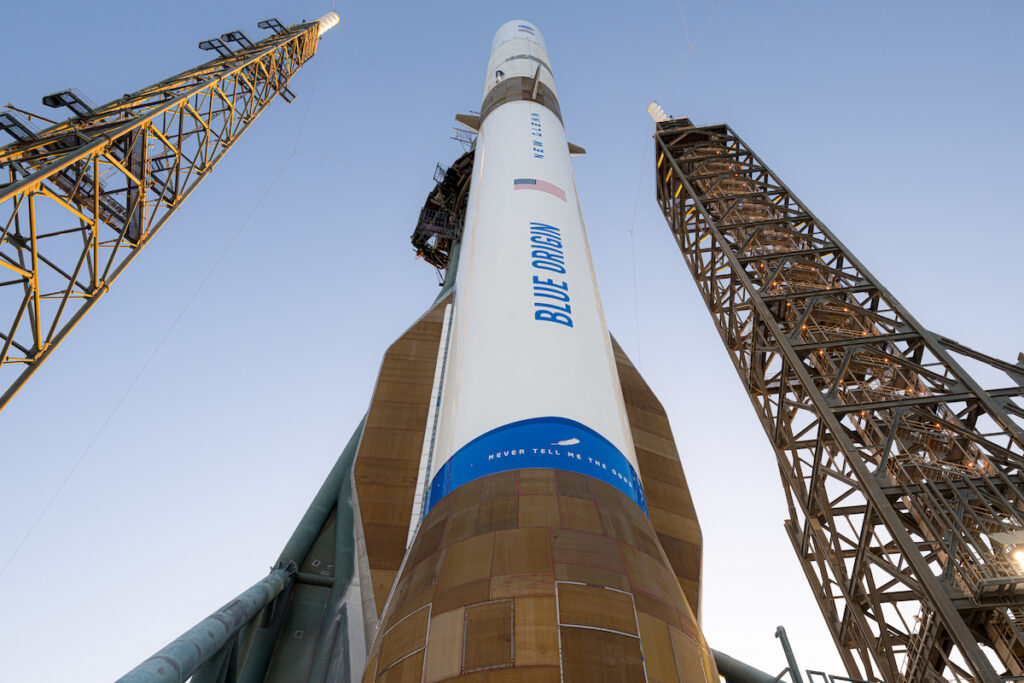
Table of Contents
The Green Light for New Glenn
Blue Origin’s heavy-lift orbital ambitions are back on track. The Federal Aviation Administration (FAA) has officially cleared the New Glenn rocket to return to flight operations following a grounding period triggered by a mission failure in April. The decision comes after the company submitted a detailed mishap report and implemented corrective measures to address a critical failure in the rocket’s upper stage.
The incident in question occurred during a high-stakes attempt to deploy a commercial payload for AST SpaceMobile. While the initial ascent appeared successful, the mission ended abruptly when the upper stage failed to deliver the satellite into its intended orbit. Instead of achieving a stable trajectory, the payload plummeted back toward Earth, eventually burning up in the atmosphere.
Analyzing the ‘Off-Nominal Thermal Condition’
In a succinct update posted to X, Blue Origin attributed the failure to an “off-nominal thermal condition” within the upper stage. This thermal anomaly reportedly affected one of the three engines, causing it to produce significantly lower thrust than calculated. In the precise mathematics of orbital mechanics, a deficit in thrust—even a marginal one—can be the difference between a successful orbit and a catastrophic re-entry.
While Blue Origin has not publicly detailed the exact nature of the “corrective measures” taken to satisfy the FAA, thermal management is a perennial challenge for cryogenic engines. Variations in propellant temperature or failures in heat shielding can lead to erratic combustion or structural instability. The company’s silence on the specifics is typical of the industry’s proprietary approach to hardware iteration, but the FAA’s swift clearance suggests that the root cause was isolated and solvable via software or component adjustments rather than a fundamental redesign of the New Glenn architecture.
A Mixed Bag of Success and Failure
Despite the loss of the AST SpaceMobile satellite, the flight provided a crucial victory for Blue Origin’s recovery operations. The mission marked the first time the New Glenn booster stage was successfully reused, landing precisely on a drone ship in the ocean for the second time. This validates the core design philosophy of the New Glenn: high-cadence reusability to drive down the cost of access to space.
For AST SpaceMobile, the loss was a setback in their effort to build a space-based cellular broadband network, though the company confirmed it held insurance coverage to offset the financial impact of the lost hardware. This highlights the critical role of space insurance in the emerging commercial satellite economy, where the risk of “infant mortality” for new rocket platforms remains high.
The Race for Orbital Cadence
The FAA’s clearance arrives at a pivotal moment for Jeff Bezos’ venture. Blue Origin has set an aggressive target to launch New Glenn up to 12 times by the end of 2026. To reach this volume, the company must transition from an experimental phase to a reliable logistical cadence, moving away from the “mishap-and-fix” cycle that has characterized the early days of SpaceX’s Falcon 9.
A one-month grounding is a minor blip in the grand scheme of aerospace development, but it underscores the volatility of the heavy-lift market. With the New Glenn designed to compete directly with SpaceX’s Starship and the upcoming iterations of the Vulcan Centaur, consistency is now more valuable than raw power. The ability to deliver payloads reliably is the only way Blue Origin can convert its massive capital investment into a sustainable commercial business.