FAA Clears Blue Origin’s New Glenn for Flight Following April Upper-Stage Failure
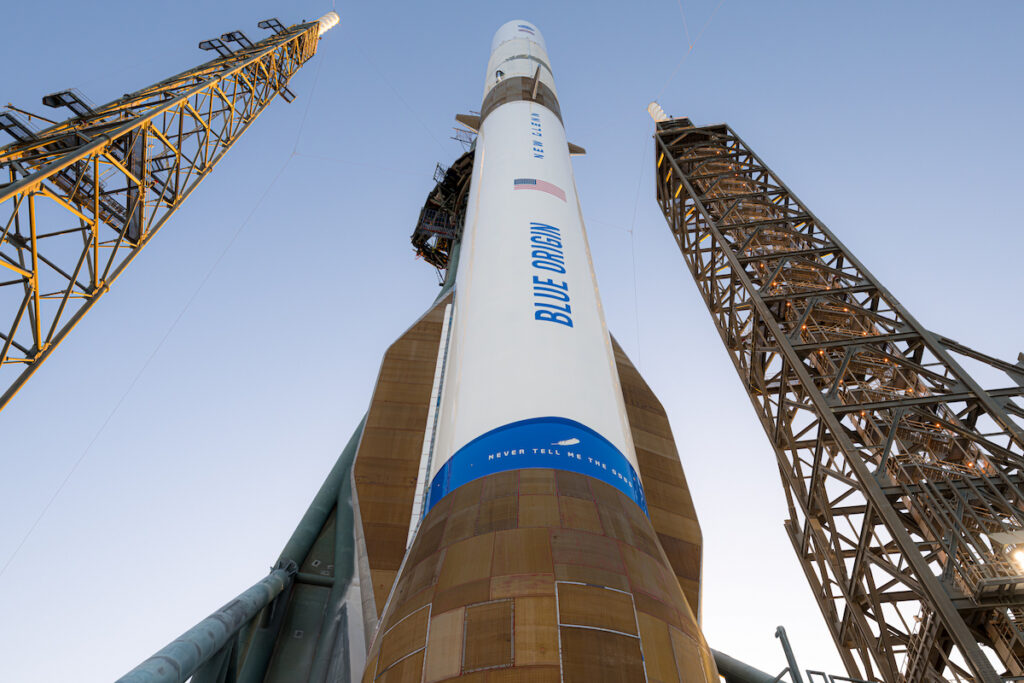
Table of Contents
A Return to the Pad
Blue Origin has officially received the green light from the Federal Aviation Administration (FAA) to resume flight operations for its New Glenn orbital launch vehicle. The clearance comes after a month-long grounding following a high-profile failure in April, where the rocket’s upper stage failed to successfully deploy a commercial payload.
The announcement, shared via X (formerly Twitter) on Friday, marks a critical pivot for Jeff Bezos’ space venture as it attempts to transition from a developmental phase into a reliable commercial cadence. While the FAA’s approval is a regulatory necessity, the specifics of the fix remain largely shielded from public view, a common practice in the highly competitive private space race.
Analyzing the ‘Off-Nominal’ Failure
The April mishap occurred during what was New Glenn’s third flight. While the primary booster performed flawlessly, the upper stage—the component responsible for precisely injecting satellites into their target orbits—encountered what Blue Origin described as an “off-nominal thermal condition.”
This thermal anomaly directly impacted engine performance, causing one of the three onboard rocket engines to produce thrust levels significantly below the required threshold. The resulting loss of velocity meant the vehicle could not maintain the necessary trajectory, leading to the total loss of the payload. The casualty was a satellite belonging to AST SpaceMobile, a company aiming to build a space-based cellular broadband network. Because the satellite failed to reach orbit, it succumbed to atmospheric reentry and burned up over the Pacific.
AST SpaceMobile confirmed that the loss was mitigated by comprehensive insurance coverage, but the event highlighted the inherent risks of relying on a relatively new heavy-lift architecture. For Blue Origin, the failure was a blow to its credibility at a time when SpaceX’s Falcon 9 and Starship are dominating the orbital landscape.
The Silver Lining: Booster Recovery
Despite the payload failure, the April mission provided a vital proof-of-concept for New Glenn’s most ambitious feature: reuse. The first-stage booster successfully detached and executed a precision landing on a drone ship in the ocean for the second time.
This successful recovery is central to Blue Origin’s business model. By reusing the massive booster, the company aims to drastically lower the cost per kilogram to orbit, challenging the monopoly SpaceX holds on reusable heavy-lift launchers. The fact that the booster performed as expected suggests that the April failure was isolated to the upper-stage propulsion and thermal management systems, rather than a systemic flaw in the rocket’s primary architecture.
Scaling the Launch Cadence
With the FAA grounding lifted, Blue Origin is now racing to meet an aggressive manifestation schedule. The company has publicly stated its intention to launch New Glenn up to 12 times by the end of 2026. This ramp-up is not merely about prestige; it is about fulfilling commercial contracts and supporting the infrastructure for future lunar missions.
However, the industry question remains: did the one-month pause set back the broader timeline? While 30 days may seem negligible in aerospace terms, any delay in flight-proven hardware can create a bottleneck for satellite operators who have already spent millions on payload development. Blue Origin’s ability to maintain this pace will depend on whether the “corrective measures” submitted to the FAA were a simple software patch or required a more fundamental hardware redesign of the upper stage’s thermal shielding.


