FAA Clears Blue Origin’s New Glenn for Flight After Upper Stage Thermal Failure
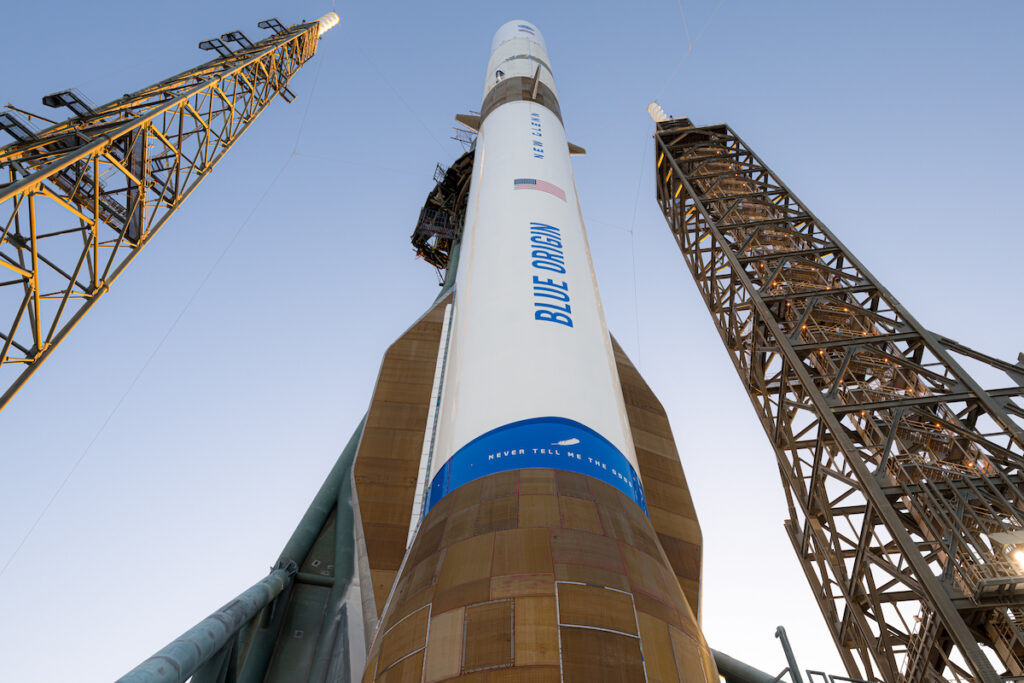
Table of Contents
Return to Flight
Blue Origin is officially back in the launch game. The Federal Aviation Administration (FAA) has cleared the company’s New Glenn mega-rocket to resume flights following a month-long grounding triggered by a partial failure during an April mission. The clearance comes after Blue Origin submitted a detailed mishap report and implemented a series of corrective measures to address a critical thermal issue in the rocket’s upper stage.
The incident in question occurred during New Glenn’s third flight, where the vehicle’s upper stage failed to deliver its commercial payload into the intended orbit. While the launch began successfully, the mission ended in a partial loss when an AST SpaceMobile satellite, designed to provide space-based cellular broadband, burned up upon re-entry into Earth’s atmosphere. According to a brief statement posted by Blue Origin on X, the upper stage experienced an “off-nominal thermal condition” that directly impacted the performance of one of its three engines, leading to thrust levels that were significantly lower than required for orbital insertion.
The Cost of an ‘Off-Nominal’ Thermal Event
While Blue Origin has been tight-lipped about the specific engineering fixes applied to the hardware, the “off-nominal thermal condition” suggests a failure in the rocket’s heat management or propulsion cooling systems. In the vacuum of space, managing the extreme temperatures generated by liquid oxygen and liquid methane engines is a delicate balance; a leak or a failure in a cooling jacket can lead to rapid overheating, which in turn degrades engine performance or causes a total shutdown.
The loss of the AST SpaceMobile satellite was a significant blow to the mission’s objectives, but the financial fallout was mitigated. AST SpaceMobile confirmed that the lost hardware was fully insured, allowing the company to pivot toward a replacement launch without catastrophic capital loss. However, for Blue Origin, the mishap highlighted the volatility of the New Glenn’s early flight cadence as it attempts to scale into a reliable heavy-lift provider.
A Silver Lining in the Debris
Despite the upper stage failure, the April flight was not a total loss for Jeff Bezos’ space venture. The mission provided a critical validation of New Glenn’s most ambitious feature: its reusable first stage. The massive booster successfully detached and landed on a drone ship in the ocean for the second time in the program’s history.
This successful recovery is a vital data point for Blue Origin. The ability to reliably land and refurbish the booster is the only way the company can hope to compete with SpaceX’s Falcon 9 and Starship. By proving that the booster can survive the stresses of flight regardless of what happens at the upper stage, Blue Origin has secured at least one pillar of its operational architecture.
The Race to 2026
The FAA’s quick turnaround on the grounding is a signal that the regulatory body is satisfied with the provided telemetry and the proposed fixes. This allows Blue Origin to return to an aggressive manifest. The company has publicly stated an ambition to launch New Glenn as many as 12 times by the end of 2026, a pace that would move it from a developmental program to a legitimate commercial workhorse.
Whether a one-month pause meaningfully disrupts this timeline remains to be seen, but the pressure is mounting. As the commercial satellite market shifts toward larger constellations and more frequent replenishment, the reliability of New Glenn’s upper stage will be the deciding factor in whether Blue Origin can capture a significant share of the heavy-lift market or remain in the shadow of its competitors.