Drones, Sanctions, and the Strait: US-Iran Escalation Risks Global Energy Chokepoint
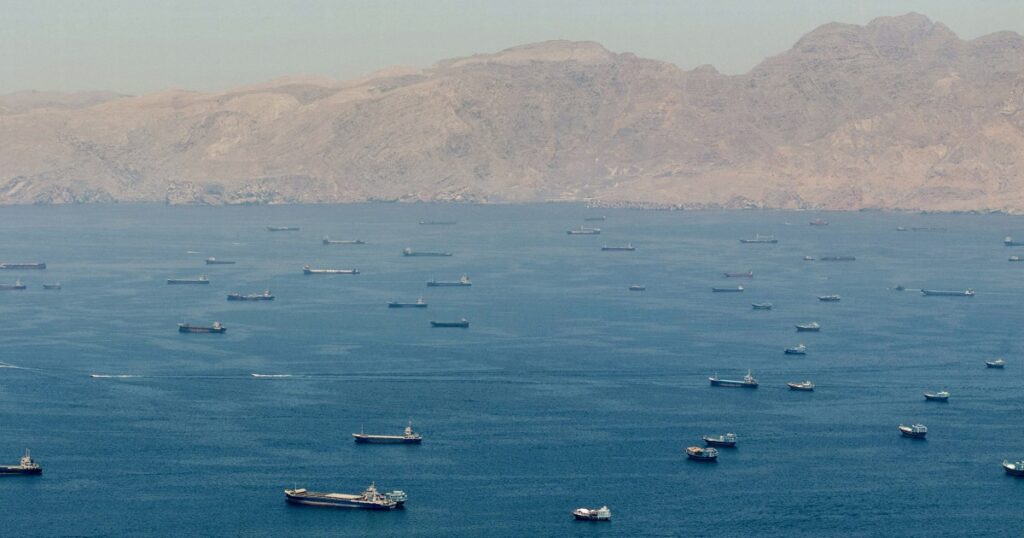
Table of Contents
A Cycle of Precision and Retaliation
The fragile ceasefire between the United States and Iran has entered a volatile new phase, as both nations exchange claims of targeted strikes that threaten to dismantle the prospects of a lasting peace deal. Following U.S. military operations against Iranian drone infrastructure, Tehran has claimed to have retaliated against an American air base, though the specific location and extent of the damage remain unconfirmed by the Pentagon.
The escalation centered around Bandar Abbas, a critical port city near the Strait of Hormuz. U.S. officials confirmed the interception of four Iranian one-way attack drones and a precision strike on a ground control station. According to military sources, the operation was a defensive necessity; the ground control station was targeted specifically to neutralize a fifth drone that was imminent for launch. This suggests a high level of real-time intelligence and electronic surveillance, as the U.S. aimed to disrupt the launch sequence before the asset could become airborne.
In response, the Islamic Revolutionary Guard Corps (IRGC) reported via the Tasnim news agency that they targeted a U.S. air base at 4:50 a.m. local time. While the U.S. has not yet verified an attack on its facilities, the regional tension is compounded by reports from the Kuwaiti army. Kuwaiti air defenses were activated Thursday to intercept “hostile missile and drone threats,” creating a cloud of uncertainty regarding whether these intercepts were aimed at Kuwaiti soil or intended for the U.S. air assets stationed within the country.
The Weaponization of the Strait
Beyond the kinetic exchanges, a deeper struggle for control over the Strait of Hormuz—the world’s most critical oil transit chokepoint—is unfolding. The U.S. Treasury has moved to sanction the newly formed Persian Gulf Strait Authority, an Iranian agency that sought to impose tolls of up to $2 million on transiting ships. Treasury Secretary Scott Bessent characterized the move as an attempt by the regime to “extort global maritime trade,” framing the economic pressure as a means to limit Tehran’s operational capacity.
President Donald Trump has been explicit about the strategic stakes, stating during a Cabinet meeting that the U.S. will not allow any single entity to control the waterway. With approximately 20% of the world’s oil flowing through the strait prior to the conflict, the intersection of naval blockades and drone warfare has turned the region into a high-stakes laboratory for asymmetric conflict.
The Diplomacy of ‘Fumes’
The military friction is occurring against a backdrop of failed diplomatic frameworks. Iranian state media recently claimed a preliminary memorandum of understanding existed, which would have seen the U.S. lift its naval blockade and withdraw forces in exchange for Tehran restoring ship traffic to prewar levels. However, the White House has vigorously denied the existence of such an agreement.
President Trump’s assessment of the situation is stark, suggesting that Iran is “negotiating on fumes.” This rhetoric, combined with the second set of U.S. “defensive strikes” in just three days, indicates a strategy of maximum pressure intended to force a more favorable deal—or, as Trump noted, to “finish the job.”
For the global markets, the volatility is immediate. Oil prices, which had dipped 5% on hopes of a diplomatic breakthrough, spiked Thursday as the reality of drone intercepts and IRGC threats took hold. The IRGC has warned that further U.S. incursions will meet a “more decisive” response, signaling that the current cycle of “limited” strikes may be unsustainable.