DJI Osmo Pocket 4P Detailed: Dual-Camera Architecture and the Battle for the Vlogger’s Pocket
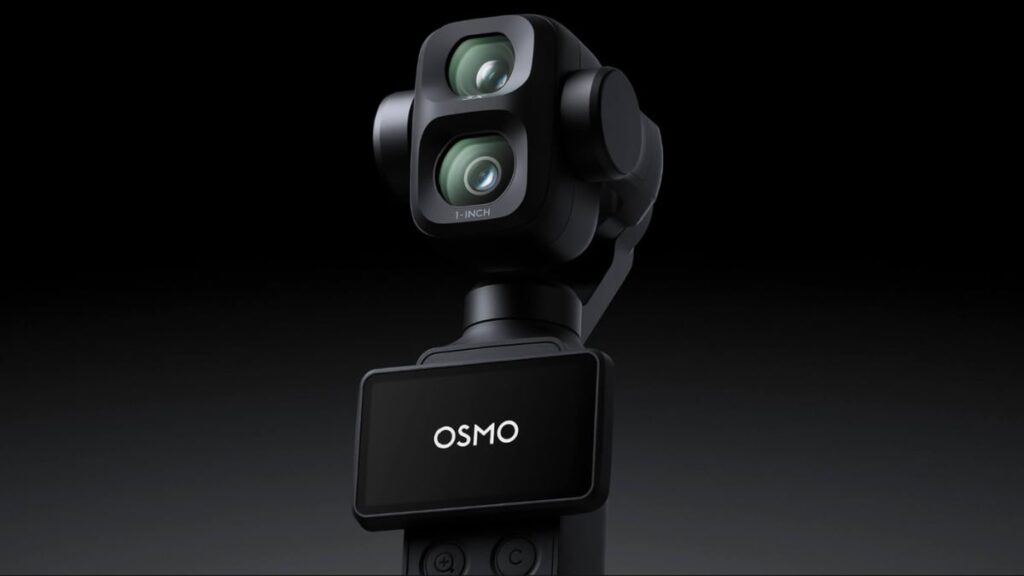
Table of Contents
A Fundamental Shift in Pocket Cinematography
For years, the DJI Osmo Pocket series has been defined by a single, high-quality lens perched atop a miniature gimbal. It was the gold standard for ‘run-and-gun’ creators who needed stability without the bulk of a full rig. However, the launch of the DJI Osmo Pocket 4P marks a departure from that singular vision. By introducing a dual-camera architecture, DJI is no longer just stabilizing a single perspective; it is attempting to bridge the gap between a handheld action camera and a professional multi-focal length setup.
- Dual-Sensor Setup: Combines a 1-inch wide-angle primary sensor with a dedicated mid-telephoto camera for versatile framing.
- Enhanced Tracking: Smart Follow 8.0 introduces more aggressive AI-driven subject locking and predictive movement.
- Professional Color Grading: D-Log 2 support allows for higher dynamic range and more flexibility in post-production.
- Competitive Pricing: Starting at CNY 3,799, positioning it directly against the Insta360 Luna Ultra.
The timing of this release is not coincidental. The recent entry of the Insta360 Luna Ultra into the ultra-compact market forced DJI to innovate beyond simple sensor upgrades. While the Pocket 3 was praised for its 1-inch sensor, the 4P addresses the one limitation vloggers always complained about: the inability to get a tight shot without digitally zooming and losing image quality.
Breaking Down the Dual-Camera Architecture
The centerpiece of the Osmo Pocket 4P is the implementation of two distinct optical paths. Most “dual-camera” devices in this category rely on a secondary low-res lens for stabilization or a wide-angle crop. DJI has instead opted for a strategic split: a 1-inch wide-angle sensor for landscapes and vlogging, and a mid-telephoto camera for portraits and detail shots.
In practical terms, this means the device can switch focal lengths without the mechanical complexity of an optical zoom lens, which would be too heavy for a 3-axis gimbal to balance effectively. The mid-telephoto lens allows creators to capture B-roll and close-ups with natural bokeh, avoiding the “fisheye” distortion common in action cameras when moving closer to a subject.
The Role of the 3-Axis Mechanical Gimbal
While software stabilization (EIS) has improved significantly, DJI continues to double down on mechanical stabilization. The 3-axis gimbal on the 4P is not just a carry-over from previous models; it has been recalibrated to handle the shift in center of gravity caused by the dual-camera housing. This ensures that whether you are using the wide or telephoto lens, the horizon remains level and the micro-jitters associated with walking are virtually eliminated.
AI Integration: Smart Follow 8.0 and Intelligent Shooting
Hardware is only half the story. The Osmo Pocket 4P integrates Smart Follow 8.0, which leverages a new neural processing unit (NPU) to improve subject recognition. Previous versions occasionally struggled with “occlusion”—when a subject disappears behind a pole or another person. Version 8.0 utilizes predictive pathing to maintain the lock on the subject’s likely trajectory, reducing the need for manual correction.
Furthermore, the AI-assisted shooting modes now include automated “cinematic’ presets. The camera can recognize the scene—be it a fast-paced city street or a quiet nature trail—and automatically adjust the gimbal’s panning speed and the sensor’s exposure targets to match a specific mood.
Post-Production Power: D-Log 2 and Color Science
For professional editors, the introduction of D-Log 2 is the most significant software update. While the original D-Log provided a flat profile for color grading, D-Log 2 expands the dynamic range, particularly in the highlights and deep shadows. This is critical for vloggers filming in high-contrast environments, such as a sunny beach or a neon-lit city at night.
When paired with the 1-inch sensor, D-Log 2 allows the Pocket 4P to behave more like a cinema camera than a gadget. It captures more raw data, giving colorists the ability to push the image in DaVinci Resolve or Adobe Premiere without introducing significant noise or artifacts in the shadows.
Technical Specifications Comparison
| Feature | Osmo Pocket 3 | Osmo Pocket 4P |
|---|---|---|
| Sensor | 1-inch (Single) | 1-inch + Mid-Telephoto |
| Stabilization | 3-Axis Mechanical | 3-Axis (Optimized) |
| Tracking | Smart Follow 6.0 | Smart Follow 8.0 |
| Color Profile | D-Log M | D-Log 2 |
Pricing, Bundles, and Market Position
DJI has launched the Pocket 4P in two primary configurations to cater to different tiers of creators. The Standard Bundle, priced at CNY 3,799 (approximately $530 USD / ₹53,200), includes the core hardware: the camera, a flash attachment, a threaded grip, a carrying case, and a USB-C cable. This is aimed at the casual creator who may already own a microphone setup.
For those looking for a comprehensive studio in their pocket, the Vlog Kit is priced at CNY 4,299 (approximately $600 USD / ₹60,200). This kit is significantly more attractive as it bundles the DJI Mic Mini 2 transmitter. Given that audio is 50% of the viewing experience, the inclusion of a dedicated, low-latency wireless mic makes this the logical choice for serious content creators.
The device is currently available in Black and Pearl White. While it has launched first in the Chinese market, global availability is expected to follow shortly, likely targeting the North American and European markets via DJI’s official storefront and Amazon.
What This Means for the Industry
The arrival of the Osmo Pocket 4P signals a shift in how “action” cameras are defined. We are moving away from the era of indestructible, wide-angle cubes (like the GoPro) and into an era of computational cinematography. By integrating a telephoto lens into a gimbal system, DJI is effectively attacking the market share of small mirrorless cameras used for vlogging.
For the user, this means fewer lens changes and less gear. You no longer need to carry a separate zoom lens to get a detailed shot of a product or a close-up of a face; you simply toggle the camera architecture. It also puts immense pressure on Insta360 to move beyond 360-degree captures and focus on traditional, high-quality linear imaging.
Frequently Asked Questions
Is the Osmo Pocket 4P waterproof?
Unlike the DJI Action series, the Osmo Pocket 4P is not natively waterproof due to the mechanical 3-axis gimbal and the dual-camera housing. It requires a specialized waterproof dive case for underwater use.
How does the 1-inch sensor benefit low-light filming?
A larger sensor can capture more photons, which reduces the amount of digital noise (grain) in dark environments. Combined with D-Log 2, the 4P can maintain detail in shadows where smaller sensors would simply produce black, muddy areas.
What is the difference between Smart Follow 8.0 and previous versions?
Smart Follow 8.0 uses improved AI object detection to better handle “temporary occlusion.” If a person walks behind a tree, the camera remembers their speed and direction, snapping back to them much faster than previous versions.
Can I use third-party microphones with the Pocket 4P?
Yes, while it is optimized for the DJI Mic Mini 2, the device supports standard 3.5mm inputs via its accessory adapters, allowing for a wide range of external audio solutions.
Does the dual-camera setup affect battery life?
The increased processing power required for the NPU and the dual-sensor management may result in a slight dip in battery life compared to the Pocket 3, though DJI has not released official runtime benchmarks for the 4P yet.
Ultimately, the DJI Osmo Pocket 4P is not just a minor iterative update. It is a hardware pivot that acknowledges the evolving needs of the creator economy—where versatility and speed are more valuable than raw megapixels. Whether it can completely displace the small mirrorless camera remains to be seen, but it has certainly closed the gap.