DJI Osmo Pocket 4 Swaps Small Sensor for 1-Inch CMOS, Directly Challenging High-End Vlogging Compacts
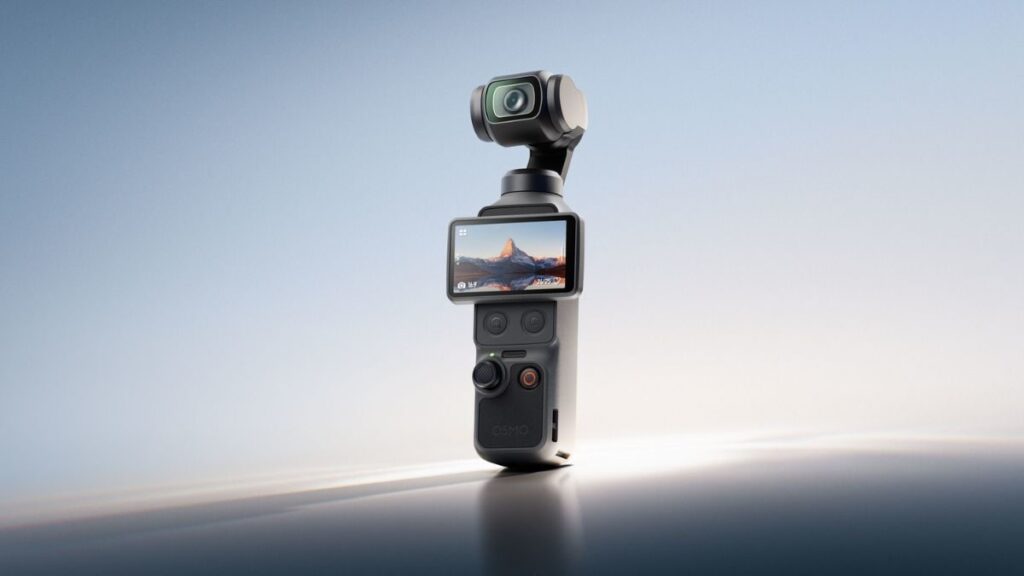
Table of Contents
A Massive Leap in Glass and Silicon
For years, the DJI Osmo Pocket series has occupied a strange niche in the camera market: the perfect tool for those who found a smartphone too limiting but a full-sized mirrorless rig too cumbersome. With the launch of the Osmo Pocket 4, DJI is no longer just iterating on a niche product; it is attempting to bridge the gap between consumer vlogging and professional cinematography.
The headline feature is the move to a 1-inch CMOS sensor. While the previous generations relied on smaller sensors that struggled in low light and suffered from limited dynamic range, the new hardware brings a level of light gathering previously reserved for the Pocket’s larger cousin, the DJI Action series, or standalone compacts like the Sony ZV-1. This shift means significantly less noise in shadow areas and a more natural, shallow depth of field that separates creators from their backgrounds without relying on artificial software blur.
Stabilization Beyond the Gimbal
While the mechanical 3-axis gimbal remains the core of the Pocket’s appeal, DJI has overhauled the stabilization algorithms to handle more aggressive movement. The new system combines physical gimbal precision with an updated electronic image stabilization (EIS) layer, which helps eliminate the “micro-jitters” that occasionally plagued the Pocket 3 during fast walking or jogging sequences.
Beyond the hardware, the AI tracking has been refined. The “ActiveTrack” system is now more capable of regaining a subject after a momentary obstruction—such as a person walking in front of the lens—reducing the number of missed shots during candid street filming. This is paired with a more intuitive interface on the rotating screen, which now supports faster mode switching for those jumping between cinematic slow-motion and standard 4K recording.
The Creator Ecosystem and Audio
DJI is leaning heavily into the “combo” strategy with this release. The Standard Combo, priced at EUR 499 (approximately Rs. 54,600), provides the core camera and charging cable. However, the Creator Combo (EUR 619 / approx. Rs. 67,700) reveals DJI’s actual intent for the device. By bundling the new DJI Mic 3 Transmitter, a fill light, and a wide-angle lens, DJI is positioning the Pocket 4 as a complete production studio that fits in a jacket pocket.
The inclusion of the DJI Mic 3 is particularly noteworthy. Audio has always been the Achilles’ heel of the Pocket series, and the tighter integration with the Mic 3 system allows for professional-grade gain control and noise cancellation directly within the camera’s ecosystem, removing the need for external recorders or cumbersome adapters in the field.
Market Positioning
The Pocket 4 arrives at a time when smartphone manufacturers are pushing “cinematic modes” via computational photography. By sticking to physical hardware—a larger sensor and a mechanical gimbal—DJI is betting that creators still value optical truth over AI-generated smoothness. The device now competes not just with other vlogging cameras, but with entry-level mirrorless setups for those who prioritize speed of deployment over lens versatility.


