DJI Osmo Pocket 4 Swaps Sensor for 1-Inch CMOS in Bid to Dominate Vlogging Market
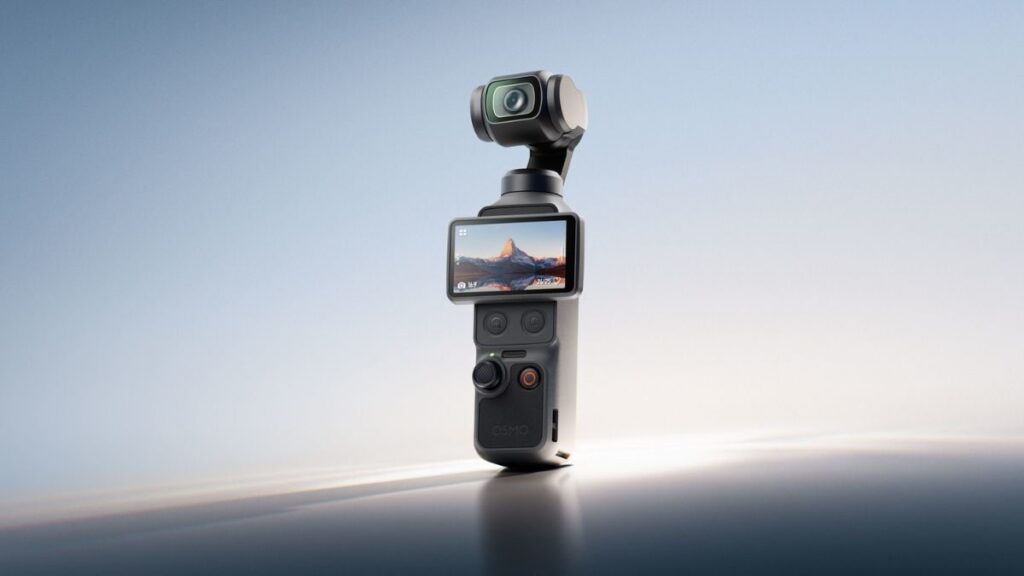
Table of Contents
The Hardware Leap: A 1-Inch Sensor in a Pocket Form Factor
DJI has officially expanded its compact stabilization lineup with the release of the Osmo Pocket 4. While the exterior remains largely consistent with the Pocket 3’s ergonomic design, the internal shift is significant. The centerpiece of the new hardware is the integration of a 1-inch CMOS sensor, a move that pushes the device further away from ‘action cam’ territory and closer to professional compact cinema tools.
The jump to a larger sensor is a direct response to the growing demand for better low-light performance among creators. In previous iterations, noise became a primary issue as soon as the sun set or the indoor lighting dimmed. By increasing the sensor size, DJI is promising a wider dynamic range and a more natural bokeh effect, reducing the reliance on software-simulated background blur that often plagued earlier models.
Accompanying the sensor is a refined 3-axis mechanical gimbal. While the Pocket 3 was already praised for its steadiness, the Pocket 4 introduces updated algorithms to handle high-velocity movements more fluidly, effectively bridging the gap between a handheld gimbal and the electronic stabilization found in high-end smartphones.
The Ecosystem Play: Enter the DJI Mic 3
Hardware is only half the story. The Osmo Pocket 4 launch is strategically tied to the introduction of the DJI Mic 3 Transmitter. Audio has historically been the Achilles’ heel of compact vlogging cameras, often requiring cumbersome external recorders or fragile cables. By bundling the Mic 3 into the Creator Combo, DJI is attempting to create a closed-loop ecosystem where the camera and audio source communicate with zero latency and minimal setup.
The Creator Combo, priced at EUR 619, is clearly the intended purchase for the target demographic. Beyond the microphone, the bundle includes a dedicated fill light and a wide-angle lens attachment, acknowledging that while the sensor is better, the fixed focal length of the Pocket series can still be restrictive for wide architectural shots or group vlogs.
AI Tracking and the ‘Invisible’ Operator
Beyond the optics, DJI is leaning heavily into its AI-powered tracking. The Pocket 4 introduces a more aggressive version of ActiveTrack, designed to maintain subject lock even during rapid occlusions—such as when a vlogger passes behind a pole or another person. This is intended to make the device feel like a standalone robotic operator, allowing creators to film themselves without a dedicated camera person.
The software integration also focuses on ‘flexible shooting options,’ which likely refers to the improved intuitive interface on the rotatable screen. This screen allows for rapid switching between horizontal and vertical orientations, a necessity for creators who must optimize content for both YouTube and TikTok simultaneously.
Pricing and Market Positioning
The entry price point for the Standard Combo is set at EUR 499 (approx. Rs. 54,600). This positions the Pocket 4 in a precarious but profitable spot: it is significantly more expensive than a standard action camera like the GoPro Hero series, but cheaper than a mirrorless setup like the Sony ZV-1. DJI is betting that creators will pay a premium for the convenience of a built-in gimbal and a sensor that can actually compete in low light.
With the Standard Combo and the Creator Combo (EUR 619 / approx. Rs. 67,700) hitting the European market first, the industry will be watching to see if the 1-inch sensor is enough to pull users away from the increasingly capable video modes of the iPhone 15 Pro and Samsung S24 Ultra.


