DJI Osmo Pocket 4 Shifts Toward Professionalism With 1-Inch Sensor and Mic 3 Integration
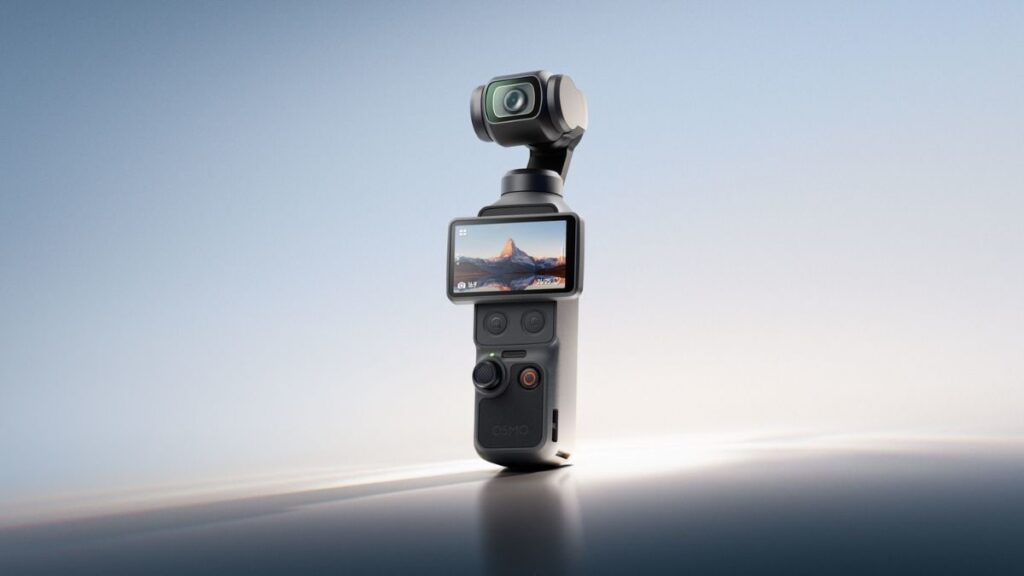
Table of Contents
The pursuit of the perfect vlogging frame
DJI has officially expanded its handheld ecosystem with the launch of the Osmo Pocket 4. On the surface, it retains the iconic “stick-and-gimbal” form factor that defined its predecessors, but under the hood, the device represents a significant pivot toward the prosumer market. The most critical update is the move to a 1-inch CMOS sensor, a hardware jump that fundamentally alters how the camera handles light and dynamic range.
For years, the Pocket series struggled in low-light environments—a common trade-off for the small sensor sizes required to keep the device pocketable. By integrating a larger 1-inch sensor, DJI is directly challenging the dominance of high-end smartphones and dedicated vlogging cameras like the Sony ZV series. This change isn’t just about resolution; it’s about reducing noise in dim settings and providing a more natural bokeh that doesn’t rely on artificial software blurring.
Stabilization and the AI tracking evolution
Beyond the sensor, DJI has refined the mechanical gimbal system. While the Pocket 3 was already lauded for its smoothness, the Pocket 4 introduces updated algorithms to handle more aggressive movements, reducing the “micro-jitters” often seen during fast walking or sudden pivots. This hardware stabilization is paired with a new iteration of DJI’s AI-powered tracking. The camera can now lock onto subjects with higher precision, adapting to occlusions more effectively—meaning if a subject momentarily passes behind a pillar, the gimbal is more likely to snap back to them instantly.
This focus on autonomy makes the Pocket 4 less of a camera and more of a robotic camera assistant. For solo creators who don’t have a dedicated camera operator, the improved tracking removes a significant amount of the friction associated with framing shots while moving.
The Creator Combo and the Mic 3 ecosystem
Audio has always been the Achilles’ heel of compact cameras. DJI is attempting to solve this by bundling the new Osmo Pocket 4 Creator Combo with the DJI Mic 3 Transmitter. The Mic 3 represents a step up in wireless audio fidelity and connectivity, allowing for a seamless, plug-and-play experience that bypasses the need for external recorders or cumbersome cabling.
The Creator Combo also includes a fill light, a wide-angle lens for expansive landscapes, and the Osmo Mini tripod. By packaging these together, DJI is signaling that the Pocket 4 is intended to be a complete production kit rather than just a casual accessory. The inclusion of the wide-angle lens is particularly noteworthy, as it allows creators to maintain a natural perspective when filming themselves at arm’s length without the distorted “fish-eye” effect common in smaller lenses.
Market positioning and pricing
In Europe, the pricing reflects the hardware upgrades. The Standard Combo enters the market at EUR 499 (approximately Rs. 54,600), while the comprehensive Creator Combo is priced at EUR 619 (approximately Rs. 67,700).
At this price point, DJI is playing a delicate game. They are targeting a gap between the casual smartphone user and the professional cinematographer. The Pocket 4 doesn’t aim to replace a cinema rig, but it seeks to make the “B-roll” and vlogging process significantly more efficient. For those who have resisted the upgrade from the Pocket 3, the 1-inch sensor is likely the primary catalyst for switching, as it offers a tangible leap in image quality that software updates alone cannot achieve.


