Damian McCarthy’s ‘Oddity’ Proves That Low-Budget Horror Still Hits Hardest
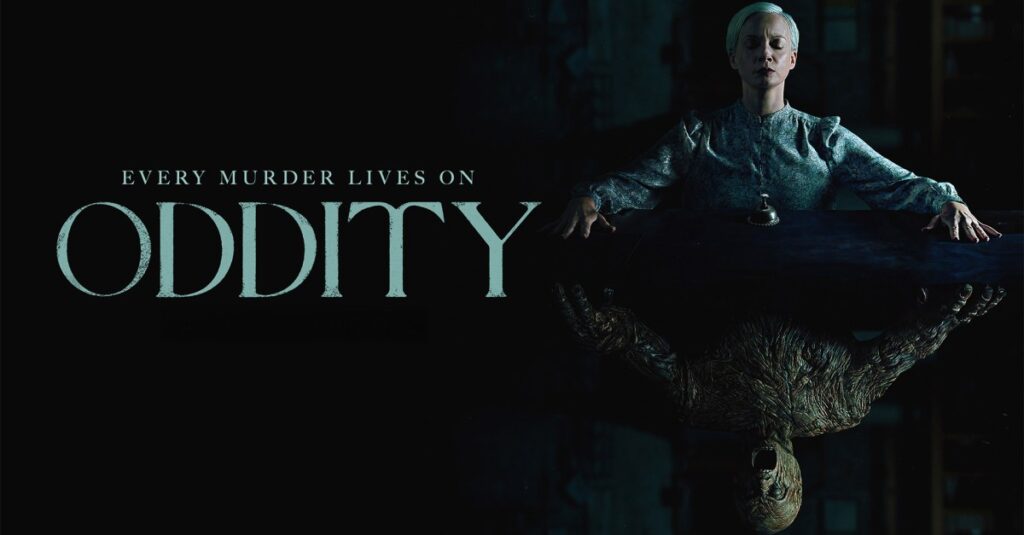
Table of Contents
The Art of the Low-Budget Scare
With the recent theatrical success of Hokum, director Damian McCarthy has stepped into a spotlight that usually eludes indie horror filmmakers. While Hokum—a Kubrick-inspired haunted hotel flick starring Adam Scott—has been outperforming box office expectations, those who enjoyed its atmospheric dread should look backward to McCarthy’s previous effort, Oddity.
If Hokum is a polished exercise in psychological tension, Oddity is its grittier, more visceral predecessor. The two films share a creative DNA: they both utilize the isolation of the Irish countryside, lean heavily into the occult, and explore the dynamics of power and victimization through a supernatural lens. But where Hokum operated on a modest $5 million budget, Oddity was crafted with an astonishingly small sum—some reports suggest as little as $750,000.
The result is a film that doesn’t rely on CGI spectacles or sprawling sets to unsettle its audience. Instead, McCarthy focuses on the oppressive nature of silence and the terrifying potential of a single, stationary object.
The Terror of the Wooden Golem
The centerpiece of the film is a wooden golem, a cursed artifact that serves as the catalyst for the movie’s unfolding horror. In an era where movie monsters often lose their impact through over-exposure or poor digital rendering, the golem in Oddity remains genuinely disturbing. Its design is a nightmare of intricately carved wrinkles, hollow eyes, and a mouth frozen in a permanent, silent scream.
What makes the golem truly effective is its stillness. For much of the 98-minute runtime, the object simply sits there, staring ahead. This creates a psychological game between the director and the viewer; you are forced to watch it, waiting for a movement that rarely comes, which only heightens the tension when the film finally decides to deliver a scare.
A Narrative of Revenge and Deception
At its core, Oddity is a revenge story, though it avoids the predictable beats of the genre. The plot follows Darcy Odello, a blind psychic who is convinced that the man accused of murdering her twin sister, Dani, is actually innocent. This leads her to investigate Ted, Dani’s widower, and his new girlfriend, Yana.
The tension is built not just through the supernatural, but through the crumbling trust between characters. McCarthy expertly lulls the audience into a false sense of security, deploying jump scares that feel earned rather than cheap. Even upon a second viewing, the pacing remains tight, mirroring the feeling of being trapped in a house where the cell reception is non-existent and the exits feel distant.
Beyond the golem, the film flirts with other gruesome imagery—from the spectral appearances of Dani’s ghost to brief, shocking moments of cannibalism—but these serve as accents to the primary mood of claustrophobia. It is a remarkably efficient piece of filmmaking that prioritizes atmosphere over exposition.
For those who prefer to experience horror without spoilers, Oddity is currently available via streaming platforms including Hulu, Shudder, Kanopy, and Hoopla. It stands as a testament to the fact that a clear vision and a terrifyingly well-designed prop can be more effective than a multimillion-dollar marketing campaign.