Commodore Callback 8020: A Sailfish OS Flip Phone Betting on the Digital Detox Trend
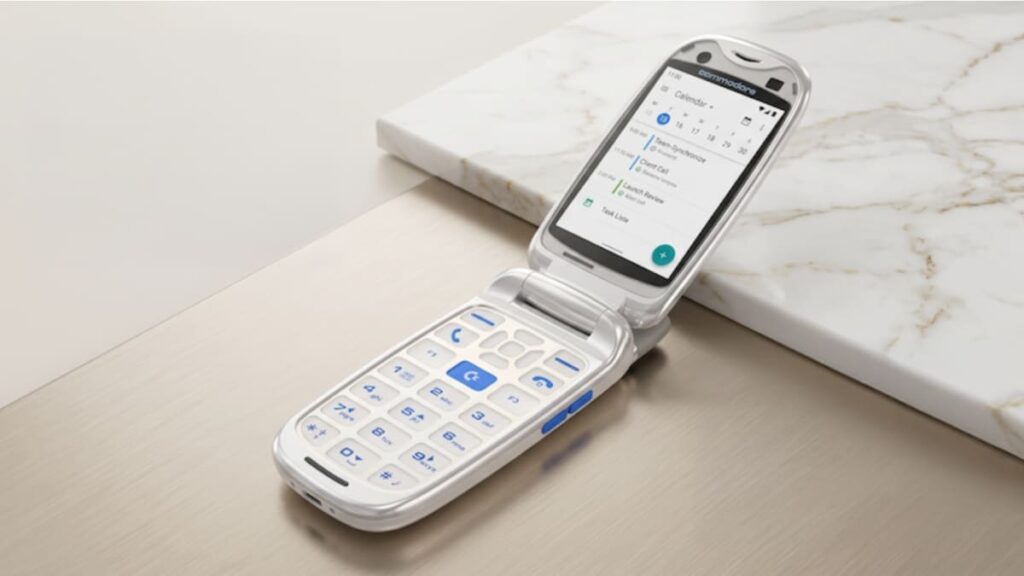
Table of Contents
The resurgence of the “dumbphone” isn’t just a fashion statement for Gen Z; it is a calculated reaction to the algorithmic exhaustion of the modern smartphone era. Entering this niche is a brand that once defined the personal computing revolution of the 1980s. The Commodore Callback 8020 arrives not as a competitor to the iPhone 15 or Galaxy S24, but as a deliberate alternative—a retro-inspired flip phone designed specifically for those seeking a “digital detox” without completely severing their connection to the grid.
- Core Value: Combines nostalgic 80s hardware aesthetics with a minimalist, non-Android OS to reduce screen addiction.
- OS Choice: Utilizes Sailfish OS, offering a gesture-based interface that deviates from the app-centric grids of iOS and Android.
- Pricing: Ranges from $499 for standard colors to $640 for the limited Founder’s Edition.
- Target Market: Tech enthusiasts, nostalgia seekers, and professionals fighting burnout.
The Return of a Computing Legend
To understand the Callback 8020, one must first acknowledge the weight of the Commodore name. Founded by Jack Tramiel, Commodore International was the catalyst for the home computer boom, with the Commodore 64 remaining one of the best-selling single computer models of all time. However, the brand’s history is also a cautionary tale of market volatility, leading to its eventual cease of manufacturing and a failed attempt to enter the Android market in 2015 through licensed partnerships.
The Callback 8020 represents a pivot in strategy. Rather than attempting to out-spec Samsung or Apple, the new venture leans into brand equity and lifestyle positioning. By framing the device as a tool for digital wellness, Commodore is tapping into a growing market of users who feel overwhelmed by the “attention economy.” This is no longer about who has the fastest processor, but who can offer the most intentional user experience.
Sailfish OS: The Technical Pivot
The most significant technical decision in the Callback 8020 is the abandonment of Android in favor of Sailfish OS. For the uninitiated, Sailfish OS is a Linux-based operating system known for its unique gesture-centric navigation and privacy-focused architecture. Unlike Android, which is deeply integrated into the Google ecosystem, Sailfish provides a more streamlined, less intrusive way of interacting with a device.
By utilizing Sailfish, Commodore avoids the “app trap.” Most modern smartphones are designed to keep users engaged through push notifications and infinite scrolls. Sailfish OS, by contrast, prioritizes utility. While it supports some Android app compatibility through a compatibility layer, the core experience is designed to be lean. This technical choice is essential for the “digital detox” claim to hold water; a flip phone running a full version of Android is simply a small smartphone, but a flip phone running Sailfish is a different tool entirely.
Comparison: Sailfish OS vs. Traditional Mobile OS
| Feature | Sailfish OS (Callback 8020) | Android / iOS |
|---|---|---|
| Primary Interaction | Gestures & Menus | App Icons & Touch-Grid |
| Engagement Model | Utility-First | Attention-First (Notifications) |
| Privacy | High (Less Data Harvesting) | Variable (High Ecosystem Integration) |
| Hardware Focus | Tactile/Physical Keys | Full-Screen Glass |
Pricing Tiers and Aesthetic Options
The pricing of the Callback 8020 suggests it is positioned as a “boutique” device rather than a mass-market budget phone. Starting at $499 for the standard models in Beige, White, and Silver, the device targets a demographic willing to pay a premium for design and philosophy.
The color options are a direct nod to the 1980s computing era. The “Beige” variant, in particular, evokes the plastic casings of early PCs and C64s. For those seeking something more distinct, the translucent Blue variant is available for $549.99, reminiscent of the late-90s trend of clear electronics. The top-tier Founder’s Edition, finished in gold, reaches $640, moving the device from a utility tool to a collector’s item.
The Psychology of the Digital Detox Movement
The “Digital Detox” isn’t just a marketing buzzword; it’s a response to documented trends in mental health. According to various digital wellness studies, the average user checks their phone over 50 times a day, often driven by dopamine loops created by social media notifications. The physical act of “flipping” a phone closed provides a psychological boundary that a touchscreen cannot offer.
By restricting the screen real estate and utilizing an OS that doesn’t prioritize addictive loops, the Callback 8020 encourages intentionality. Users are more likely to use the device for its primary purpose—communication—rather than as a portal for endless consumption. This movement is particularly strong among “burnt-out” professionals and parents who want to model healthier tech habits for their children.
What This Means for the Consumer
For the average consumer, the Commodore Callback 8020 is not a primary device replacement. It is a secondary device. The most likely use case is the “weekend phone”—a device used during vacations or weekends to stay reachable for emergencies while eliminating the temptation of Instagram, X (formerly Twitter), or work emails.
However, for the minimalist, it offers a path toward a “single-device’ life. If a user can migrate their essential services (banking, maps, messaging) to a more restricted environment, they regain hours of reclaimed time. The risk, of course, is the “ecosystem lock-in.” Those deeply embedded in Apple’s iMessage or Google’s Workspace may find the transition to Sailfish OS jarring or impractical.
Practical Implications for Different User Groups
- The Tech Enthusiast: A way to experiment with an alternative OS (Sailfish) and own a piece of brand history.
- The Overwhelmed Professional: A tool to separate “work life” from “home life” by leaving the smartphone in the office.
- The Retro Collector: A physical manifestation of 80s nostalgia that actually functions in a 5G world.
Analysis: Market Viability and Challenges
Commodore faces a steep climb. The luxury “dumbphone” market is small, and the price point of $499+ is aggressive for a device with intentionally limited features. To succeed, Commodore must prove that the Callback 8020 is more than just a nostalgic novelty. They are selling a feeling—the feeling of freedom from the screen—rather than a set of specifications.
The success of the device will likely depend on the stability of the Sailfish OS implementation and the brand’s ability to foster a community around “mindful tech.” If they can position the phone as a status symbol for the “unplugged” elite, they may find a sustainable niche. If it’s viewed merely as an overpriced flip phone, it may mirror the failures of the 2015 Android attempt.
Frequently Asked Questions
Can the Commodore Callback 8020 run WhatsApp or Telegram?
While Sailfish OS has some Android app compatibility, it is not seamless. Basic messaging apps may work, but the experience is optimized for the native OS. Users should check the specific Sailfish app store for compatibility before purchasing.
Is this a 4G or 5G device?
Commodore has positioned the device for modern connectivity, though specific band support varies by region. It is designed to handle contemporary cellular networks to ensure that “detoxing” doesn’t mean losing essential connectivity.
When can I get the Commodore Callback 8020?
Pre-orders are scheduled to begin on June 30, with shipping expected to commence by the end of the current calendar year.
Why is it so expensive compared to other flip phones?
The price reflects the niche nature of Sailfish OS, the retro-premium materials used in the build, and the brand licensing associated with the Commodore name. It is marketed as a lifestyle product rather than a budget utility phone.
Does it have a camera?
Yes, the device includes basic camera functionality, though it is designed for utility snapshots rather than high-end mobile photography, aligning with the digital detox philosophy.
Final Reporting Notes
The Commodore Callback 8020 is a bold experiment in reverse-innovation. In an era where every company is racing toward more AI integration and larger screens, Commodore is betting that a segment of the population wants to go backward. Whether the world is ready to pay $500 to use a phone that does less remains to be seen, but the Callback 8020 is a fascinating marker of our current cultural struggle with technology.