Columbia Researchers Achieve Precision ‘Base Editing’ in Human Embryos, Sparking New Genetic Debate
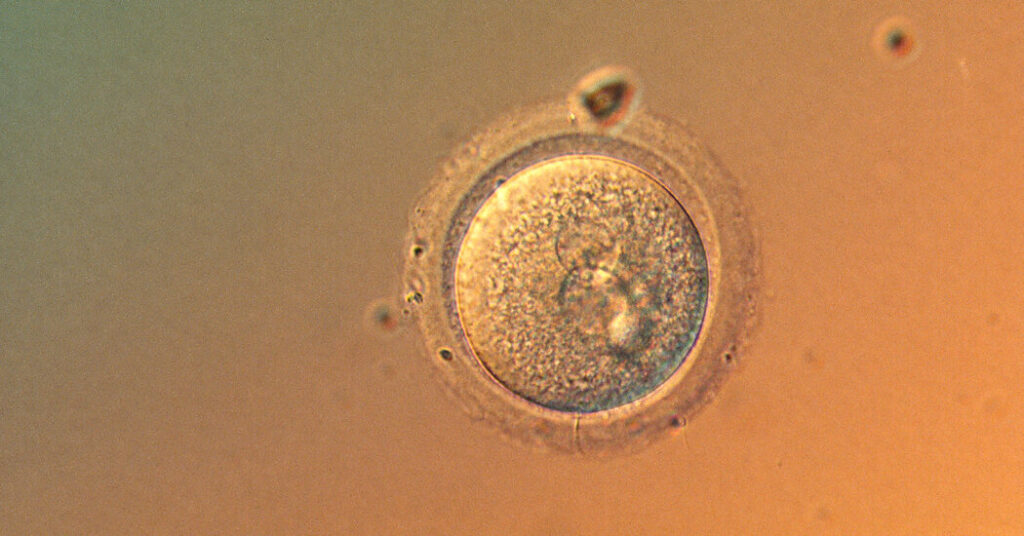
Table of Contents
Moving Beyond the ‘Molecular Scissors’
For years, the conversation around human gene editing has been dominated by CRISPR-Cas9, a tool often described as molecular scissors. While revolutionary, CRISPR’s tendency to create double-stranded breaks in DNA has frequently led to unintended mutations—’off-target effects’ that make the prospect of clinical use in human embryos dangerously unpredictable. However, a new study from Columbia University suggests a shift toward a far more surgical approach.
Geneticist Dieter Egli and his team have successfully utilized base editing to modify the DNA of early-stage human embryos. Unlike traditional CRISPR, which cuts through the DNA helix, base editing allows scientists to chemically convert one genetic letter (nucleotide) into another without breaking the DNA backbone. The result is a level of precision that significantly reduces the genomic instability typically associated with embryonic editing.
The Technical Shift: Chemical Conversion over Physical Cutting
The primary breakthrough lies in the mechanism of the edit. In standard CRISPR-Cas9 applications, the cell’s own repair machinery must stitch the DNA back together after a cut, a process that is prone to errors and random insertions or deletions. Base editing bypasses this volatile repair phase. By using a modified protein that avoids the double-strand break, Egli’s team was able to meticulously replace individual genetic letters within the sequence.
This capability moves the needle from ‘disrupting’ a gene to ‘correcting’ one. In a clinical context, this could theoretically allow for the removal of single-point mutations—the kind responsible for devastating hereditary diseases like cystic fibrosis or sickle cell anemia—before an embryo is even implanted.
The Ethical Friction of ‘Designer’ Traits
While the technical achievement is significant, the implications have reignited a fierce debate over the boundary between therapeutic intervention and enhancement. The ability to edit an embryo with such accuracy doesn’t just offer a path to curing disease; it potentially opens the door to selecting for non-medical traits, a prospect that ethicists have long warned is a slide toward a new era of eugenics.
Dieter Egli has remained cautious about the immediate application of this work. Speaking on the necessity of a societal consensus, Egli noted, “As a scientist, you can provide the data for discussion, but then essentially there you stop and let others take over.” He emphasized that the research is not a signal for immediate clinical adoption, stating explicitly, “We’re not saying this is going to be used tomorrow in the clinics.”
Unresolved Risks and the Path to Peer Review
Despite the precision of base editing, the biological landscape of a developing embryo is incredibly complex. The research team acknowledges that critical questions regarding long-term side effects and systemic biological responses remain unanswered. Even a ‘precise’ edit can have unforeseen consequences on how a gene is expressed as the embryo grows and differentiates into various cell types.
The study has been posted online and is currently undergoing the rigorous process of peer review before formal publication in a scientific journal. This window of review is critical, as the scientific community will be looking for data on the frequency of “bystander edits”—where letters adjacent to the target site are accidentally changed—and the overall viability of the edited embryos.
As the technology matures, the tension between the drive to eradicate genetic suffering and the fear of engineered humans remains. Columbia’s latest findings prove that the technical barriers are falling, leaving the ethical and regulatory frameworks to struggle of catching up.