Colossal Biosciences Successfully Grows Chickens in 3D-Printed Artificial Shells
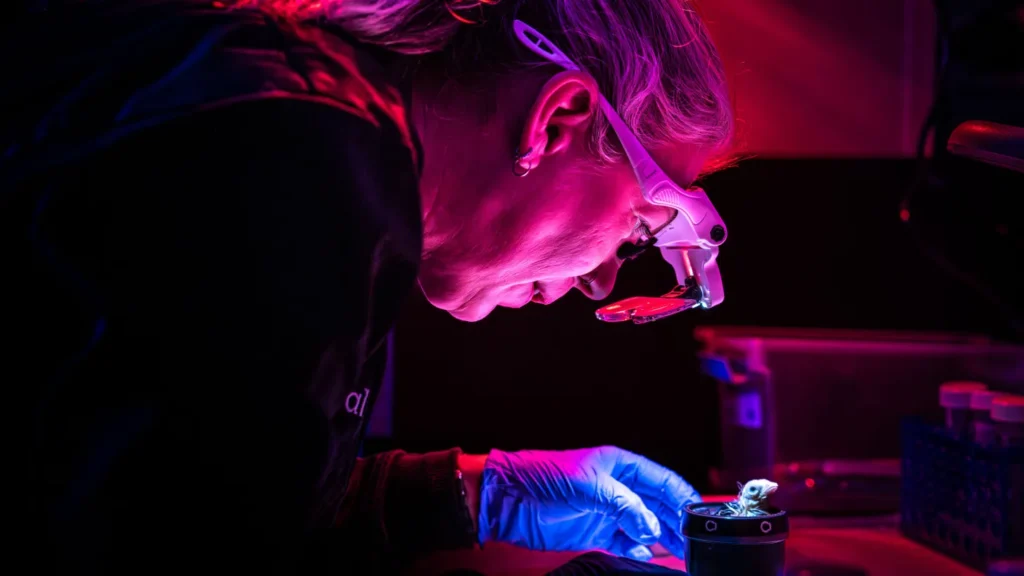
Table of Contents
A New Kind of Hatchery
Colossal Biosciences, the biotech firm making waves with its ambitious plans to bring back the woolly mammoth, has shifted its focus toward the avian world with a significant technical milestone. The company announced it has successfully grown chickens inside 3D-printed artificial eggshells, a move that signals a shift toward creating synthetic environments for embryonic development.
The breakthrough is less about the chickens themselves and more about the architecture of the shell. Traditional avian conservation often relies on fragile natural eggs, but Colossal is betting that a precision-engineered, synthetic alternative can provide a more controlled environment for growth, potentially reducing the failure rates associated with endangered bird species.
Engineering the Perfect Shell
The challenge of mimicking a biological egg is immense. A real shell isn’t just a container; it’s a semi-permeable membrane that regulates gas exchange and protects the embryo from external contaminants while allowing it to breathe. Colossal’s approach uses 3D printing to replicate this complex geometry and porosity.
By utilizing advanced materials that can mimic the calcium carbonate structure of a natural egg, the team has created a vessel capable of sustaining a living embryo through to hatching. While the current success involves domestic chickens—a standard baseline for avian research—the underlying tech is designed for much larger and more complex targets.
The Shadow of the Giant Moa
The most provocative application of this technology isn’t conservation, but de-extinction. Colossal is openly eyeing the giant moa, a massive, flightless bird that once dominated the landscapes of New Zealand. Standing up to 12 feet tall, the moa was an ecological powerhouse that vanished centuries ago.
The moa presents a unique biological hurdle: its eggs. The bird laid eggs with volumes reaching up to four liters, far exceeding the capacity of any living bird today. There is simply no living surrogate species capable of hosting a moa embryo. A 3D-printed shell, however, can be scaled to any size. By printing a custom, four-liter synthetic egg, Colossal believes it can bypass the need for a biological surrogate entirely, creating a bespoke incubator for a species that hasn’t walked the earth in hundreds of years.
Beyond De-Extinction
While the idea of a 12-foot bird is the “headline” grabber, the immediate utility of this tech lies in the precarious state of modern biodiversity. Many critically endangered bird species suffer from low hatching rates in the wild due to environmental stressors or shell deformities. A synthetic shell could allow biologists to move embryos into a laboratory setting where temperature, humidity, and oxygen levels are perfectly calibrated, significantly increasing the odds of survival.
This development also moves the needle closer to the concept of artificial wombs. By proving that a complex vertebrate can develop fully within a synthetic enclosure, Colossal is providing a proof-of-concept for external gestation that could eventually be applied to other species, including mammals.
The company has not yet released a full timeline for when they expect to attempt a moa revival, but the successful hatching of chickens suggests that the mechanical hurdles of the “egg” are beginning to fall. The next challenge will be the genetic orchestration required to actually build a moa embryo to put inside those shells.