Colombia’s Presidential Race Headed to Run-off: The ‘Bukele-Style’ Outsider vs. The Leftist Establishment
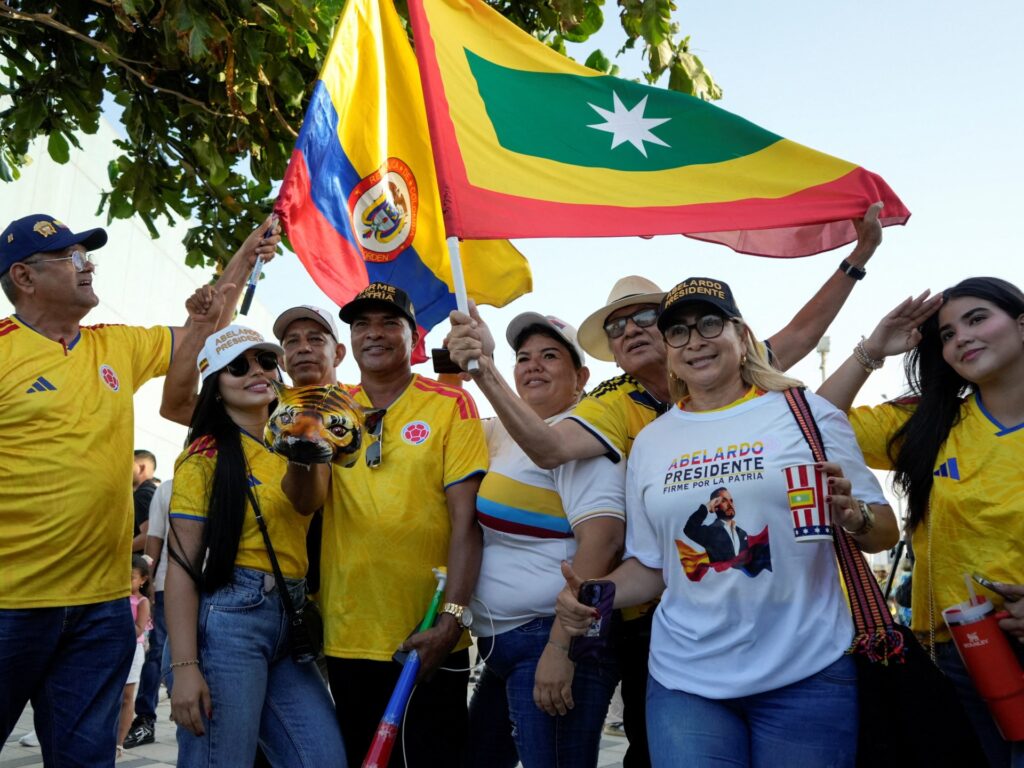
Table of Contents
A Divided Nation Heads to June 21
Colombia is bracing for a high-stakes presidential run-off after Sunday’s first-round vote failed to produce a majority winner, setting up a stark ideological clash between far-right outsider Abelardo de la Espriella and left-wing Senator Ivan Cepeda. With 99 percent of ballots tallied, de la Espriella has claimed a narrow lead with 43 percent of the vote, while Cepeda trails closely with 40 percent.
The results represent a significant shift in momentum. Until the final weeks of the campaign, Cepeda had consistently led public opinion polls, including a May 24 survey by the National Consulting Centre (CNC) that placed him at 33 percent against de la Espriella’s 30.9 percent. However, the actual turnout—totaling over 23.6 million voters—revealed a deeper appetite for de la Espriella’s hardline approach to security.
The ‘Tiger’ and the Bukele Blueprint
Abelardo de la Espriella, a lawyer and businessman who has never held elected office, has modeled his campaign on the “outsider” success of Argentinian President Javier Milei and the security tactics of El Salvador’s Nayib Bukele. Nicknamed “The Tiger,” de la Espriella has centered his platform on a scorched-earth policy toward crime and narcotics trafficking.
His proposal is aggressive: the construction of 10 “megaprisons” and a military-led campaign to disrupt drug trafficking that includes shooting down planes and sinking boats. While these tactics have drawn condemnation from human rights groups as potential extrajudicial killings, they have resonated with a populace exhausted by decades of internal conflict. “The only peace process I believe in is one imposed by the force of arms and the laws of the republic,” de la Espriella told the Associated Press recently.
The Legacy of ‘Total Peace’
Opposing him is Ivan Cepeda, a veteran of the Colombian Senate since 2014 and a representative of the Historic Pact party. Cepeda is running as the ideological successor to outgoing President Gustavo Petro, the first left-wing leader in Colombia’s history. Cepeda’s campaign is anchored in Petro’s “Total Peace” policy, which prioritizes negotiated settlements with rebel groups and criminal networks over military escalation.
Cepeda’s political identity is deeply tied to Colombia’s history of political violence; his own father, also a senator, was assassinated in 1994. This personal history has fueled his career-long opposition to right-wing paramilitaries, most notably in his legal battles with former President Alvaro Uribe. While the Supreme Court’s handling of the Uribe-Cepeda disputes remained a rollercoaster of convictions and overturned verdicts, the friction between the two men mirrors the broader societal fracture in Colombia.
The Road to the Run-off
The second round, scheduled for June 21, presents a challenging climb for Cepeda. The failure of right-wing Senator Paloma Valencia to make the run-off is likely to result in a consolidation of the right-wing vote behind de la Espriella. With more than 10.3 million ballots already in his favor, de la Espriella enters the final stretch with significant mathematical momentum.
The election also highlighted a notable level of voter disillusionment, with over 650,000 ballots returning as either blank or null. If de la Espriella secures the presidency, it would further cement a regional trend across Latin America, where countries like Chile, Honduras, and Bolivia have recently pivoted from left-wing administrations toward right-wing contenders.
In a social media post following the tally, de la Espriella framed the coming weeks as a battle against “tyranny and absolutism,” promising his supporters that in 21 days, Colombia would “make history.”