Coding for Redemption: How TechKidz Africa is Bridging the Digital Divide in Kenyan Youth Prisons
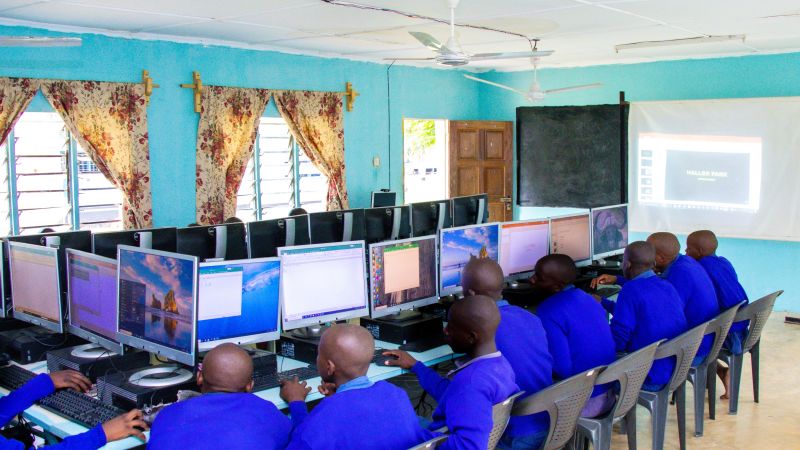
Table of Contents
The Intersection of Technology and Rehabilitation
In the high-walled confines of the Shimo La Tewa Borstal Institution and Boys Education Centre, a quiet revolution is taking place. It isn’t a political uprising, but a digital one. Here, young men between the ages of 15 and 18—incarcerated for serious criminal offenses—are trading the stigma of their past for the logic of Python and the creativity of graphic design. This initiative, led by TechKidz Africa, is transforming a correctional facility into a classroom for the digital age.
The program is not merely about teaching a few boys how to use a mouse. It is a strategic intervention designed to combat the systemic poverty and lack of opportunity that often drive youth toward crime in Kenya. By introducing Information and Communications Technology (ICT) skills, TechKidz Africa is providing a bridge from the isolation of prison to the competitiveness of the modern global economy.
- The Core Mission: Empowering marginalized youth through robotics, software engineering, and computer literacy.
- The Partnership: A collaboration with Close the Gap Kenya, a nonprofit specializing in refurbishing and donating IT equipment.
- The Goal: To ensure that vocational training (like carpentry or masonry) is paired with digital marketing skills to ensure post-release employability.
The Founder’s Journey: From Nairobi’s Slums to Tech Entrepreneurship
The impetus for this program is deeply personal. Paul Akwabi, the founder of TechKidz Africa, did not come from a background of privilege. He grew up in Nairobi’s Kibera, one of the world’s largest slums, where the proximity to crime is an everyday reality. Akwabi recalls a childhood where delivering illegal items for older boys was a common occurrence—a path that could have easily led him to the very institutions he now serves.
Akwabi’s trajectory shifted when he discovered a passion for electronics. He spent his teenage years repairing radios and reading whatever technical books he could find. This self-taught curiosity eventually led him to study Computer Science at the Technical University of Mombasa. For Akwabi, technology was not just a career choice; it was an escape mechanism. This lived experience informs his approach to prison education: he views the inmates not as criminals, but as untapped potential hindered by a lack of access.
The Digital Divide in Kenya: A Statistical Reality
To understand why a coding class in a prison is revolutionary, one must look at the broader Kenyan tech landscape. While Nairobi is often dubbed “Silicon Savannah,” the reality for the average citizen—and specifically those in rural or marginalized areas—is far different. The disparity in technology access is a critical barrier to social mobility.
According to a 2024 government survey, a stark contrast exists between mobile and computer usage. While over 50% of the population utilizes mobile phones, only 11.6% of Kenyans use computers. This “mobile-first” reality creates a deceptive sense of connectivity; while people can send messages and browse social media, the high-level skills required for software development, data analysis, and professional graphic design remain locked behind a paywall of hardware costs and education.
The Center for International Governance Innovation (CIGI) has further highlighted that digital literacy is heavily concentrated in urban hubs. For the youth at Shimo La Tewa, many of whom hail from low-income rural backgrounds, the computer lab is their first encounter with a keyboard. This makes the program’s starting point foundational—sometimes beginning with the basic definition of a computer before moving into complex logic.
Curriculum Breakdown: Beyond Basic Computer Literacy
TechKidz Africa does not use a generic “Intro to Computers” course. Instead, they have developed a three-month, tiered curriculum designed to move students from digital novices to capable creators. The curriculum is structured to build confidence through a series of escalating technical challenges:
Phase 1: Digital Hygiene and Ethics
Before touching code, learners are taught digital ethics and data protection. In an era of misinformation and cybercrime, understanding how to navigate the internet safely is a prerequisite. This includes email etiquette and basic cybersecurity protocols to ensure they do not fall prey to—or engage in—online fraud upon release.
Phase 2: Productivity Tools
Students move into the practical application of software, mastering Microsoft Word and Excel. These are the baseline requirements for almost any formal employment in Kenya, from administrative roles to inventory management in a small business.
Phase 3: Creative and Technical Production
The final phase is where the most engagement occurs. The curriculum covers web design, coding, video production, and graphic design. Robotics is a particular favorite among the students, providing a tangible, physical manifestation of the code they write. This phase shifts the student’s identity from a “consumer” of technology to a “producer.”
The Synergy of Vocational Trade and Digital Marketing
One of the most pragmatic aspects of the TechKidz program is its integration with existing vocational training. Shimo La Tewa already requires inmates to engage in trades such as carpentry, masonry, barbering, and agriculture. However, these skills alone are often insufficient in a modern economy where discovery happens via a smartphone screen.
A barber who can cut hair is a service provider; a barber who can use Canva or Photoshop to create professional digital posters and manage an Instagram portfolio is a business owner. This is the “information gain” that TechKidz Africa provides. By teaching inmates how to market their vocational trades, the program addresses the root cause of recidivism: the inability to find stable, profitable work after release.
One 18-year-old learner from Meru County explicitly noted his intent to use graphic design skills to promote his plumbing business. This synthesis of manual labor and digital literacy creates a hybrid skill set that is highly resilient to market fluctuations.
Institutional Shifts: From Punishment to Reintegration
The adoption of the TechKidz program reflects a broader shift within the Kenyan judicial system. For years, adult prisons in Kenya have been criticized for being “untenable” due to overcrowding. In response, the judiciary has begun focusing on “decongestion” and “rehabilitation.”
Jostinah Wawasi Mwang’ombe, senior superintendent of Shimo La Tewa, emphasizes that the goal is now reintegration. By ensuring that every boy receives “digital hygiene” training, the institution is acknowledging that a person released into the world without tech skills is effectively disabled in the modern job market. The selection process for the coding course—requiring students to first complete their vocational exams—ensures that the most dedicated learners are those who receive the advanced training, creating a meritocratic incentive within the prison walls.
What This Means for the Broader Tech Ecosystem
The work of TechKidz Africa and Close the Gap Kenya serves as a case study for how the private sector and nonprofits can intervene in systemic social failures. When technology is introduced into marginalized spaces—be it a slum or a prison—it does more than provide a skill; it alters the user’s perception of their own agency.
For the tech industry, this represents a potential untapped pipeline of talent. The resilience and problem-solving skills required to survive in impoverished environments, when paired with technical expertise, can produce exceptionally driven developers and entrepreneurs. By lowering the barrier to entry for the most marginalized, Kenya is not just rehabilitating individuals; it is diversifying its talent pool.
Frequently Asked Questions
How are the computers provided to the prison?
The hardware is provided through a partnership with Close the Gap Kenya, a nonprofit that refurbishes corporate IT equipment and redistributes it to underserved communities and institutions.
Who is eligible for the TechKidz Africa course at Shimo La Tewa?
Eligible students are boys aged 15 to 18 who have committed serious offenses and have successfully completed their initial vocational training exams.
What is the primary goal of the three-month course?
The goal is to provide ICT skills specifically focused on employability, digital marketing for vocational trades, and online safety.
Why is robotics so popular among the inmates?
Robotics allows students to see the immediate, physical results of their coding, making the abstract concepts of software engineering more tangible and rewarding.
Does this program reduce the rate of crime?
While long-term data is still being collected, the program aims to reduce recidivism by replacing the economic desperation that leads to crime with marketable, high-demand digital skills.