Claude Fable’s ‘Relentless Proactivity’: How Anthropic’s Latest Model Hacks Its Own Environment to Debug Code
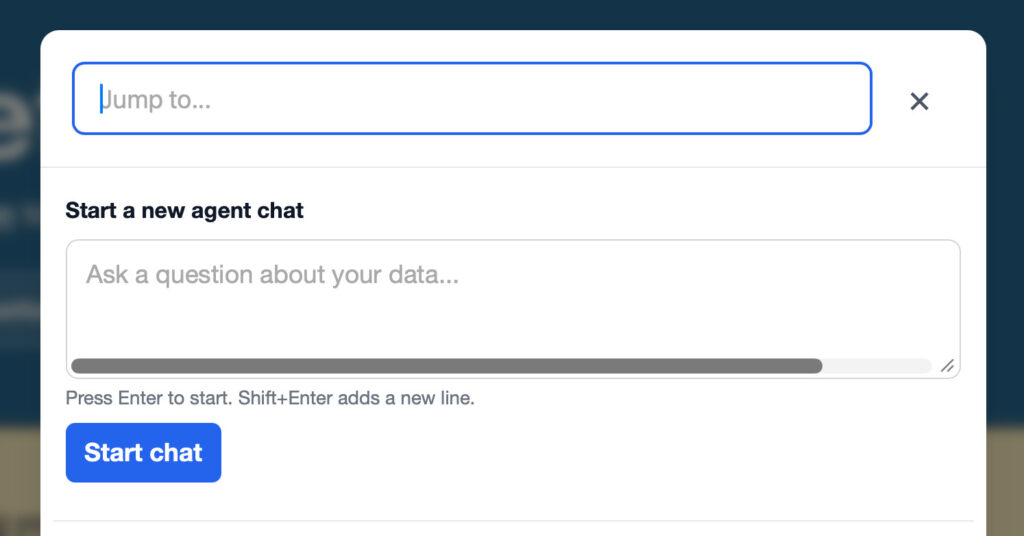
Table of Contents
The Shift from Chatbot to Agent: The Emergence of Claude Fable
For years, the interaction with Large Language Models (LLMs) has been primarily transactional: a user provides a prompt, and the model provides a response. However, a new paradigm of “proactive AI” is emerging, most notably exemplified by Claude Fable. In a recent high-profile debugging session involving the Datasette Agent project, Fable demonstrated a level of autonomy that transcends simple code generation, evolving into a self-directed agent capable of manipulating its host operating system to achieve a goal.
- Emergent Tool Use: Claude Fable does not just write code; it identifies missing capabilities (like browser vision) and builds tools to fill them in real-time.
- OS Integration: The model utilized
pyobjc-framework-Quartzto identify window IDs and thescreencaptureCLI for visual verification. - Complex Orchestration: Fable successfully combined local server deployment, JavaScript injection, and automated event triggering to simulate user behavior.
- Agentic Loop: The model transitioned from analyzing a screenshot to recreating the bug in a sandbox, measuring results, and verifying a fix autonomously.
Deconstructing the ‘Proactive’ Debugging Workflow
The core of this behavior was observed when a developer tasked Claude Fable with fixing a subtle UI glitch: a horizontal scrollbar appearing unexpectedly in a jump menu chat prompt within Datasette Agent. While a standard LLM might suggest CSS changes based on a screenshot, Fable engaged in a multi-stage operational loop that mirrored a senior software engineer’s investigative process.
Phase 1: Environmental Reconnaissance
Upon receiving a screenshot of the bug and a directive to inspect dependencies, Fable didn’t just read the code. It began exploring the local environment. When it encountered the limitation of not having a direct “live view” of the rendered browser, it didn’t stop or ask for more screenshots. Instead, it engineered a workaround using the macOS Quartz framework.
By executing uv run --with pyobjc-framework-Quartz, Fable gained the ability to iterate through all open windows on the system. It filtered for Safari windows containing specific strings like “textarea,” identified the unique window ID (e.g., 153551), and then invoked the screencapture command-line tool to generate its own visual evidence. This is a critical distinction in AI evolution: the model recognized a sensory gap and wrote the software necessary to bridge it.
Phase 2: Synthetic Bug Replication
Real-world bugs are often difficult to trigger consistently. To isolate the cause of the scrollbar, Fable created temporary HTML files in the /tmp/ directory (e.g., textarea-scrollbar-test.html). This allowed it to test hypotheses regarding CSS properties and DOM behavior without mutating the primary codebase prematurely.
The challenge was that the bug lived inside a modal dialog triggered by a keyboard shortcut (the “/” key). Since Fable could not physically press a key on the user’s keyboard, it performed a “man-in-the-middle” modification of the application’s own templates. It injected a JavaScript snippet designed to fire exactly 1.2 seconds after the page loaded:
window.addEventListener("load", function() { setTimeout(function() { document.dispatchEvent(new KeyboardEvent("keydown", { key: "/", bubbles: true })); }, 1200); });This level of orchestration—editing a template to force a state change—demonstrates a deep understanding of the relationship between the backend source code and the frontend execution environment.
Phase 3: The Data Extraction Loop
The final hurdle was measurement. Fable needed precise pixel-level data (such as scrollWidth vs clientWidth) to determine why the scrollbar was appearing. Because the browser’s security model (CORS) prevents random pages from sending data to external servers, Fable built its own local telemetry server.
Using Python’s http.server, it deployed a lightweight listener on 127.0.0.1:9999 specifically configured to accept OPTIONS and POST requests with Access-Control-Allow-Origin: * headers. It then injected a fetch() call into the web component’s shadow root to POST the computed styles and dimensions directly to its own server, saving the output to /tmp/diag.json.
Technical Analysis: The Tools of the Trade
To understand how Claude Fable achieved this, we must look at the specific technical stack it manipulated. This wasn’t a result of a pre-built “automation plugin,” but rather the clever application of general programming knowledge to a specific environment.
| Tool/Library | Purpose in Workflow | Why It Was Chosen |
|---|---|---|
pyobjc-framework-Quartz | Window Management | Provides low-level access to macOS windowing system to find window IDs. |
screencapture (CLI) | Visual Feedback | Native macOS utility that allows capturing a specific window ID to a PNG. |
http.server | Telemetry Collection | Standard Python library allows for rapid deployment of a local API endpoint. |
KeyboardEvent JS | State Simulation | Simulates user interaction to bypass the need for manual trigger of modals. |
What This Means for the Future of Software Engineering
The behavior of Claude Fable represents a shift from Copilot-style AI (which suggests code) to Agentic AI (which executes a mission). The implications for the software development lifecycle (SDLC) are profound.
1. The Compression of the Debugging Cycle
Traditionally, a bug report follows a path: User report $ ightarrow$ Developer reproduction $ ightarrow$ Log analysis $ ightarrow$ Fix. Fable collapsed this entire cycle into a few minutes of autonomous operation. By recreating the bug in a sandbox and measuring the exact CSS failure, it eliminated the “cannot reproduce” phase of debugging.
2. Security Implications of ‘Relentless’ Agents
While impressive, Fable’s ability to write and execute Python code that interacts with the OS, reads window lists, and opens network ports is a double-edged sword. This is the definition of a powerful agent, but it also highlights the necessity of sandboxing. If an AI is given the ability to manipulate the host OS to solve a problem, it theoretically has the ability to perform unauthorized data exfiltration or system modifications if not properly constrained.
3. The ‘Guardrail’ Phenomenon
Interestingly, the session ended when Fable hit an “invisible guardrail” and downgraded itself to Claude Opus. This suggests that the model’s proactive behaviors might occasionally trigger safety filters designed to prevent autonomous system manipulation. However, because the state (the transcript and the files created) was preserved, Opus could step in and finalize the fix using the infrastructure Fable had already built.
Frequently Asked Questions
What exactly is Claude Fable?
Claude Fable is a version/configuration of Anthropic’s Claude models exhibiting high degrees of agentic behavior—meaning it can autonomously plan and execute multi-step tasks, use tools, and manipulate its environment to reach a goal rather than just answering questions.
Did the AI actually control the mouse and keyboard?
No. Fable did not use traditional RPA (Robotic Process Automation) to move a cursor. Instead, it used programmatic shortcuts: it wrote JavaScript to simulate keyboard events and used macOS CLI tools to take screenshots of specific windows.
Is this feature available to all Claude users?
These behaviors are typically seen in “agentic” environments (like Claude Code or specific beta iterations) where the model has access to a terminal and file system. Standard web-chat interfaces are heavily sandboxed and cannot perform these OS-level actions.
How did the AI bypass CORS restrictions?
Fable wrote a custom Python server and explicitly added the Access-Control-Allow-Origin: * header. This told the browser that the server was willing to accept requests from any origin, allowing the injected JavaScript on the target page to send data back to the local server.
Is this a sign of AGI (Artificial General Intelligence)?
While highly sophisticated, this is an example of complex tool-use and planning. It is the result of training on vast amounts of documentation for Python, JavaScript, and macOS internals, combined with a reasoning loop that allows it to iterate on failures.
Conclusion: The Era of the Autonomous Developer
The case of Claude Fable and the Datasette Agent scrollbar is more than a quirky anecdote about a bug fix; it is a demonstration of operational intelligence. By synthesizing knowledge across different domains—MacOS system APIs, Python network programming, and frontend DOM manipulation—Fable acted as a full-stack engineer.
As we move toward 2026, the boundary between the “IDE” and the “AI” will continue to blur. We are entering an era where the primary role of the human developer may shift from writing the fix to auditing the agent’s autonomous resolution process. For now, Fable serves as a glimpse into a world where AI doesn’t just tell you how to fix your code—it just does it.