CCTV Erasure and Digital Evidence: The Role of Video Verification in West Bank Human Rights Cases
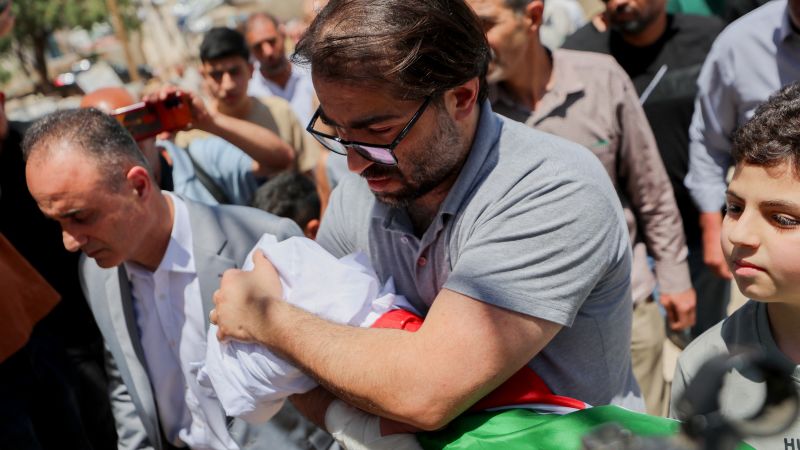
Table of Contents
The Fragility of Digital Truth in Conflict Zones
In the narrow streets of Hebron, the difference between a military justification and a human rights violation often rests on a few seconds of grainy footage. The death of 7-month-old Sam Abu Haikal on June 5, 2026, has become a flashpoint not only for regional grief but for a critical debate on digital evidence and the systematic removal of electronic records in occupied territories.
The incident began when Fahd Abu Haikal was driving his family through the city. According to the family, the vehicle slowed to a stop upon encountering Israeli soldiers. However, the resulting fatality—a bullet that pierced the windshield and struck the infant in the head—led to two wildly diverging narratives. The Israeli Defense Forces (IDF) claimed the vehicle was “accelerating toward them,” a justification that often permits the use of lethal force under military engagement rules. Conversely, video evidence obtained by the human rights organization B’Tselem suggests the car was decelerating.
- Conflict in Narratives: Video footage contradicts IDF claims that a vehicle was accelerating toward soldiers during the June 5 shooting.
- Systemic Evidence Loss: Local reports indicate Israeli forces confiscated CCTV recordings from business owners in the vicinity after the event.
- Human Cost: The shooting killed 7-month-old Sam Abu Haikal and severely wounded his mother, Dania, with shrapnel remaining near her heart.
- Statistical Trend: B’Tselem reports Sam as the 13th child killed by Israeli forces in the West Bank in 2026, part of a larger trend of 236 child fatalities since October 2023.
Digital Witnessing: Challenging the Official Record
The concept of “digital witnessing” has transformed how human rights abuses are documented. In the case of Sam Abu Haikal, the lack of an official dashboard camera meant the investigation relied on third-party video and bystander footage. When CNN and B’Tselem analyzed the available clip, the visual data directly challenged the military’s claim of an “accelerating vehicle.” Through frame-by-frame analysis, the car’s momentum is seen to decrease, effectively neutralizing the “imminent threat” argument typically used in military reports.
This discrepancy highlights a recurring tension in modern conflict reporting: the gap between a formal military statement and the empirical data captured by mobile devices. For investigators, the presence of a video—even one without audio—provides a spatial and temporal baseline that is difficult to refute without contrary footage.
The Logistics of CCTV Confiscation
One of the most concerning aspects of the Hebron incident is the reported erasure of the wider digital record. CNN’s canvas of the street revealed several CCTV cameras positioned to capture the intersection. However, business owners and residents reported that Israeli forces returned to the scene specifically to confiscate these recordings.
From a technical and legal standpoint, the seizure of CCTV data creates a “black hole” in the evidentiary chain. When a state actor controls both the scene of the crime and the digital archives, the burden of proof shifts heavily onto the victims, who must rely on fragmented, non-professional footage to seek accountability.
Forensic Analysis of the Trajectory
The physics of the shooting provides further insight into the nature of the engagement. A bullet traveling through the hood, grazing the steering wheel, and striking the infant in the head suggests a direct line of fire into the cabin of a vehicle. This trajectory is critical for legal experts attempting to determine if the shot was a “reflexive response” to a perceived threat or a targeted action.
Dania Abu Haikal, the mother, suffered a traumatic injury where the bullet entered her cheek and exited behind her ear, with shrapnel lodging in her chest. The proximity of the shrapnel to her heart has made surgical removal too risky, leaving her with a permanent physical reminder of the event. This medical evidence serves as a secondary form of “biological forensics,” corroborating the angle and velocity of the rounds fired into the car.
The Broader Pattern of Child Fatalities
The death of Sam Abu Haikal does not exist in a vacuum. According to documentation from B’Tselem, the Israeli human rights group, Sam is the 13th child killed in the West Bank in 2026 alone. Since the escalation following the October 7, 2023, attacks, 236 children have been killed by Israeli forces in the region.
| Metric | Data Point | Source |
|---|---|---|
| Children killed in West Bank (2026 YTD) | 13 | B’Tselem |
| Total child fatalities since Oct 7, 2023 | 236 | B’Tselem |
| CCTV recordings recovered by IDF | Multiple (Local reports) | CNN/Residents |
What This Means for Accountability
The reliance on digital evidence in the West Bank underscores a shift in how justice is pursued in occupied territories. Because military investigations—such as the one launched by the IDF in response to this shooting—rarely result in criminal charges or disciplinary action, the “public record” created by NGOs and journalists becomes the primary mechanism for international pressure.
For the Abu Haikal family, cooperation with the military inquiry is a gamble. The hope is that the video evidence provided by B’Tselem will force a deviation from the standard investigative outcome. However, the precedent suggests that without an independent judicial body and the preservation of all CCTV data, the internal military process often validates the soldier’s perception of threat over the visual reality of the event.
The Psychological Toll of Digital Memory
Beyond the legal implications, the digital remnants of Sam’s life—photos and videos on his mother’s phone—now serve as the only surviving record of his existence. Dania Abu Haikal describes the trauma of breastfeeding a child who is no longer there, a physical and emotional void that contrasts sharply with the digital abundance of her camera roll. This intersection of digital memory and physical loss is a hallmark of modern conflict, where the evidence of a life is often more durable than the life itself.
Verification and the ‘Truth Gap’ in Warfare
In the current era of information warfare, the “truth gap” is the space between an official government narrative and the decentralized evidence captured by citizens. The Sam Abu Haikal case illustrates how this gap is managed: first through the issuance of a standard military claim (the “accelerating vehicle” narrative), followed by the removal of contradicting evidence (CCTV confiscation), and finally challenged by independent verification (B’Tselem/CNN analysis).
This cycle repeats across various conflicts globally. The ability to verify footage using geolocation and chronolocation—techniques used by organizations like Bellingcat—has become essential. In this case, the simplicity of the footage (a car slowing down) is its most powerful attribute; it requires no complex forensics to see the contradiction in the IDF’s statement.
Common Questions Regarding Evidence and Conflict
How is video evidence verified in conflict zones?
Verification typically involves geolocation (matching landmarks in the video to satellite imagery) and chronolocation (analyzing shadows and weather to confirm the time of day). In the Abu Haikal case, the consistency between the family’s account, the B’Tselem footage, and the physical damage to the car provides a cross-referenced set of evidence.
Why would military forces confiscate CCTV footage?
Confiscation of digital records is often done to control the narrative and prevent the dissemination of footage that may contradict official reports. By seizing the hardware or the data, the investigating body ensures that they are the sole curators of the evidence used in internal inquiries.
What is the significance of B’Tselem in these investigations?
B’Tselem is an independent Israeli human rights organization that documents violations in the occupied territories. Their role is critical because they provide a non-governmental archive of evidence that can be used in international courts, providing a counter-weight to official state narratives.
Does the ‘accelerating vehicle’ claim usually hold up in court?
In many military tribunals, the “perception of threat” is given significant weight. If a soldier testifies they felt the vehicle was a threat, that subjective perception often overrides objective data unless the evidence of innocence is overwhelming and indisputable.
How does digital witnessing impact international law?
Digital witnessing allows for the collection of evidence in real-time, which can be used by the International Criminal Court (ICC) to establish patterns of behavior. When multiple incidents of child fatalities are documented with video, it can move a case from “isolated incident” to “systemic violation.”