C-Band Clash: AT&T and Verizon Set to Resume 5G Rollout After Aviation Safety Standoff
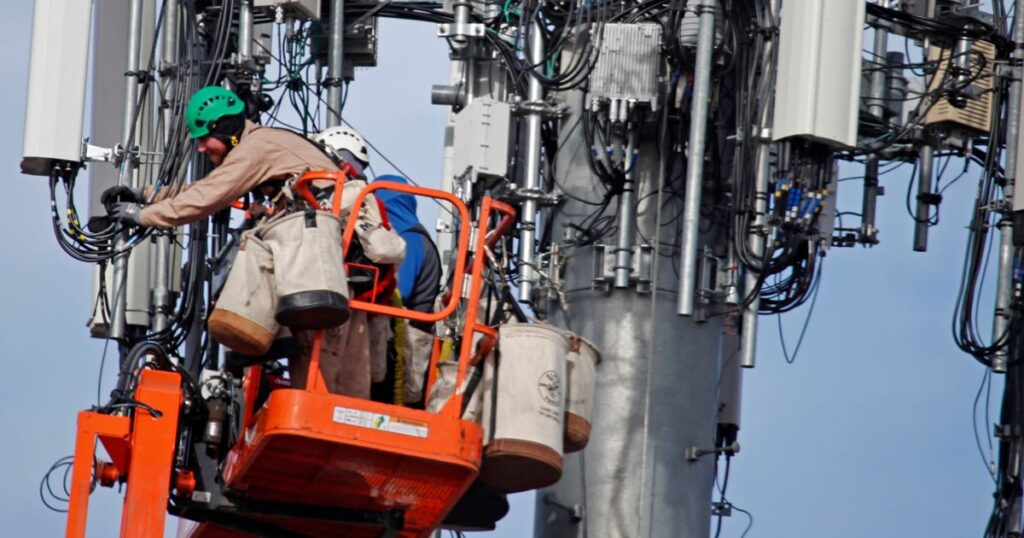
Table of Contents
The Spectrum Standoff
AT&T and Verizon are preparing to resume the expansion of their 5G wireless services on January 19, ending a tense two-week moratorium requested by the U.S. Department of Transportation. The pause, which began in early January, highlighted a critical friction point between the aggressive push for next-generation connectivity and the rigid safety requirements of commercial aviation.
The conflict centers on the “C-band” spectrum. While this frequency is prized by telecommunications companies for its ability to deliver the ultra-fast speeds and high bandwidth promised by 5G, the aviation industry warned that these signals could bleed into the frequencies used by radio altimeters. These precision instruments are vital for pilots, particularly during low-visibility landings in poor weather, as they provide the exact height of the aircraft above the ground.
Initially, the wireless carriers resisted the government’s request to halt the rollout, viewing the delay as an unnecessary obstacle to infrastructure modernization. However, after the Department of Transportation signaled that the risks could lead to significant flight diversions and cancellations, both carriers reversed course to avoid a national travel crisis.
Mitigating the Risk
Transportation Secretary Pete Buttigieg described the ongoing dialogue between the Federal Aviation Administration (FAA), major airlines, and wireless providers as “healthy,” noting that federal officials are leveraging every hour of the pause to conduct technical analyses. Buttigieg emphasized that the FAA maintains a “zero tolerable level” of major flight hazards when certifying aviation equipment, leaving little room for compromise on safety.
To bridge the gap between connectivity and safety, AT&T and Verizon have agreed to a series of temporary compromises. The most significant of these is the implementation of a temporary power reduction for 5G transmitters located near airports. By throttling the signal strength in these specific zones, the carriers aim to reduce the likelihood of interference with onboard aircraft systems while still providing service to the broader surrounding areas.
The FAA has identified 50 high-traffic airports—including heavyweights like John F. Kennedy International (JFK) and Los Angeles International (LAX)—that will implement these specific 5G buffer zones for a period of six months. This window is intended to allow airlines to upgrade their hardware and for regulators to gather real-world data on how C-band signals affect current altimeter technology.
Industry Implications
The CTIA, the industry association representing wireless providers, confirmed that the transmitters are scheduled to go live on January 19. Nick Ludlum, CTIA’s Chief Communications Officer, stated that the current agreement represents some of the “most stringent protection for air traffic anywhere in the world.”
For the aviation sector, the resolution is a cautious win. Airlines for America, the trade group representing major commercial and cargo carriers, expressed gratitude for the FAA’s mitigation efforts, though the industry remains wary. The primary concern is that if the buffer zones prove insufficient, the result will be an increase in flight delays and diversions, impacting the efficiency of the U.S. national airspace.
This episode underscores a recurring theme in the transition to 5G: the struggle to carve out spectrum space in an increasingly crowded airwave environment. As wireless carriers continue to deploy mid-band spectrum to improve urban coverage, the potential for overlap with legacy industrial and aviation systems remains a persistent technical hurdle.


