The Tragedy of Timing: Reassessing ‘SpaceCamp’ 40 Years After a Changed Orbit
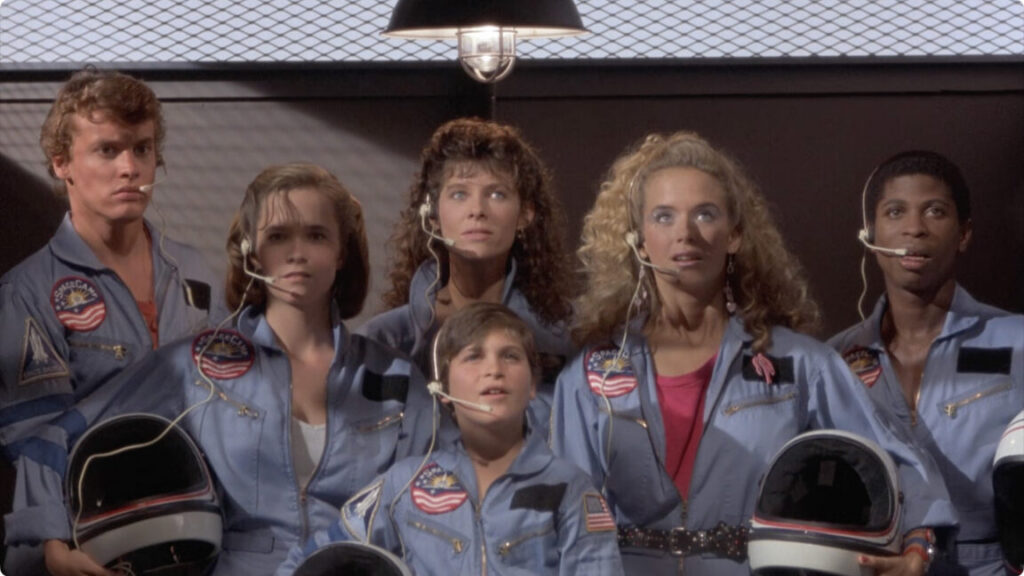
Table of Contents
A Future That Never Arrived
In the early 1980s, the Space Shuttle wasn’t just a piece of hardware; it was a promise. NASA envisioned a fully reusable transportation system that would make low Earth orbit (LEO) as mundane as a cross-country flight. The optimism of the era was palpable, manifesting in corporate fantasies where Coke and Pepsi fought the ‘Cola Wars’ in microgravity and Sesame Street’s Big Bird was slated for an orbital excursion. The shuttle was designed to move human spaceflight from the extraordinary to the routine.
That illusion shattered on January 28, 1986. The loss of the Challenger, and the death of educator Christa McAuliffe, didn’t just end a mission; it ended the era of shuttle optimism. The vehicle, while technologically sophisticated, was never the scalable ‘bus to space’ its proponents claimed. Even at its operational peak in 1985, the hardware managed only nine flights in a calendar year. The dream of civilian accessibility was replaced by a sobering realization of the risks inherent in orbital mechanics.
The Production Nightmare of 1986
Into this climate of grief and disillusionment entered SpaceCamp. Released on June 6, 1986, the film was completed before the Challenger disaster, leaving 20th Century Fox with a precarious editorial dilemma. The studio faced a choice: shelve a multi-million dollar investment or release a movie featuring children in peril on a space shuttle just four months after a national tragedy.
Fox opted for the latter, and the market response was cold. With a reported budget of $25 million and a meager theatrical return of $9.6 million, the film became a financial footnote. For decades, SpaceCamp has been relegated to the realm of ‘guilty pleasure’ or derided for its plot conveniences and 80s-era cheese. Yet, viewed through a modern lens, the film serves as a fascinating time capsule of aerospace ambition.
Technical Precision vs. Narrative Absurdity
Despite its reputation, SpaceCamp avoids the hallmarks of a low-budget B-movie. The production invested heavily in authenticity, utilizing real NASA location footage and meticulously constructed sets. The shuttle flight deck and mid-deck were built to exact specifications, and the film captures minor details—cockpit switch positions, authentic uniform patches, and specific terminology—that typically escape Hollywood’s notice.
However, the technical accuracy is uneven. While the physical sets are spot-on, the physics often fail. The shuttle’s erratic shaking after Main Engine Cut-Off (MECO) is a cinematic liberty, and the dialogue regarding a “180×33” orbit reveals a significant oversight. In real-world terms, an orbit with a perigee of 33 miles is not a stable trajectory; the shuttle would encounter severe atmospheric braking and incinerate long before completing a single revolution.
The Legacy of an Era
The casting of the film—featuring a young Joaquin Phoenix and seasoned leads like Tom Skerritt—signals that the studio viewed it as a prestige family drama rather than a disposable flick. Its failure wasn’t necessarily a result of poor quality, but of catastrophic timing. It attempted to sell a vision of adventurous, accessible space travel to a public that had just witnessed the fragility of that same technology.
Today, SpaceCamp remains largely unavailable on streaming platforms, existing primarily on physical media. Its value now lies not in its plot, but in its reflection of a specific moment in tech history: the brief window when we believed the stars were finally within our reach, and the abrupt moment we realized how high the cost of entry actually was.


