Blue Origin’s New Glenn Explosion Cripples Launch Infrastructure, Threatening NASA Moon Timelines
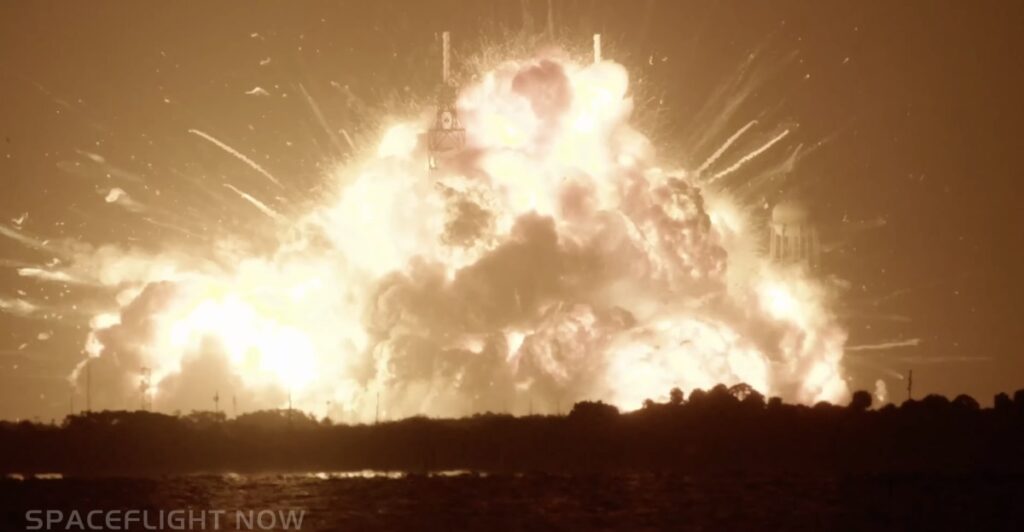
Table of Contents
A Catastrophic Failure at LC-36
Blue Origin’s ambitions for heavy-lift dominance suffered a massive blow Thursday night when a New Glenn rocket exploded during a critical hot-fire test in Florida. The incident, which occurred around 9:00 PM, saw a fireball engulf the 322-foot-tall vehicle while it was fixed to the launchpad, causing extensive damage to the surrounding infrastructure.
In a hot-fire test, engineers ignite the booster stage engines to verify performance before a live mission. In this instance, the test transitioned from a routine verification to a catastrophic failure, leaving Blue Origin’s primary launch site at Launch Complex 36 (LC-36) in ruins. Jeff Bezos took to X to acknowledge the setback, stating, “Very rough day, but we’ll rebuild whatever needs rebuilding and get back to flying.”
The Infrastructure Crisis
While the loss of the vehicle is a financial hit, the damage to the ground equipment is a strategic disaster. Initial reports indicate that the transporter-erector—the massive machinery used to move and raise the rocket—and one of the critical lightning towers may be beyond salvage. Because LC-36 is the only operational site designed for New Glenn, the company is now facing a bottleneck that cannot be solved by simply building another rocket.
Industry analysts suggest that the window for a 2026 return to flight has effectively closed. Given the lead times for specialized aerospace construction, a launch in the first half of 2027 would be considered an aggressive, if not “heroic,” recovery timeline. This puts Blue Origin in a precarious position as it attempts to transition from a research-and-development firm into a reliable commercial launch provider.
NASA’s Lunar Timeline in Jeopardy
The fallout extends far beyond Blue Origin’s balance sheet, directly impacting NASA’s Artemis program. Just days prior to the explosion, NASA announced that New Glenn was slated to deliver a robotic lunar lander by the fall of 2026. This mission is a critical precursor to the crewed Artemis III mission, which intends to return astronauts to the lunar surface.
With New Glenn sidelined, NASA now faces a gap in its logistics chain. While the agency has diversified its lander contracts—most notably with SpaceX—the loss of Blue Origin’s immediate capacity forces a re-evaluation of the 2027 mission architecture. NASA Administrator Jared Isaacman emphasized the difficulty of the endeavor, noting that developing heavy-lift capability is “extraordinarily difficult” and that the agency will work to assess near-term impacts on the Moon base plans.
Amazon’s Satellite Race Against the Clock
The explosion also creates a critical hurdle for Amazon’s Project Kuiper. The rocket involved in the test was being prepared for a massive deployment of 48 Leo satellites—the largest single batch planned for the constellation. These satellites were not on board during the blast, but the loss of the launch vehicle means Amazon has no internal way to reach orbit.
The stakes are regulatory. The FCC requires Amazon to launch 1,618 satellites by July 30, 2026, to maintain its license. With only about 300 satellites currently in orbit, Amazon is falling dangerously behind SpaceX’s Starlink. While Amazon has applied for a license extension, the company is now forced into a position of dependency, relying on competitors like SpaceX, Arianespace, and United Launch Alliance (ULA) to fill the gap.
This dependency is a strategic failure for Amazon, which invested in New Glenn specifically to avoid paying the “SpaceX tax” and to ensure total control over its orbital deployment schedule. For now, the road to the Moon and the race for satellite internet will have to wait for the rubble at LC-36 to be cleared.


