Blue Origin and NASA Clash Over New Glenn Recovery Timeline Following Pad Explosion
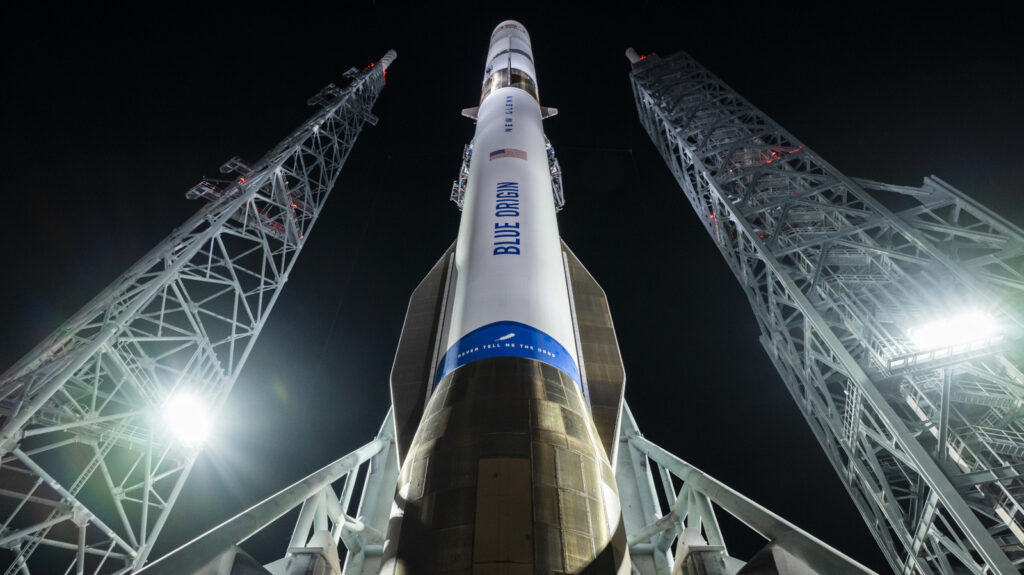
Table of Contents
A Widening Gap in Expectations
The recovery timeline for Blue Origin’s New Glenn orbital rocket has become a point of contention between the aerospace company and its primary customer, NASA. Following a catastrophic explosion at Launch Complex 36 (LC-36) on May 28, the two organizations are offering starkly different projections on when the heavy-lift vehicle will return to flight.
NASA Administrator Jared Isaacman, who personally toured the devastated facility on May 29, has expressed a sobering outlook. Speaking with CNBC, Isaacman noted that restoring the launchpad will require “some serious time,” suggesting that a 2028 return-to-flight window is “within the realm” of possibility. His assessment reflects the systemic complexity of launch infrastructure, where a single failure can trigger a cascade of regulatory reviews and structural rebuilds.
Blue Origin CEO Dave Limp is operating on a vastly more aggressive schedule. Taking to X (formerly Twitter), Limp dismissed the notion of a multi-year delay, stating, “We will fly again before the end of this year. Gradatim Ferociter.” The phrase—meaning ‘Step by step, ferociously’—serves as the company’s motto, but in this instance, it underscores a high-stakes gamble on the speed of industrial repair.
Assessing the Damage at LC-36
The incident occurred during a critical hotfire test intended to prep New Glenn for its fourth mission. The explosion was particularly ill-timed; the company had only recently regained flight authorization from the Federal Aviation Administration (FAA) following a previous grounding. That prior investigation had traced a failure in the third mission to a “cryogenic leak,” suggesting a pattern of volatility in the rocket’s fuel systems.
Limp’s optimism stems from a preliminary assessment of the hardware. According to the CEO, the most critical and time-consuming components—the propellant farm and the liquid hydrogen, oxygen, and LNG tanks—remained largely intact. These are typically “long-lead items,” meaning their replacement could indeed push a timeline into 2028.
The primary casualty appears to be the support tower. Limp claims the tower’s damage is localized enough to allow for in-place repairs rather than a complete demolition and reconstruction. However, the discrepancy between Limp’s and Isaacman’s views suggests a fundamental disagreement over whether the structural integrity of the pad was compromised beyond a superficial level.
The Ripple Effect: Artemis and Amazon
The urgency for a rapid recovery isn’t just about corporate pride; it is about contractual survival and infrastructure dependency. Blue Origin is a cornerstone of NASA’s Artemis program and the broader Moon Base initiatives. The agency had specifically tapped New Glenn for the Moon Base I mission scheduled for this autumn, a milestone that now appears increasingly precarious given the state of the Florida pad.
Beyond NASA, the delay creates a bottleneck for Jeff Bezos’ other massive venture: Amazon. The company’s Project Kuiper—a satellite broadband constellation designed to compete with SpaceX’s Starlink—is heavily reliant on New Glenn. The fourth mission was slated to carry 48 Leo satellites into orbit. Without a functional launch vehicle, Amazon’s timeline for global broadband deployment begins to slip, potentially handing more market share to Elon Musk’s SpaceX.
The Vandenberg Alternative
While Blue Origin is expanding its footprint, the secondary option offers little immediate relief. The company recently secured a lease for Space Launch Complex (SLC)-14 at Vandenberg Space Force Base in California. While this provides a strategic hedge against failures at Cape Canaveral, the facility is nowhere near operational. Current estimates suggest the Vandenberg site will take roughly two years to prepare, aligning perfectly with Isaacman’s pessimistic 2028 timeline.
For now, the industry is watching to see if Dave Limp can defy the gravity of aerospace logistics. If Blue Origin fails to launch by the end of the year, the company will not only face a setback in its technical roadmap but may also see a shift in how NASA weighs its reliance on the firm for the future of lunar exploration.