Bill Pulte Takes Reins as Acting DNI, Creating a High-Stakes Intersection of Intelligence and Financial Oversight
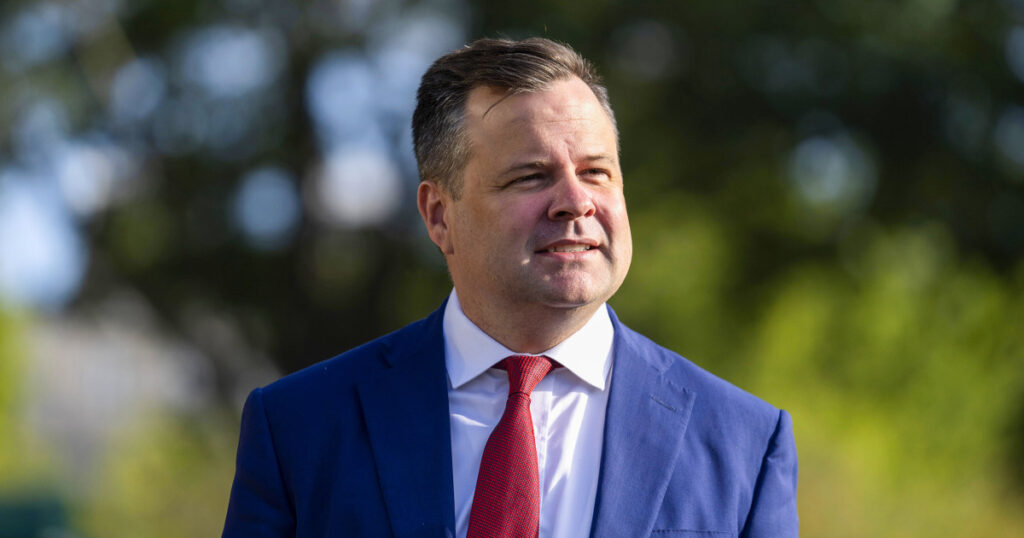
Table of Contents
A Rare Dual Mandate in Washington
President Donald Trump has appointed Bill Pulte as the acting Director of National Intelligence (DNI), filling the vacancy left by Tulsi Gabbard, who is slated to depart the role at the end of June. The appointment is not merely a personnel shift; it represents a highly unusual consolidation of authority. In a Truth Social announcement on Tuesday, the President confirmed that Pulte will maintain his current role as director of the Federal Housing Finance Agency (FHFA) and his chairmanship of Fannie Mae and Freddie Mac while steering the nation’s intelligence community.
By designating Pulte in an “acting” capacity, the administration effectively sidesteps the immediate necessity of a Senate confirmation process for the DNI role—a Cabinet-level position that traditionally requires rigorous vetting and legislative approval. While Pulte was confirmed for the FHFA in March 2025 in a 56-43 vote, his transition into the intelligence sphere happens without a similar mandate from the Senate.
The Convergence of Finance and Espionage
The DNI is responsible for overseeing the 18 organizations within the U.S. Intelligence Community, managing the National Intelligence Program budget and ensuring the integration of disparate data streams to protect national security. To place a financial regulator at the helm of this apparatus is a departure from the traditional trajectory of intelligence directors, who are typically drawn from the CIA, military command, or seasoned diplomatic circles.
The Trump administration has leaned heavily into Pulte’s background in financial management, citing his stewardship of over $10 trillion at Fannie Mae and Freddie Mac. However, the crossover between the FHFA’s oversight of the secondary mortgage market and the DNI’s access to classified global signals intelligence (SIGINT) and human intelligence (HUMINT) creates a potent concentration of power. The ability to monitor global financial flows and integrate that with state-level intelligence capabilities could fundamentally change how the U.S. tracks economic warfare and foreign influence operations.
A Record of Aggressive Litigation
Pulte’s tenure at the FHFA has been defined by a combative relationship with political opponents, a trait that may now translate into his management of the intelligence community. Since taking over the agency in March 2025, Pulte has frequently utilized criminal referrals as a tool of administrative warfare. Notable among these were referrals against New York Attorney General Letitia James and Senator Adam Schiff, both of whom have denied the allegations of insurance and mortgage fraud, respectively.
This pattern of behavior has drawn significant scrutiny from House Democrats and legal challenges from former officials. Most notably, former Representative Eric Swalwell sued Pulte in November 2025, alleging the director fabricated mortgage fraud claims to target political adversaries. For the intelligence community, where objectivity and the “wall” between political goals and factual intelligence are paramount, Pulte’s history of adversarial referrals raises questions about the potential for the DNI’s office to be used for domestic political leverage.
The Federal Reserve Friction
Pulte has also been a central figure in the ongoing tensions between the executive branch and the Federal Reserve. He was a key advisor during Trump’s highly publicized and unplanned tour of the Federal Reserve headquarters’ renovation site, an event that preceded calls for an investigation into former Fed Chair Jerome Powell. While the Fed’s independent inspector general cleared the project of wrongdoing on two separate occasions, the administration has continued to signal dissatisfaction with the central bank’s autonomy.
With Pulte now overseeing the DNI, his influence extends beyond the FHFA and the Fed’s construction site into the very heart of the U.S. security state. Whether this appointment is a temporary placeholder or a precursor to a permanent nomination remains unclear, but the immediate impact is a broadened portfolio for one of the President’s most loyal allies, bridging the gap between American financial stability and global clandestine operations.