Asus Debuts Dawn 7 Pro in China, Betting on AMD’s New Ryzen AI Chips
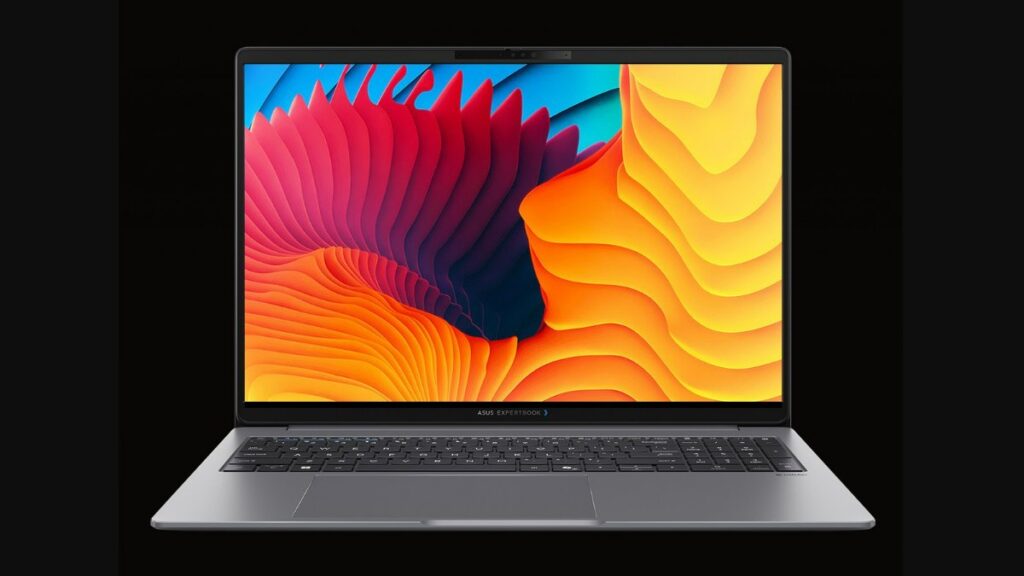
Table of Contents
A New Play for the AI PC Market
Asus has officially expanded its hardware portfolio in the Chinese market with the launch of the Dawn 7 Pro series. While the global market is currently obsessed with the battle between Qualcomm’s Snapdragon X Elite and Intel’s Lunar Lake, Asus is leaning into AMD’s latest silicon to carve out a niche for productivity-focused users who need a blend of NPU performance and traditional x86 compatibility.
The Dawn 7 Pro arrives in two primary chassis options—a portable 14-inch model and a more expansive 16-inch variant. Both are designed to accommodate the new AMD Ryzen AI chipsets, specifically the 4nm-process Ryzen AI 7 445 and the Ryzen AI 5 430. These chips are built to handle the growing demand for on-device AI processing, reducing the reliance on cloud-based LLMs for basic productivity tasks.
Display and Hardware Specs
Asus hasn’t gone for the ultra-high-end OLED panels typically seen in the Zenbook line, instead opting for IPS displays across the board. However, they’ve pushed the refresh rate to 144Hz, a spec usually reserved for gaming laptops, which makes the UI feel significantly more fluid during standard navigation and creative work. The panels hit a peak brightness of 400 nits, making them sufficient for indoor office environments, though they may struggle in direct sunlight compared to the 500-600 nit benchmarks of flagship competitors.
Under the hood, the high-end configurations utilize the Radeon 840M integrated graphics. While not a replacement for a dedicated GPU in heavy 4K video editing or AAA gaming, the 840M is a competent performer for hardware acceleration in AI-driven software and general multimedia consumption. To keep the system powered, Asus integrated a 70Wh battery, which is respectable for the 14-inch model, though likely to be stretched thin by the 16-inch screen’s power draw.
Pricing Strategy and Market Positioning
The pricing structure for the Dawn 7 Pro suggests that Asus is targeting the mid-to-high-end professional segment. The 14-inch models are positioned as the premium, portable option. A configuration featuring the Ryzen AI 5 430 with 32GB of RAM and a 1TB SSD starts at CNY 9,499 (approximately $1,310 / ₹1,33,000). Stepping up to the more powerful Ryzen AI 7 445 APU pushes the price to CNY 9,999 (approximately $1,380 / ₹1,40,000).
Interestingly, the 16-inch models are priced more aggressively, likely to attract users who prioritize screen real estate over extreme portability. The base 16-inch model with the Ryzen AI 5 430 and 16GB of RAM is listed at CNY 7,999 (approximately $1,110 / ₹1,12,000), while the Ryzen AI 7 445 version reaches CNY 8,499 (approximately $1,170 / ₹1,19,000).
The AMD Advantage
By integrating the Ryzen AI series, Asus is positioning the Dawn 7 Pro to take advantage of Windows 11’s evolving AI features. The 4nm architecture of these chips allows for better thermal management and efficiency, which is critical in thin-and-light laptops where heat throttling often kills performance during sustained AI workloads.
The availability is currently limited to China via JD.com, but if the series performs well, it serves as a blueprint for how Asus might roll out similar AMD-powered AI laptops in other regions. For now, the Dawn 7 Pro represents a calculated bet: providing a high-refresh-rate experience and specialized AI silicon without the prohibitive cost of the most expensive workstation-grade hardware.


