Asus Bets on ARM with the VM441 All-in-One, Bringing Snapdragon X Elite to the Desktop
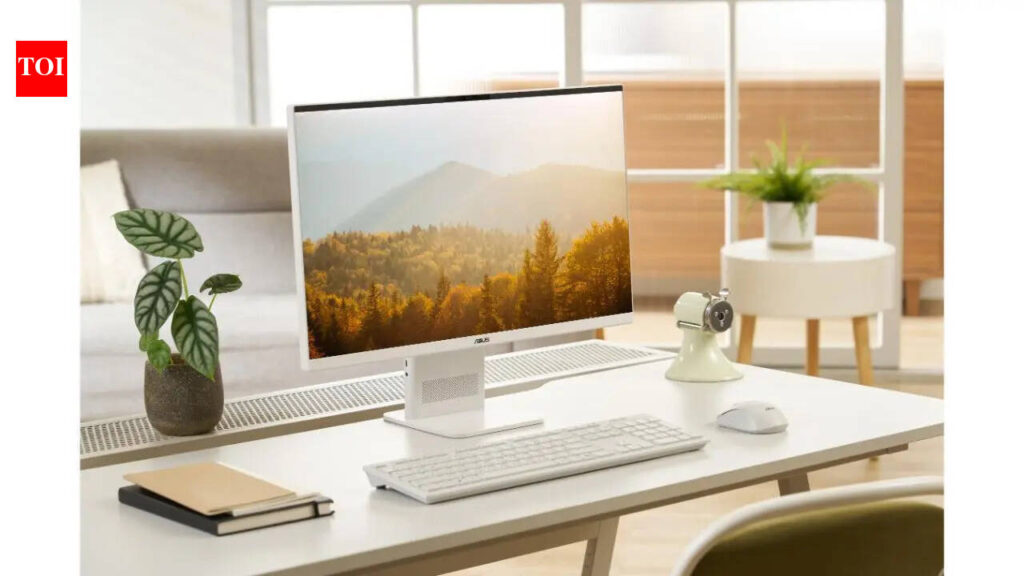
Table of Contents
A Shift Toward ARM in the Living Room
Asus is making a calculated gamble on the future of desktop computing with the launch of the VM441 All-in-One (AiO). While the industry has long viewed ARM processors as the domain of tablets and thin-and-light laptops, the VM441 integrates the Qualcomm Snapdragon X Elite, signaling a push to bring the efficiency and AI capabilities of ARM to a stationary workstation format. Starting at ₹1,01,990, the device isn’t just another spec bump; it’s a test of whether consumers are ready to move away from the x86 dominance of Intel and AMD in the home office.
The core of the VM441 is the Snapdragon X Elite, a chip designed specifically to compete with Apple’s M-series silicon. By utilizing an NPU (Neural Processing Unit) capable of 45 TOPS, the VM441 qualifies as a Copilot+ PC. This means it isn’t just relying on the cloud for AI tasks; it can handle local generative AI workloads, such as real-time captions and advanced Cocreator features in Paint, without the latency or privacy concerns associated with server-side processing.
Design and Integration
Visually, the VM441 follows the clean, minimalist aesthetic Asus has adopted for its latest business-class hardware. The all-in-one form factor eliminates the cable clutter of a traditional tower, integrating the components directly behind a high-resolution display. However, the real story is the thermal profile. Because the Snapdragon X Elite is significantly more power-efficient than high-wattage Intel Core i7 or i9 chips, Asus has been able to keep the chassis slim without the intrusive fan noise that typically plagues AIOs under heavy load.
The hardware is paired with a chassis that emphasizes productivity. While the exact display specs vary by region, the Indian launch focuses on a balance of color accuracy and brightness suitable for professional environments. The integration of the Snapdragon platform also means the VM441 boasts an ‘instant-on’ experience—waking from sleep in milliseconds, a feature that has been a staple of smartphones but remains stubbornly inconsistent in traditional Windows desktops.
The Compatibility Hurdle
Despite the impressive benchmarks, the VM441 faces the same challenge every ARM-based Windows machine encounters: software compatibility. While Microsoft has made strides with the Prism emulator, there remains a divide between native ARM64 apps and legacy x86 applications. For the average user running Office 365, Chrome, and Zoom, the transition is seamless. However, specialized software—particularly legacy drivers for older printers or niche industry tools—may still struggle to run efficiently.
This positions the VM441 as a device for a specific demographic: the ‘modern professional’ who prioritizes battery-like efficiency, silent operation, and integrated AI over the raw, unbridled power required for 4K video rendering or AAA gaming. It is less of a workstation for a creative director and more of a sophisticated hub for a corporate executive or a remote worker.
Pricing and Market Positioning
At ₹1,01,990, Asus is positioning the VM441 in the premium mid-range segment. It competes directly with high-end iMacs and premium HP or Dell AIOs. The value proposition here isn’t based on sheer horsepower per rupee, but on the longevity of the hardware and the ability to evolve with Windows’ AI-centric roadmap. As Microsoft continues to bake NPU-dependent features into the OS, the VM441 is essentially future-proofed in a way that older x86 machines are not.


