Apple Pivots AI Strategy With Deep Integration of Google Gemini Architecture
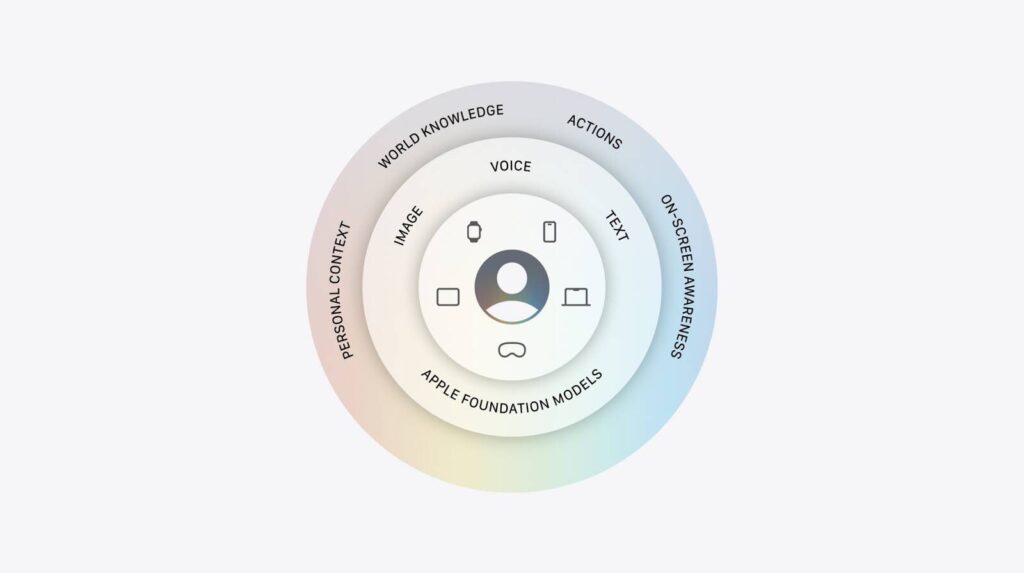
Table of Contents
A Fundamental Shift in the Silicon Valley Alliance
Apple has fundamentally rewritten the playbook for its AI ambitions, announcing a structural overhaul of Apple Intelligence that moves beyond simple API integrations and into a deep architectural partnership with Google. The company revealed it has co-developed a new suite of Apple Foundation Models based on the technology powering Google’s Gemini family, signaling a pragmatic shift in how Cupertino intends to catch up in the generative AI race.
For months, Apple Intelligence was framed as a curated ecosystem where Google Gemini served as an optional, third-party plugin—similar to how Siri handles Wikipedia queries. This new direction is different. By collaborating on the underlying architecture, Apple is integrating Gemini-derived capabilities directly into the core of its operating systems, allowing for a level of system-wide fluidity that was absent in the initial beta releases.
The Orchestrator: Moving Beyond Chatbots
At the heart of this revised framework is a new system orchestrator. Unlike traditional LLM implementations that act as a separate layer on top of the UI, this orchestrator is designed to sit between the user’s intent and the hardware. It dynamically coordinates features across the platform, tailoring responses based on the active application and the user’s immediate context.
In practice, this means the AI isn’t just answering questions; it’s managing tasks. If a user is in a Mail draft and asks to “summarize the last three threads about the project,” the orchestrator handles the retrieval from the database, processes the text via the co-developed models, and delivers the output without the latency associated with jumping between separate AI modules.
Hybrid Compute and the Privacy Wall
The technical challenge Apple is solving here is the balance between raw power and privacy. The new models are designed to run in a hybrid environment: lightweight versions execute locally on the NPU (Neural Processing Unit) of the A-series and M-series chips, while more complex reasoning tasks are offloaded to Private Cloud Compute.
Apple is leaning heavily into this distinction to distance itself from the data-harvesting reputations of its peers. While the models are co-developed with Google, Apple insists that the data pipeline remains isolated. According to the company, user data is used exclusively to execute the immediate request and is not stored or accessible to either Apple or Google. To maintain transparency, Apple has invited third-party security auditors to verify these privacy guarantees, a move intended to quell skepticism about the “black box” nature of cloud AI.
Multimodal Capabilities and Device Tiering
The architectural shift unlocks advanced multimodal support, specifically in image understanding and generation. Users will see immediate improvements in visual question answering—the ability for the device to “see” a photo or a live camera feed and provide complex reasoning about it—and more realistic image synthesis for creative tools.
However, the rollout appears to be stratified. Apple noted that a “higher-power” version of the model will be available for specific, unnamed devices. This suggests a hardware-based tiering system where the most advanced speech generation and natural language understanding capabilities may be reserved for the latest M4-powered Macs or the newest iPhone Pro models, potentially creating a performance gap between legacy and current-gen hardware.
Contextualizing the Google Partnership
This partnership represents a calculated risk. By aligning with Google, Apple gains immediate access to some of the world’s most advanced multimodal research, avoiding the years of training cycles required to build a competing model from scratch. Yet, it also binds Apple’s AI trajectory to Google’s technical roadmap.
By framing the move as a contrast to competitors who are “racing forward” without safeguards, Apple is attempting to brand its reliance on Google as a curated, safety-first approach rather than a lack of internal capability. Whether users perceive this as a sophisticated partnership or a strategic retreat depends largely on how the “higher-power” models perform in the wild.