Ancient Phoenician Ruins and Crusader Forts Caught in Crossfire of Southern Lebanon Offensive
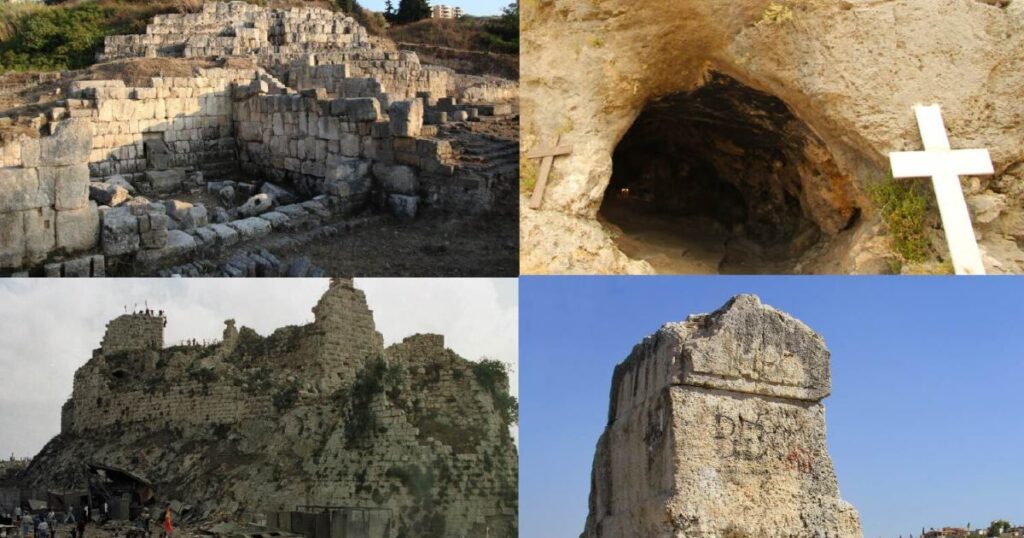
Table of Contents
Strategic Strongholds and Ancient Ruins
The geography of southern Lebanon has always been defined by its strategic heights and maritime ports, but today those same features are placing centuries of human history in the direct line of fire. As Israeli forces push further north of the Litani River in the deepest military incursion into Lebanese territory in 26 years, a critical layer of archaeological and cultural heritage is facing systemic risk.
The most immediate casualty of this tactical positioning is Beaufort Castle (Qalaat al-Shaqif). The 12th-century Crusader fortress, perched 700 meters above the valley, was recently captured by Israeli forces following days of intense combat. While the castle’s commanding view of the Litani River makes it a military prize, the physical structure—which has survived the Ottomans and previous conflicts—was reportedly hit directly during the operation. This repeat of history is stark; the site was previously occupied by Israel from 1982 until 2000.
The Fragility of Tyre and the Phoenician Legacy
Further south, the ancient city of Tyre remains one of the most vulnerable cultural entities in the region. As a cornerstone of the ancient Phoenician world, Tyre contains some of the largest Roman-era ruins in the Mediterranean, including a massive hippodrome. Lebanon’s Culture Minister, Ghassan Salame, has warned that bombings falling in close proximity to these ruins are placing the site in “serious danger.”
The crisis is not merely structural but humanitarian. The bombardment and subsequent forced displacement orders have pushed an estimated 200,000 people out of Tyre and its surroundings. When populations flee, the organic stewardship of these sites vanishes, leaving priceless artifacts and ruins exposed to both collateral damage and looting.
Legal Protections vs. Military Reality
Lebanon currently hosts six UNESCO World Heritage Sites, and at least 39 additional cultural landmarks have been granted “provisional enhanced protection.” Under the 1954 Hague Convention and its 1999 Second Protocol, this designation provides the highest level of legal shielding for cultural property during armed conflict. Any direct attack on these sites can be classified as a serious breach of international law, potentially triggering criminal responsibility for the commanders involved.
However, the reality on the ground often diverges from international treaties. UNESCO’s Assistant Director-General for Culture, Lazare Eloundou Assomo, has noted that the destruction of heritage is not just a loss of stone and mortar, but an erosion of social cohesion and identity. In the case of southern Lebanon, the risk extends to a network of medieval architecture in the Mount Amel region—specifically the castles of Tibnin, Chakra, Deir Kifa, and Chamaa—which document the evolution of military architecture from the Bronze Age through the Crusades.
At-Risk Heritage Sites in the Conflict Zone
| Site | Significance | Risk Factor |
|---|---|---|
| Beaufort Castle | Crusader Fortress | Direct military occupation/combat |
| Ancient Tyre | Phoenician/Roman Ruins | Proximity to bombardment |
| Eshmun Sanctuary | Phoenician Healing Temple | Collateral damage from southern strikes |
| Mount Amel Castles | Medieval Military Architecture | Sustained artillery/aerial strikes |
Beyond the fortresses, the conflict threatens the Eshmun sanctuary near Sidon—a vital site dedicated to the Phoenician god of healing—and the historic core of Saida, which grew wealthy on Mediterranean trade and glassmaking. Even the rural Byzantine villages in the Chouf region, offering rare glimpses into late antiquity worship, remain precariously close to the shifting front lines.
As the conflict persists, the tension between immediate military objectives and the preservation of global history remains unresolved. The loss of these sites would not only be a national tragedy for Lebanon but a permanent gap in the archaeological record of the Levant.