Alphabet Moves to Raise $80 Billion for AI Infrastructure as Compute Shortages Loom
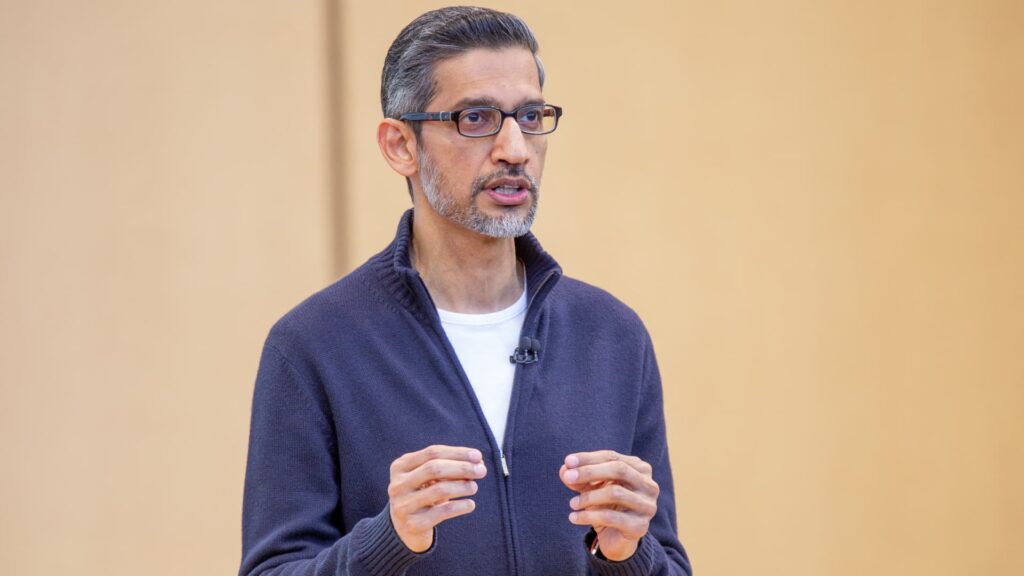
Table of Contents
The Battle for Compute Capacity
Alphabet is placing a massive bet on the physical layer of artificial intelligence. The company announced Monday that it intends to raise $80 billion through a series of stock sales and a strategic investment from Berkshire Hathaway, signaling that the race for AI dominance is no longer just about algorithmic breakthroughs, but about who can secure the most silicon and power.
In a candid admission, Alphabet stated the capital is intended to fund its AI compute infrastructure to meet “unprecedented customer demand.” According to the company, the appetite for its AI solutions among both enterprise clients and consumers is currently outpacing its available supply. This puts a concrete number on the “compute anxiety” that has permeated the C-suites of the world’s largest tech firms.
For CEO Sundar Pichai, the bottleneck isn’t just chips. When questioned previously about the company’s primary stressors, Pichai pointed to a complex web of constraints: power availability, land acquisition for data centers, and fragile supply chains. The $80 billion war chest is a direct attempt to flatten those hurdles.
A Complex Financial Maneuver
The structure of the raise reveals a diversified approach to liquidity. While a $10 billion investment from Warren Buffett’s Berkshire Hathaway provides a high-profile vote of confidence, the rest of the capital is being sourced through more traditional, though aggressive, market mechanisms.
Alphabet is planning $30 billion in underwritten offerings. This includes $15 billion in depositary shares representing mandatory convertible preferred stock—a sophisticated instrument that allows the company to raise capital now while delaying the full impact of dilution on common shareholders. The remaining $40 billion will be executed via an at-the-market (ATM) offering program for Class A and Class C shares, slated to begin in the third quarter.
Wall Street’s heavyweights are managing the logistics, with Goldman Sachs, JPMorgan Chase, and Morgan Stanley acting as joint book-running managers. Goldman Sachs is also handling the private placement for the Berkshire deal.
The Hyperscale Arms Race
This move doesn’t happen in a vacuum. Alphabet is operating within a broader trend where the “hyperscalers”—Microsoft, Meta, and Amazon—are effectively building the industrial infrastructure of the 21st century. Together, these four giants are expected to spend over $700 billion on capital expenditures (capex) this year alone. Some analysts predict that collective AI spending could breach the $1 trillion mark by 2027.
Alphabet has already been aggressively adjusting its financial forecasts to match this trajectory. In April, the company raised its annual capex estimate to a range of $180 billion to $190 billion, up from an earlier projection of $175 billion to $185 billion. The company has also leaned heavily on the debt markets, issuing over $30 billion in global bonds in February and an additional $11 billion in sterling and Swiss francs in Europe, following a $25 billion sale last November.
The Buffett Signal
The involvement of Berkshire Hathaway adds a layer of institutional validation. While Apple remains Berkshire’s largest holding, the firm has been steadily increasing its exposure to Alphabet since the third quarter of last year. Before Monday’s announcement, Berkshire’s stake in the search giant was valued at approximately $20 billion.
Buffett’s move into Alphabet suggests a belief that Google’s ecosystem—anchored by Search and YouTube—remains resilient despite the existential threat posed by generative AI. By backing Alphabet’s infrastructure push, Berkshire is betting that the company can successfully transition Gemini from a challenger to the industry standard for enterprise AI.
Despite the strategic logic, the market reacted with immediate caution. Alphabet’s stock, which has more than doubled over the past year, slipped in extended trading on Monday as investors weighed the long-term rewards of AI growth against the immediate cost of such massive capital deployment.


