Acer Bets Big on Oversized OLEDs With New Iconia Duo Tablet Trio
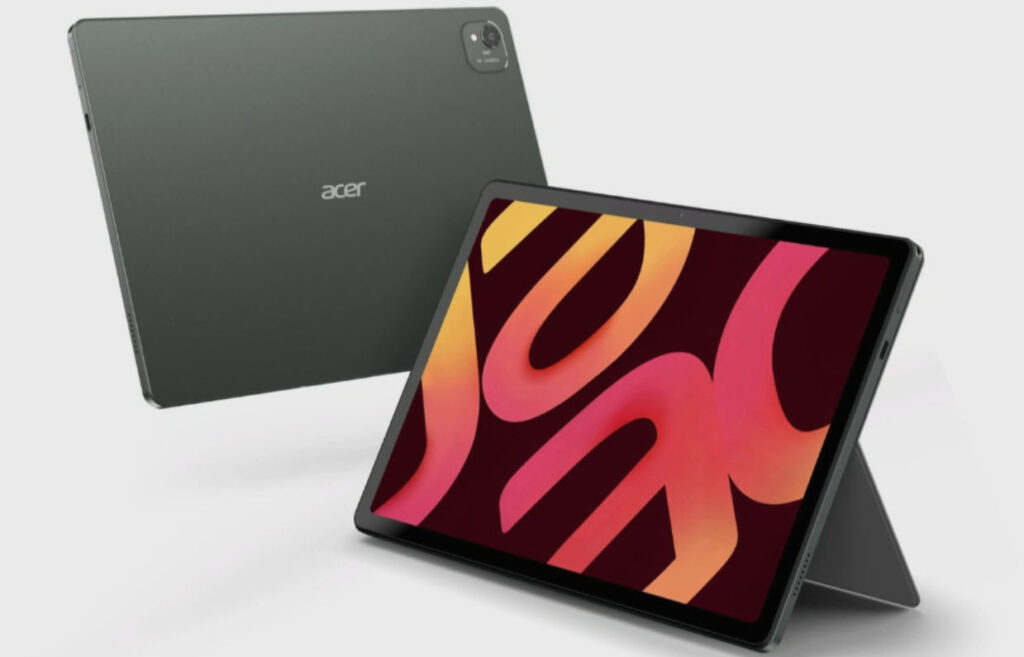
Table of Contents
The Return of the ‘Big’ Tablet
At Computex 2026, Acer made a definitive statement about the current state of mobile productivity by unveiling three new additions to its Iconia Duo family. While the industry has spent the last few years obsessed with the foldables and the hyper-portable, Acer is pivoting back toward the ‘super-tablet’—devices that blur the line between a traditional Android slab and a laptop replacement.
The centerpiece of the announcement is the Iconia Duo S14. Boasting a massive 14.2-inch OLED panel, the S14 is clearly aimed at creators and power users who find the iPad Pro’s footprint too limiting. The screen isn’t just about size; it utilizes a 3:2 aspect ratio, which is a critical detail for anyone doing actual work. This ratio provides more vertical breathing room for documents and code compared to the cinematic 16:9 or 16:10 standards usually found in the Android ecosystem.
Technically, the S14 is a powerhouse of display engineering. With a resolution of 2880 x 1840 and a 120Hz refresh rate, the panel covers 100% of the DCI-P3 color gamut. While 400 nits of brightness may seem modest compared to some flagship smartphones, it’s balanced by the deep blacks of OLED, making it a viable tool for digital illustration and photo editing, especially given the integrated stylus support.
Silicon Shifts: MediaTek Takes the Lead
Interestingly, Acer has opted for MediaTek silicon across the entire range, moving away from the typical Qualcomm Snapdragon dominance seen in high-end tablets. The S14 is powered by the Dimensity 8300, a chip known for balancing efficiency with high-tier performance. Paired with up to 8GB of RAM and 256GB of storage, the S14 is designed for heavy multitasking rather than raw gaming benchmarks.
Parallel to the flagship is the Iconia Duo S12. This model serves as a more portable alternative, scaling the screen down to 12.2 inches while retaining the OLED quality. In a surprising move, the S12 actually edges out its larger sibling in outdoor visibility, hitting 600 nits of peak brightness. Under the hood, it steps down to the Dimensity 7400 processor, suggesting a device tuned more for media consumption and lighter productivity tasks.
The Budget Tier and the D12
Rounding out the trio is the Iconia Duo D12. If the S-series is about prestige and precision, the D12 is about accessibility. It retains the 12.2-inch form factor but swaps the expensive OLED for a standard LCD panel with a 2400 x 1600 resolution and a 90Hz refresh rate. The internals shift to the Helio G99, a dependable mid-range chip that handles everyday apps with ease but won’t compete in video rendering or high-end gaming.
The D12 is remarkably light, weighing in at just 620 grams, making it the most plausible ‘daily driver’ for students or casual users. It strips away some of the luxury—dropping the camera specs to an 8MP rear and 5MP front array—but keeps the essential USB-C connectivity and Wi-Fi 6 support.
Connectivity and Endurance
Across the board, Acer has addressed a common tablet pain point: ports. The S14 features dual USB-C ports, allowing for simultaneous charging and peripheral connection without the need for a clunky dongle. This, combined with a substantial 10,000 mAh battery in the S14 and 8,000 mAh in the S12 and D12, suggests that Acer is prioritizing ‘unplugged’ sessions over sheer thinness.
While Acer has yet to announce official pricing or regional availability, the tiered structure of the Iconia Duo lineup suggests a broad market attack. By offering a professional OLED workstation, a balanced mid-range slate, and a budget-friendly entry point, Acer is positioning itself to capture users who are tired of the limited options currently dominating the Android tablet landscape.