Papal Authority vs. Traditionalist Defiance: Pope Leo XIV Faces First Major Schism Crisis
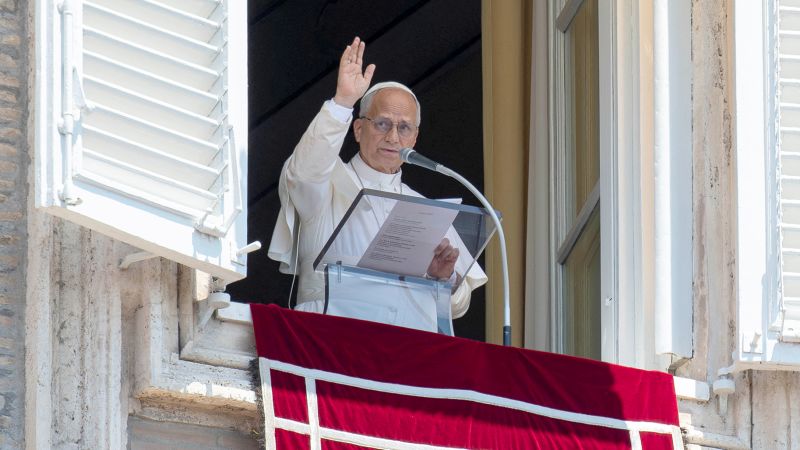
Table of Contents
A Direct Challenge to Apostolic Authority
Just over a year into his papacy, Pope Leo XIV is confronting a crisis of authority that threatens the very fabric of ecclesiastical unity. In a high-stakes standoff with the Society of Saint Pius X (SSPX), a rebel group of traditionalist Catholics, the pontiff has issued a final, urgent appeal to halt the unauthorized ordination of four bishops scheduled for Wednesday at the group’s seminary in Écône, Switzerland.
The conflict is not merely a dispute over ritual, but a fundamental clash over the legitimacy of the modern Church. In an 11th-hour letter to the society, Pope Leo described the proposed ordinations as a “sin of extreme gravity” and a “schismatic” act. The stakes are absolute: should the ceremony proceed, the newly ordained bishops will face immediate excommunication, effectively severing them and their followers from the sacraments of the Roman Catholic Church.
“I plead with you and ask you with all my heart: please turn back!” the Pope wrote, framing the act as an attempt to “tear the seamless garment of Christ.” For Leo, whose early tenure has been defined by an effort to foster global church unity, the move by the SSPX represents a direct assault on the cornerstone of Catholic governance—the essential communion between bishops and the Pope.
The Roots of the Traditionalist Rebellion
The Society of Saint Pius X is not a new phenomenon, but a persistent splinter group rooted in the ideological upheavals of the mid-20th century. Founded in 1970 by French Archbishop Marcel Lefebvre, the group fundamentally rejects the reforms of the Second Vatican Council (Vatican II) of the 1960s. These reforms, which shifted the Mass from Latin to vernacular languages and opened doors to ecumenism and religious freedom, are viewed by “Lefebvrists” as a surrender to modernist and liberal errors.
The group claims the Catholic Church is currently in a “state of emergency,” arguing that the preservation of traditional doctrine outweighs the requirement for papal approval. This justification was recently codified in a 28-page “profession of Catholic faith” issued by the group to justify their actions as a necessity for the “salvation of souls.” This same logic fueled a similar crisis in 1988 when Lefebvre ordained four bishops without consent, leading to their initial excommunication.
A Parallel Church Structure
While the SSPX is numerically small—boasting roughly 700 priests and 600,000 followers compared to the 1.4 billion members of the global Church—their influence is potent and geographically dispersed. In the United States, the group maintains a headquarters in Missouri and a critical seminary in Dillwyn, Virginia. Father Michael Goldade, who leads the Virginia seminary, is one of the four candidates slated for ordination this Wednesday.
Cardinal Blase Cupich of Chicago, a key ally of Pope Leo, emphasized that the danger lies not in the number of adherents, but in the creation of a “parallel structure within the ecclesial body of the church.” According to Cupich, the Pope has made multiple interventions and invitations for the society to reconsider, yet the group remains resolute.
The Ghost of Past Reconciliations
The current tension is heightened by the complicated history of reconciliation attempts. In 2009, Pope Benedict XVI lifted the excommunications of the bishops ordained in 1988 in an attempt to heal the rift. However, that gesture of mercy was marred when Richard Williamson, one of those bishops, sparked international outrage by falsely claiming that Nazis did not use gas chambers during the Holocaust. Williamson was eventually prosecuted by a German court and expelled from the SSPX.
As the deadline for the Swiss ordinations approaches, the SSPX appears fully committed, even establishing a website to coordinate a four-day event that includes the sale of souvenir wine boxes. Despite his pleas, Pope Leo XIV has signaled a readiness to accept the outcome. In remarks made to journalists on June 16, he noted that while he remains open to dialogue, he recognizes the limits of his influence over the group’s current trajectory. “If they make that choice, I am sorry, but we must move forward,” the Pope stated.