Iran Drone Strike in Strait of Hormuz Halts UN Evacuations, Testing Fragile US-Tehran Truce
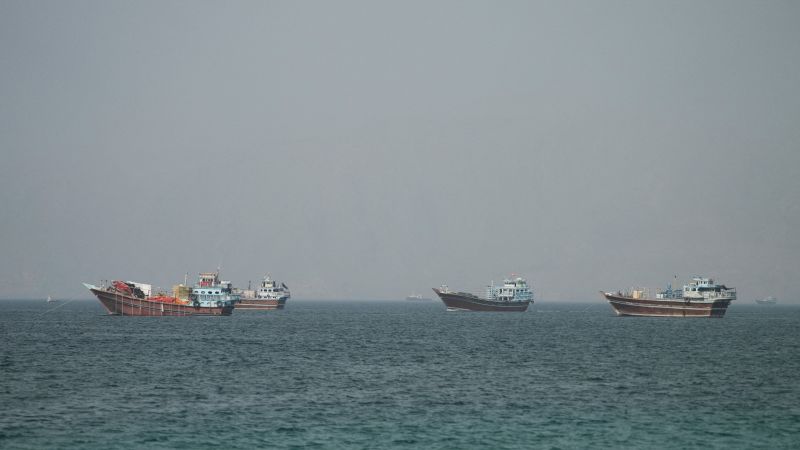
Table of Contents
A Precision Strike on a Fragile Peace
The fragile maritime truce between Washington and Tehran faced a severe stress test Thursday after an Iranian drone struck a cargo vessel in the Strait of Hormuz. The attack, which targeted the ship’s starboard side and damaged the bridge, has forced a sudden suspension of a critical United Nations mission to evacuate thousands of stranded seafarers from the Persian Gulf.
According to the United Kingdom Maritime Trade Operations (UKMTO), which monitors regional marine traffic, the projectile caused significant structural damage to the bridge, though no casualties or environmental disasters were reported. While Tehran has not officially claimed the strike, the timing is far from coincidental. The incident occurred just hours after the Islamic Revolutionary Guards Corps (IRGC) issued a stern warning: safe passage through the strait would only be guaranteed for vessels utilizing Iranian-approved routes.
The IMO Evacuation Crisis
The immediate fallout is a humanitarian freeze. The International Maritime Organization (IMO) had only recently launched a mission to rescue over 11,000 seafarers and hundreds of ships trapped in the region since the outbreak of war in February. This effort was predicated on a memorandum of understanding signed last week between the U.S. and Iran.
IMO Secretary-General Arsenio Dominguez announced an immediate pause to the operation, citing the need for a coordinated approach to ensure the safety of crews. While Dominguez clarified that the specific ship attacked was not part of the IMO’s formal evacuation framework, the strike serves as a visceral reminder that the waterway remains a high-risk zone despite diplomatic signatures.
Leverage and the ‘Toll’ Debate
For Iran, the Strait of Hormuz is more than a shipping lane; it is a geopolitical instrument. By challenging the Trump administration’s assertion that the strait is “free and open,” Tehran is signaling that its cooperation in the broader peace deal comes with strings attached—specifically, a formal role in overseeing commercial traffic.
The friction center of the current negotiations is the concept of “transit fees.” The U.S. has maintained a hard line against any tolls on international waterways. Secretary of State Marco Rubio, speaking at a Gulf Cooperation Council meeting in Bahrain, dismissed Tehran’s attempts to rebrand tolls as “service fees” as a mere game of semantics, asserting that no nation has the right to charge for the use of international waters.
Market Volatility and Diplomatic Stakes
The instability is already reflecting in the energy markets. Brent crude, the global benchmark, climbed 2% to close at $74 per barrel immediately following the news of the strike. This reversal comes after a brief dip in prices sparked by the initial signing of the 14-point memorandum.
The broader agreement is a high-stakes gamble. It offers Iran economic relief and a lifted blockade of its ports in exchange for a pledge to abandon nuclear weapons development. However, the most volatile details—including the status of enriched uranium stocks—are left for expert-level working groups to negotiate starting June 30.
As Rubio attempts to sell this agreement to skeptical Gulf allies, the reality on the water suggests a disconnect between diplomatic rhetoric and military reality. With the IRGC now managing the strait through the newly established Persian Gulf Seaways Management Organization, the line between “safe passage” and “authorized routes” has become the new frontline of the conflict.