Google unveils ‘Googlebook’: A new AI-native hardware category designed for Gemini
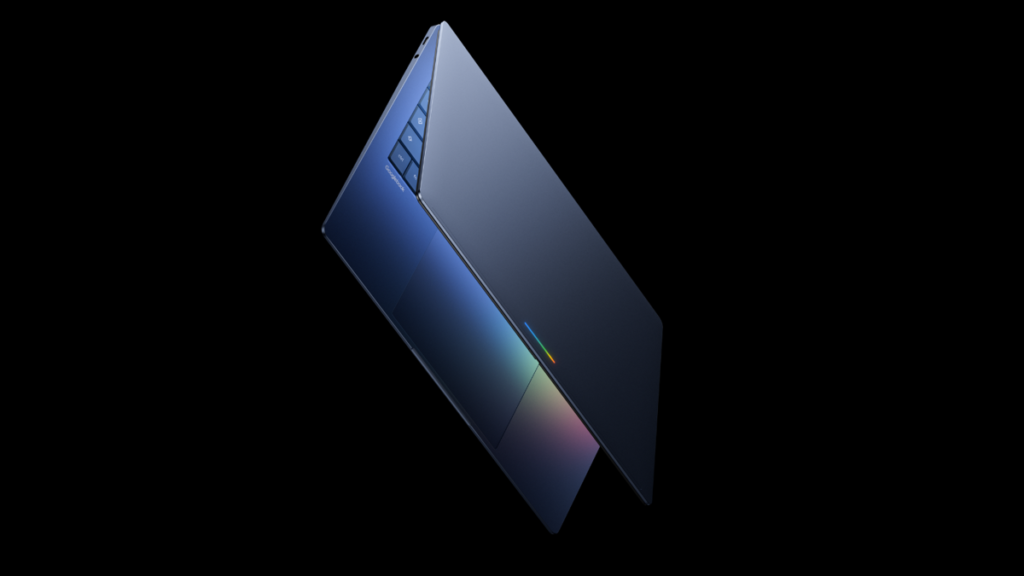
Table of Contents
Beyond the Chromebook: A Shift Toward ‘Intelligence Systems’
Google is attempting to redefine the laptop landscape. At the Android Show: I/O Edition on Tuesday, the company unveiled the Googlebook, a new category of hardware designed specifically to integrate Google’s Gemini AI at the silicon and OS level. While it shares some DNA with the Chromebook, the Googlebook represents a fundamental pivot from cloud-first computing to what Google calls an “intelligence system.”
The move is a direct challenge to Microsoft’s Copilot+ PC initiative, which has seen a surge of ARM-based Windows laptops optimized for on-device AI. In a blog post detailing the strategy, Alex Kuscher, Google’s Senior Director, noted that the original Chromebook was a response to the cloud era. Now, Google believes the OS itself needs to be reimagined to accommodate the generative AI shift. “We see an opportunity to rethink laptops again,” Kuscher stated, signaling a departure from the browser-centric model that has defined ChromeOS for over 15 years.
The OS Question: Enter ‘Project Aluminum’?
The most intriguing aspect of the Googlebook is the ambiguity surrounding its software. Google explicitly stated that these devices will run a “modern OS designed for Intelligence,” notably avoiding the term “ChromeOS.” This has reignited industry speculation regarding Project Aluminum, the rumored internal effort to merge the Android and ChromeOS kernels into a single, unified platform.
While the Googlebook will continue to support Android apps—a feature already present in many Chromebooks—the integration appears deeper. The hardware is designed to treat Android apps not as ports, but as native citizens of a hybrid environment. This seamlessness extends to mobile connectivity: a new “Quick Access” feature allows users to search and manipulate files on their paired Android phones directly from the laptop interface, while a casting feature allows mobile apps to be mirrored onto the Googlebook without requiring local installation.
‘Magic Pointer’ and Generative UI
Google is betting on a new interaction model to differentiate the hardware. The headline feature is the Magic Pointer, a cursor system powered by Gemini that possesses semantic awareness of onscreen content. Instead of traditional clicking and dragging, the Magic Pointer allows users to trigger actions by “wiggling” the cursor over specific elements.
According to Google, this enables contextual shortcuts—such as pointing at a date in a Gmail thread to automatically create a Calendar invite, or selecting a photo of a room and a piece of furniture to instantly generate a visualized composite. This moves the AI from a side-panel chatbot to a proactive layer integrated into the UI. Furthermore, a “Create your Widget” tool will allow users to generate custom functional widgets using natural language prompts, effectively letting users build their own dashboard tools on the fly.
Hardware Partnerships and Positioning
While detailed specifications remain under wraps, Google has confirmed that the first wave of Googlebooks will be manufactured by a consortium of its primary partners: Acer, Asus, Dell, HP, and Lenovo. Design-wise, the laptops will feature a signature “glowbar” lightstrip on the lid, serving as a visual indicator of Gemini’s activity.
Marketing materials describe a “Featherweight Design with Heavyweight Power,” suggesting a focus on the ultraportable, premium segment. Given that high-end Chromebooks already command prices between $750 and $1,000, the Googlebook is expected to target an even higher price bracket, competing directly with the MacBook Air and the new wave of Snapdragon-powered Windows PCs.
The first units are slated for a fall release. Whether the market is ready for a third major laptop category—sitting between the utilitarian Chromebook and the powerhouse Windows/Mac machine—remains to be seen, but Google is clearly betting that AI-native hardware is the only way to escape the gravitational pull of the browser.