Apple’s 2027 Pivot: Foldable iPhones and AI Glassware Signal a Massive Hardware Reset
Table of Contents
The 20th Anniversary Catalyst
Apple is notoriously protective of its product cycles, but the internal momentum leading up to 2027 suggests the company is preparing for something far more disruptive than a standard iterative update. According to the latest reporting from Bloomberg’s Mark Gurman in the Power On newsletter, Cupertino is sketching out a hardware offensive that aims to redefine several core product categories simultaneously, timed to coincide with the 20th anniversary of the original iPhone.
This isn’t just about a new chassis or a faster chip. The reported roadmap indicates a strategic shift toward merging AI capabilities with new physical form factors, moving beyond the slab-style smartphone that has dominated the industry for two decades. The timing is particularly significant as the company navigates a leadership transition, with John Ternus expected to take a more prominent role in steering the ship starting this September.
Beyond the Slab: The Foldable Equation
The most anticipated piece of this puzzle is the long-rumored foldable iPhone. While Samsung has spent years refining the Galaxy Z Fold and Flip series, Apple has historically avoided the format, likely waiting for breakthroughs in hinge durability and the elimination of the dreaded screen crease. Insiders suggest Apple is now confident enough in the underlying OLED technology to integrate it into a flagship device.
A foldable iPhone would solve a persistent tension in Apple’s current design language: the desire for larger screens (Max models) versus the need for pocketability. By moving to a foldable, Apple could effectively merge the utility of an iPad mini with the portability of a standard iPhone, creating a new tier of “Pro” productivity that justifies a premium price point during the 2027 anniversary window.
Ambient Computing and the ‘Invisible’ Interface
While the iPhone remains the center of the ecosystem, Gurman’s report highlights a push into “ambient computing”—hardware that provides information without requiring a screen in your hand. This is where the rumored AI glasses and camera-equipped AirPods come into play.
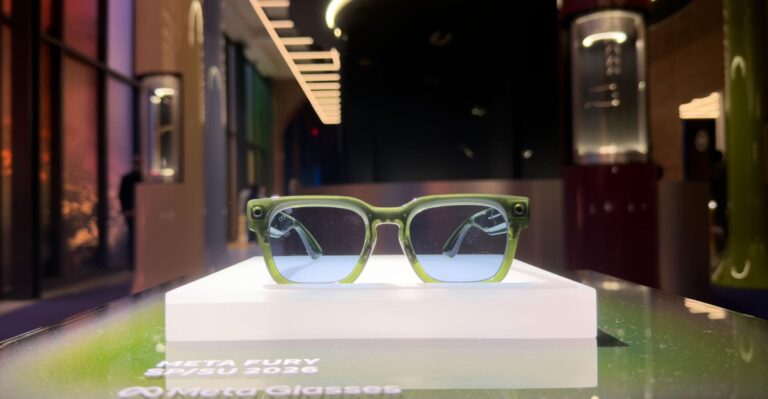
The strategy here appears to be a phased transition. Rather than jumping straight into a full-scale AR headset for the masses (a challenge the Vision Pro is currently navigating), Apple may introduce smart glasses that lean heavily on audio-visual AI. By embedding cameras into AirPods or a lightweight glasses frame, Apple can leverage its growing generative AI stack to provide real-time environmental analysis, translation, and object recognition, essentially turning the wearer’s perspective into a data stream for Siri.
Diversifying the Home and Body
The roadmap doesn’t stop at wearables. There are indications that Apple is exploring robotic smart home devices—potentially moving beyond the HomePod to something with physical agency. Whether this manifests as a sophisticated home hub with a robotic arm or an automated cleaning/security entity remains unclear, but it signals Apple’s intent to occupy more physical space in the consumer’s private life.
The Ternus Era and Execution Risk
The transition to John Ternus’s leadership suggests a shift toward operational excellence and hardware integration. Ternus has been instrumental in the engineering of the Apple Silicon transition, and his approach to the 2027 roadmap will likely prioritize the tight integration of software (Apple Intelligence) and new hardware sensors.
However, the ambition of this roadmap carries inherent risks. The foldable market has seen lukewarm growth in some regions, and the “smart glasses” category has a graveyard of failures, from Google Glass to various iterations of Meta’s Ray-Bans. Apple’s success will depend on whether these devices solve a genuine user problem or simply exist as technical curiosities. For now, the trajectory is clear: Apple is preparing to break the smartphone mold just as the world begins to wonder if the mold is finally full.