Baidu Edges Out Waymo as New AI Benchmarking Index Highlights China’s Robotaxi Lead
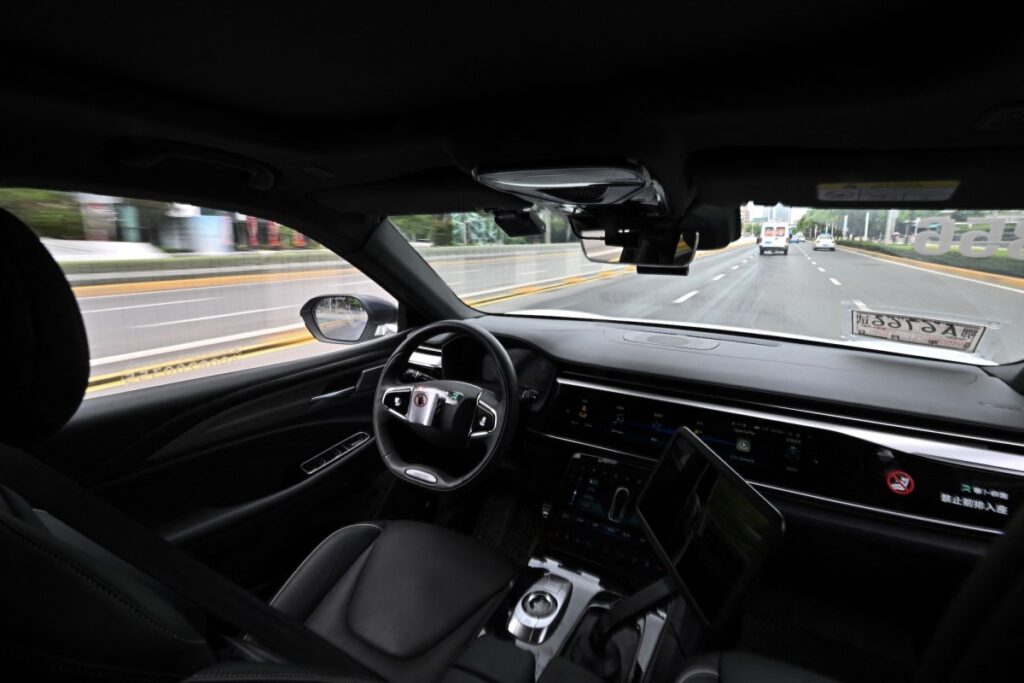
Table of Contents
Quantifying the Autonomous Race
For a decade, the conversation surrounding self-driving cars has been dominated by anecdotal evidence, carefully curated demo videos, and optimistic press releases. Determining who is actually ‘winning’ the race to full autonomy has historically been a guessing game, largely because the industry lacked a standardized, real-time metric to measure operational scale against safety and revenue.
That gap is being addressed by Autnmy AI, a research startup that has launched the Road to Autonomy Index. Unlike traditional static reports, this system utilizes a generative AI platform to synthesize data from SEC filings, federal and state regulatory reports, and public exchanges to rank autonomous vehicle (AV) companies every 12 hours. The index tracks four distinct sectors: robotaxis, autonomous trucking, delivery bots, and licensing firms.
According to Rob Grant, co-founder of Autnmy AI, the system is designed to avoid the pitfalls of simple web-scraping. Instead, the platform relies on verified public databases and licensed data to weight a company’s operational scale, commercial partnerships, and safety records, providing a more grounded view of the landscape.
The Shift Toward Eastern Dominance
The initial results of the Road to Autonomy Index suggest a narrow but significant lead for Chinese operators. In the robotaxi category, Baidu’s Apollo Go has emerged as the top-ranked program, marginally edging out Alphabet’s Waymo. This shift underscores the aggressive scaling and regulatory support for AVs within China’s urban centers.
Following Baidu and Waymo, the rankings feature other Chinese contenders like Pony.ai and WeRide, with Tesla occupying the fifth position. While Tesla continues to push its Full Self-Driving (FSD) software to a massive consumer base, its lower ranking in this specific index reflects the difference between driver-assist software and the operational infrastructure required for a true, driverless robotaxi service.
Texas Becomes the New AV Proving Ground
While the global rankings lean toward China, the United States is seeing a concentrated surge in deployment within Texas. Data from the Texas automated vehicle tracker reveals a rapid expansion of fleets as companies seek a more permissive regulatory environment than that found in California.
As of late May, Waymo’s registered fleet in Texas grew from 577 to 620 vehicles—a 7.5% increase in less than a month. Tesla has seen even more aggressive growth, increasing its registered autonomous vehicles from 42 to 69, a 64% jump. Meanwhile, Amazon’s Zoox has increased its fleet to 43 vehicles, though it remains unable to charge customers until it secures a federal exemption for its custom-built vehicle design.
Industry Consolidation and Strategic Pivots
The broader AV ecosystem is currently characterized by a mix of strategic partnerships and high-stakes pivots. In a notable move, Mobileye—which has spent years positioning itself as a Tier 1 supplier of autonomy tech—is now transitioning into an operator. The company plans to launch its own robotaxi service in an undisclosed U.S. city by 2027, confirming a long-held thesis from CEO Amnon Shashua that the path to consumer autonomy must go through the robotaxi model first.
Other significant movements include a joint venture between Stellantis, Wayve, and Uber to develop driverless taxis, and Gatik’s expansion of its short-haul autonomous trucking partnership with PepsiCo across Arkansas, Arizona, and Texas. These deals signal a shift from the ‘hype’ phase of autonomous driving toward a phase of pragmatic, commercial integration.
The Persistence of the ‘Edge Case’
Despite the scaling, the industry continues to struggle with unpredictable human behavior. A recent incident in Dallas involving an Avride robotaxi—which was struck by a human driver running a stop sign—serves as a reminder of the volatility of urban environments. While Avride reported no injuries, the event highlights the ongoing challenge of training AI to navigate not just the rules of the road, but the frequent violations of them by human operators.