Samsung Galaxy Watch Ultra 2 Leaks: Massive 800mAh Battery and AI Health Pivot
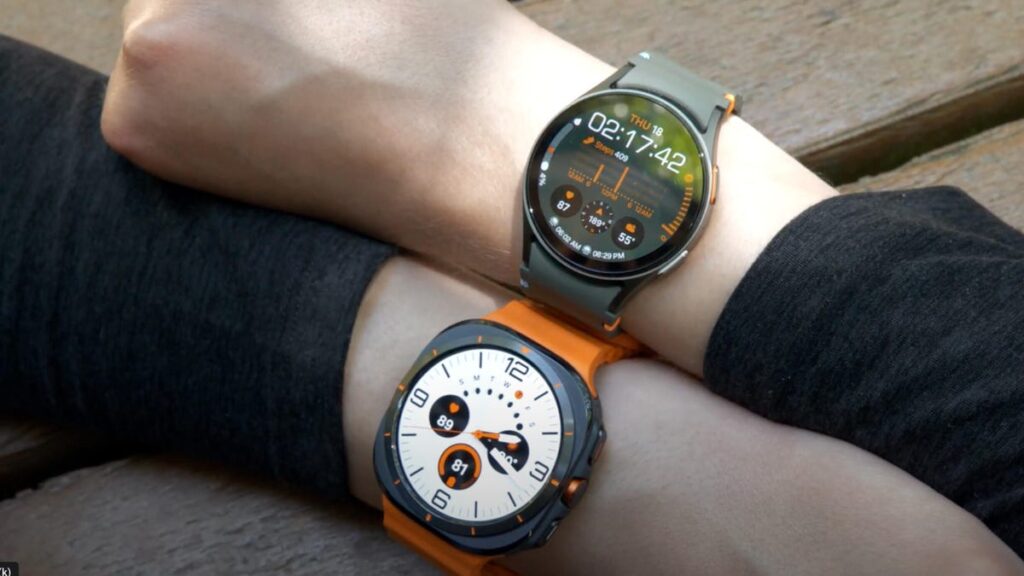
Table of Contents
The Push for Endurance: Samsung’s Next Wearable Play
The wearable market is currently defined by a stark divide: the feature-rich but power-hungry smartwatches and the stripped-back, long-lasting fitness trackers. Samsung is attempting to bridge this gap. Recent regulatory filings and supply chain leaks suggest the Galaxy Watch Ultra 2 isn’t just an iterative update, but a direct assault on the battery anxiety that has long plagued Wear OS users.
The most concrete evidence comes from a Chinese 3C regulatory filing first identified by Jeff Springer at SammyGuru. While the filing primarily confirms 10-watt charging support—matching the current generation—the appearance of two distinct model numbers strongly indicates that the Galaxy Watch 9 and the Ultra 2 are moving through the final stages of certification. For those tracking Samsung’s release cycles, this aligns perfectly with a summer launch window.
- High-Capacity Power: Rumors point to a jump to a rated 784mAh (marketed as 800mAh) battery.
- Processing Efficiency: Integration of the Snapdragon Wear Elite chip could extend usable life.
- AI Integration: A shift from simple biometric data collection to AI-driven health synthesis.
Deconstructing the Battery Leap: 800mAh and Its Implications
In the current Wear OS landscape, battery life is the primary friction point. The first-generation Galaxy Watch Ultra offered roughly two to two-and-a-half days of real-world use with a 590mAh cell. According to reports from SamMobile and subsequently 9to5Google, Samsung is targeting a rated capacity of 784mAh for the Ultra 2. This represents a roughly 33% increase in raw capacity.
To put this in perspective, most standard smartwatches in the 40mm to 44mm range operate with batteries between 300mAh and 450mAh. By pushing toward 800mAh, Samsung is moving the Ultra 2 into a category of its own within the Android ecosystem. If this capacity is paired with the rumored Snapdragon Wear Elite processor—which promises significantly better power-per-watt performance—we could see the Ultra 2 comfortably clear the three-day mark without aggressive power-saving modes.
Comparative Battery Landscape
| Device | Reported/Actual Battery | Estimated Real-World Life |
|---|---|---|
| Galaxy Watch Ultra (Gen 1) | 590 mAh | 2-2.5 Days |
| Pixel Watch 3 | ~300-400 mAh | 24-36 Hours |
| OnePlus Watch 3 | ~500-600 mAh | 2-3 Days |
| Galaxy Watch Ultra 2 (Rumored) | 800 mAh | 3+ Days |
Beyond Power: The Evolution of Samsung Health AI
Raw specs aside, the real value proposition of the Galaxy Watch Ultra 2 lies in how it handles data. Samsung is transitioning from “Passive Tracking” to “Active Insight.” This is evident in the recently previewed features within the Samsung Health ecosystem, including the Heart Health Score and Daily Cardio Load.
We are seeing a move toward metabolic health tracking. While noninvasive glucose monitoring remains the “holy grail” of wearables, reports suggest Samsung is intensifying its research into nutrition-related signals via the skin’s surface. This builds upon the Antioxidant Index introduced last year, aiming to give users a real-time window into their metabolic state without needing a needle.
The integration of AI allows these devices to act as a real-time coach. Rather than simply telling a user they slept six hours, the AI-driven synthesis can correlate that sleep duration with the previous day’s cardio load and current heart rate variability (HRV) to suggest a specific recovery intensity. This mimics the logic used by Whoop or Oura, but with the added benefit of a full-featured display and app ecosystem.
Design Shifts: Will the Rotating Bezel Return?
The Galaxy Watch 8’s redesign was met with mixed reviews, largely due to the continued absence of the physical rotating bezel in the standard models. There is persistent speculation among enthusiasts that Samsung may experiment with a hybrid design for the Ultra 2. Integrating a rotating bezel into a rugged, 47mm chassis would provide the tactile precision Garmin users love while maintaining the smartwatch functionality of Wear OS.
However, there is a technical trade-off. A physical bezel introduces a point of failure in a “rugged” device. To maintain the Ultra’s durability rating, Samsung may instead opt for an improved haptic digital bezel or a reinforced physical ring that doesn’t compromise the water and dust resistance (IP68/5ATM) of the casing.
What This Means for the Consumer
For the average user, the Galaxy Watch 9 will likely be an incremental upgrade—better efficiency, slightly larger battery (rumored 382mAh for the 40mm model), and updated AI features. However, for the power user, athlete, or tech enthusiast, the Ultra 2 represents a significant shift.
If the 800mAh battery and Snapdragon Wear Elite chip materialize, the “charging anxiety” that forces users to choose between a Garmin (for battery) and a Samsung (for apps) largely disappears. The Ultra 2 could become the first true “do-it-all” wearable that doesn’t require a charger every 48 hours, making it a viable tool for multi-day hiking or intensive training blocks.
The Strategic Pivot to Metabolic Health
The potential inclusion of more advanced metabolic sensors means Samsung is no longer just competing with Apple or Google; they are competing with medical-grade diagnostics. Moving toward a noninvasive glucose or metabolic monitoring system would pivot the device from a fitness accessory to a critical health management tool, potentially opening new revenue streams through health insurance integrations and clinical partnerships.
Technical Breakdown: The Snapdragon Wear Elite Factor
The rumored shift to the Snapdragon Wear Elite processor is the catalyst for all other improvements. A larger battery is useless if the SoC (System on a Chip) is inefficient. The Elite series is expected to utilize a more advanced node process, reducing leakage and improving thermal management.
This allows for two things: first, more on-device AI processing, reducing the need to ping the phone for health insights (which saves battery); and second, the ability to drive a high-brightness display without draining the 800mAh cell in a matter of hours. This is the technical foundation that makes the “3-day battery life” claim plausible.
Frequently Asked Questions
When is the Galaxy Watch Ultra 2 release date?
While Samsung has not officially confirmed a date, 3C regulatory filings and historical patterns suggest a launch alongside the Galaxy Watch 9 in the summer of 2026, likely during the Samsung Unpacked event in July or August.
How much better is the battery in the Ultra 2?
Leaks suggest a capacity of 784mAh (marketed as 800mAh), which is a roughly 33% increase over the original Ultra’s 590mAh battery. This could extend real-world use to 3 or more days.
Will the Galaxy Watch Ultra 2 have a rotating bezel?
There are rumors of a return to the bezel, but it is not confirmed. Samsung must balance the tactile utility of the bezel with the rugged durability requirements of the Ultra line.
What is noninvasive glucose monitoring?
It is a technology that aims to measure blood sugar levels through the skin using sensors (like infrared light or electromagnetic waves) rather than drawing blood via a needle. Samsung is reportedly working on this as part of its holistic health strategy.
Is the Galaxy Watch Ultra 2 compatible with non-Samsung phones?
Yes, as a Wear OS device, it will be compatible with most Android smartphones, though certain proprietary health features (like EKG or blood pressure monitoring in some regions) often require a Samsung Galaxy phone to function fully.