Rivian R2 Review: The Mid-Sized EV That Challenges the Tesla Model Y’s Dominance
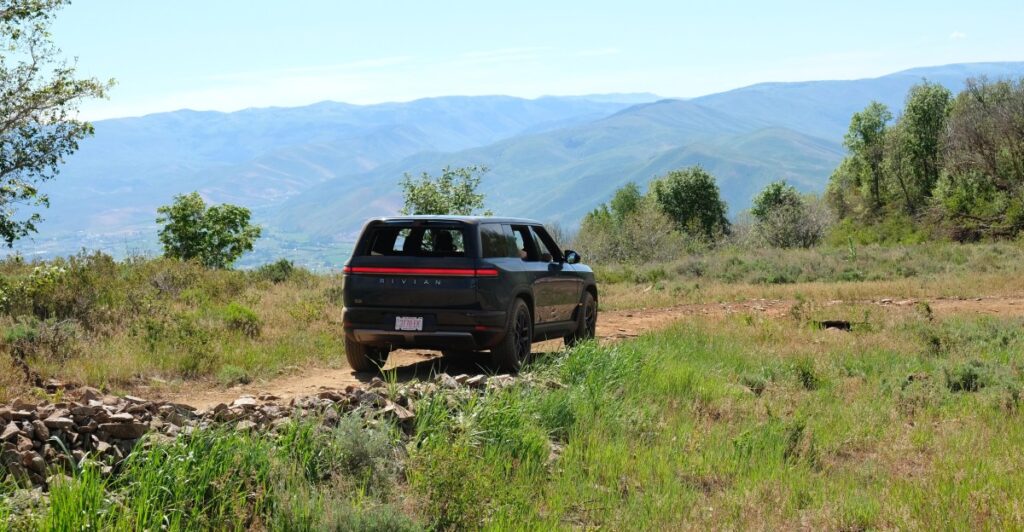
Table of Contents
For years, Rivian has been the darling of the ‘adventure’ EV niche, but its R1S and R1T models lived in a price bracket—often exceeding $100,000—that limited them to a wealthy enthusiast crowd. The Rivian R2 is the company’s strategic pivot toward the mass market. It isn’t just a smaller version of the R1; it is a complete architectural rethink designed to bring high-performance, off-road capable electric mobility to a demographic that typically shops for a Honda CR-V or a Tesla Model Y.
- Aggressive Pricing: Entry-level R2 models will start at $46,485 (Summer 2027), while the Performance trim arrives sooner.
- Brute Performance: The Performance model leverages the ‘Maximus’ drive unit to hit 0-60 mph in 3.6 seconds.
- Autonomy Gap: While Universal Hands-Free (UHF) excels on highways, it still struggles with complex urban intersections.
- Hardware Efficiency: A massive reduction in wiring (2.3 miles removed) and consolidated compute modules improve efficiency.
The R2 Architecture: More Than Just a Shrink-Wrap
When shifting from the R1 series to the R2, Rivian faced a classic engineering paradox: how to lower the price point without sacrificing the ‘rugged’ identity that defines the brand. The answer lies in a scorched-earth approach to the vehicle’s electrical architecture. According to Max Koff, R2 Chief Engineer, the vehicle represents the culmination of every lesson learned from the R1’s production hurdles.
The technical gains are staggering. While the R1’s second-gen architecture famously cut 1.6 miles of wiring, the R2 strips another 2.3 miles. This isn’t just about weight; it’s about reducing complexity, lowering the probability of electrical failure, and increasing assembly speed. Furthermore, Rivian has consolidated five separate control modules into a single, high-performance compute chip. This centralized ‘brain’ processes data from 11 cameras and five onboard radars, reducing latency and creating a more cohesive feedback loop for the driver.
Dimensions and Utility
The R2 manages to feel substantial despite its compact footprint. It is barely an inch longer than a Honda CR-V, yet it maintains the boxy, utilitarian silhouette that allows for maximum interior volume. By trimming 15 inches in length compared to the R1S, Rivian has created a vehicle that is equally at home in a tight suburban parking garage as it is on a Wasatch Mountain trailhead.
Performance: The ‘Maximus’ Factor
Driving the R2 Performance model through the twisty roads of Park City, Utah, reveals a vehicle that refuses to be categorized as a ‘commuter.’ The standout feature is the Maximus drive unit. In traditional EVs, power delivery often tapers off as velocity increases. The R2 defies this trend, maintaining a wide power curve that allows for a 50-70 mph burst in just 1.55 seconds.
With a combined output of 656 horsepower and 606 lb-ft of torque, the R2 feels less like a family SUV and more like a rally car. The 0-60 mph sprint of 3.6 seconds is impressive, but the real-world utility comes from the mid-range acceleration, which makes highway merging and overtaking effortless.
| Trim Level | Estimated Price | Horsepower | Estimated Range | Availability |
|---|---|---|---|---|
| Standard (Single Motor) | $46,485 | 350 hp | ~275 miles | Summer 2027 |
| Standard Long Range | $49,985 | 350 hp | ~345 miles | Early 2027 |
| Premium (Dual Motor) | $55,485 | 450 hp | ~330 miles | Late 2026 |
| Launch Package | $59,485 | 656 hp | ~345 miles | June 9, 2026 |
The Autonomy Paradox: Universal Hands-Free (UHF)
Rivian is positioning the R2 as a bridge to a future of full autonomy. The current Universal Hands-Free (UHF) system offers a spectrum of engagement: Mild, Medium, and ‘Spicy.’ On the open highways of Utah, UHF is a revelation. It handles lane centering and adaptive cruise control with a smoothness that rivals GM’s Super Cruise.
However, there is a critical divergence in how Rivian handles ‘edge cases’ compared to its competitors. Where Super Cruise is conservative—disengaging and alerting the driver when a scenario becomes ambiguous—UHF can be dangerously overconfident. In real-world testing, the system may identify a stop sign or traffic light but, if the driver does not manually intervene and there are no leading vehicles to trigger the adaptive braking, the R2 can potentially barrel through the intersection at the set cruising speed.
The Path to ‘Autonomy Plus’
To address these shortcomings, Rivian is introducing Autonomy Plus, a software suite promising point-to-point driving. This will be available as a one-time $2,500 purchase or a $49.99 monthly subscription. Notably, this is priced significantly lower than Tesla’s Full Self-Driving (Supervised), which currently costs $99 per month. Rivian claims that an over-the-air (OTA) update will soon enable UHF to halt at traffic lights and stop signs, closing the safety gap observed during early testing.
What This Means for the EV Market
The arrival of the R2 signals a shift in the EV landscape. For years, the ‘adventure’ segment was dominated by overpriced luxury rigs or modified Jeeps. Rivian is proving that you can have a vehicle that is both an urban commuter and a legitimate 4×4 without requiring a six-figure budget.
For the consumer, this means more pressure on legacy automakers to integrate software and hardware more deeply. The R2’s ability to consolidate compute modules and slash wiring isn’t just an engineering feat; it’s a cost-saving measure that allows Rivian to compete on price while maintaining high margins. If Rivian can stabilize its Autonomy Plus rollout, it may move from being a ‘lifestyle brand’ to a legitimate volume competitor against Tesla and the upcoming electric offerings from Ford and GM.
Frequently Asked Questions
What is the starting price of the Rivian R2?
The most affordable version, the single-motor Standard model, will start at $46,485, though it is not expected to be available until summer 2027.
How does the R2 compare in size to the R1S?
The R2 is 15 inches shorter than its larger sibling, the R1S, making it more comparable in size to a compact SUV like the Honda CR-V.
What is the ‘Maximus’ drive unit?
The Maximus drive unit is Rivian’s latest powertrain technology used in the Performance trim, enabling a wider power curve and faster acceleration at higher speeds (50-70 mph) compared to earlier EV motors.
Is the Rivian R2 truly off-road capable?
Yes. Despite its smaller size, the R2 retains Rivian’s DNA for off-roading, featuring a rugged chassis and a design intended for backcountry exploration.
How does Rivian’s Autonomy Plus pricing compare to Tesla?
Rivian offers Autonomy Plus for $2,500 upfront or $49.99 per month, which is roughly half the monthly cost of Tesla’s $99 Full Self-Driving (Supervised) subscription.
Final Verdict: A Driver’s Tool in a Robot’s World
The Rivian R2 is a rare example of a ‘scaled-down’ product that feels like an upgrade. By simplifying the electrical architecture and refining the chassis, Rivian has created a vehicle that is more efficient and accessible than the R1, without losing the visceral thrill of 656 horsepower.
While the software—specifically the UHF system—requires further refinement to reach true ‘point-to-point’ reliability, the mechanical package is flawless. For those who actually enjoy the act of driving, the R2 is a compelling argument that we shouldn’t rush toward a fully autonomous future. Some roads are simply too fun to leave to the robots.