SpaceX Valuation Hits $2.6 Trillion Following Blockbuster IPO and Cursor Acquisition
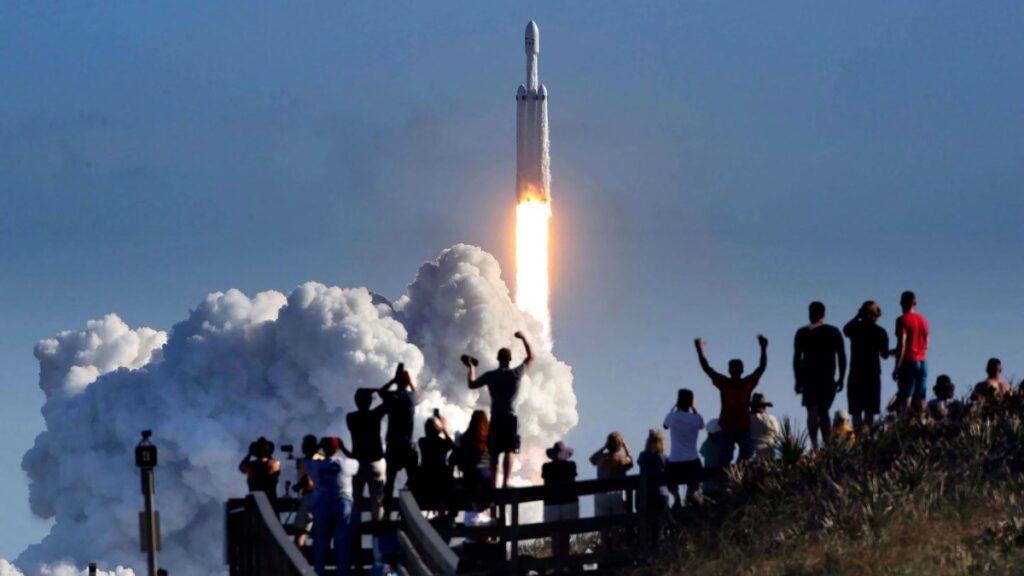
Table of Contents
The $2.6 Trillion Ascent: A New Era for SpaceX
In a sequence of market movements that captured the attention of global finance and the tech sector, SpaceX valuation briefly surged to $2.9 trillion on Tuesday, momentarily positioning it as the fifth-most valuable company globally and eclipsing Amazon’s market cap. While the price eventually corrected to settle around $2.6 trillion, the volatility underscores a fundamental shift in how investors view Elon Musk’s aerospace empire: it is no longer just a rocket company, but a speculative bet on the future of Artificial General Intelligence (AGI).</n
- Market Milestone: SpaceX hit a peak valuation of $2.9 trillion before settling at $2.6 trillion, briefly passing Amazon.
- Strategic Acquisition: The company is acquiring AI coding startup Cursor in a $60 billion all-stock deal.
- Financial Contrast: High valuation persists despite a $4.9 billion loss on $18.7 billion in revenue last year.
- AI Integration: The merger of xAI into SpaceX signals a pivot toward compute-heavy infrastructure and AI services.
The surge followed the company’s first full day of public trading, where shares climbed 20%. The catalyst for Tuesday’s spike was twofold: the announcement of the Cursor acquisition and the commencement of options trading, which typically invites higher volatility and speculative leverage. For context, SpaceX’s IPO on Friday saw a debut valuation of approximately $1.7 trillion, meaning the company added nearly $1 trillion in perceived value in just a few business days.
The Cursor Acquisition: Integrating the AI Coding Layer
The most significant driver of this valuation leap is the $60 billion acquisition of Cursor, an AI-powered code editor that has gained a cult following among software engineers. This isn’t a traditional hardware expansion; it is a strategic play to own the tools that build the software of the future. By integrating Cursor, SpaceX is effectively absorbing a high-growth AI vertical into its corporate structure.
The deal is being executed via $60 billion in company shares, a move that allows SpaceX to conserve cash while leveraging its inflated stock price as currency. This acquisition is expected to close in the third quarter, at which point Cursor’s revenue streams will be consolidated into SpaceX’s financial statements.
Why Cursor Matters for SpaceX
Cursor is not merely a text editor; it is a sophisticated implementation of Large Language Models (LLMs) tailored for codebase navigation and generation. For SpaceX, which manages some of the most complex software systems in existence—from Starship’s flight controllers to the Starlink constellation’s routing logic—owning the primary tool used by AI developers provides a recursive advantage in engineering speed.
The Financial Paradox: Growth vs. Profitability
The gap between SpaceX’s market valuation and its actual balance sheet is staggering. According to internal data and recent filings, SpaceX posted a $4.9 billion loss on $18.7 billion in revenue for the last fiscal year. In contrast, Amazon reported a $78 billion profit on $717 billion in sales in 2025.
Traditionally, a company losing billions would not be valued at $2.6 trillion. However, the market is pricing in “future-state” capabilities. Investors are not betting on current launch margins or Starlink subscription growth alone; they are betting on the compute leasing deals SpaceX has brokered with Anthropic and Google. While these deals are currently non-binding, they suggest that SpaceX is positioning itself as a critical infrastructure provider for the AI era—essentially becoming a data center in the sky or a massive terrestrial compute hub.
The xAI Factor
The integration of xAI—Musk’s dedicated AI venture—into SpaceX is a critical piece of this puzzle. Musk previously admitted that the initial build of xAI “was not built right the first time around” and required a fundamental rebuild from the foundations up. By merging xAI into the SpaceX umbrella, the company can more fluidly shift capital and talent between aerospace engineering and neural network development.
Analyzing the IPO Volatility: The 4% Float
The extreme price swings seen on Tuesday are a direct result of the IPO’s structure. SpaceX only made about 4% of its total shares available for public trading. In the world of equity markets, this creates a “low float” scenario.
When a tiny fraction of total shares is available, any surge in demand leads to exponential price increases because there isn’t enough supply to satisfy buyers. Nasdaq data shows that traders swapped over 300 million shares on Tuesday—more than half of the 555 million shares available on the public market. This high turnover rate relative to the float is what allowed the valuation to spike to $2.9 trillion and crash back down in a matter of hours.
What This Means for the Broader Tech Ecosystem
The SpaceX phenomenon reveals several critical trends in the 2025-2026 tech economy:
- The Convergence of Space and AI: We are seeing the end of “pure-play” aerospace companies. SpaceX is evolving into a conglomerate where satellite connectivity (Starlink), rocket logistics (Starship), and cognitive computing (xAI/Cursor) feed into a single ecosystem.
- The ‘Musk Premium’: The market continues to grant Elon Musk’s ventures a valuation multiple that ignores traditional P/E (Price-to-Earnings) ratios in favor of “visionary’s equity.”
- Compute as the New Oil: The focus on Anthropic and Google compute deals suggests that the most valuable asset in the next decade is not the software itself, but the raw compute power and the energy infrastructure required to run it.
A Comparison of Market Giants
| Company | Approx. Valuation/Cap | Primary Revenue Driver | AI Strategy |
|---|---|---|---|
| SpaceX | $2.6 Trillion | Launch Services & Starlink | Integrated (xAI, Cursor, Compute Leasing) |
| Amazon | ~$2.5 – 2.8 Trillion | E-commerce & AWS | AWS Bedrock, LLM Infrastructure |
| Microsoft | ~$3.0+ Trillion | Software & Azure | OpenAI Partnership, Copilot |
The Risk Profile
It is important to note that this valuation is precarious. Unlike Microsoft or Amazon, SpaceX does not have a diversified, cash-flow-positive core that can subsidize its losses indefinitely. The $86 billion in fresh capital raised during the IPO provides a significant runway, but the pressure to turn the AI pivot into actual revenue is now immense. If the compute deals with Google and Anthropic fail to materialize into binding contracts, or if the Cursor integration fails to produce productivity gains, the stock could see a correction as severe as its Tuesday spike.
Frequently Asked Questions
Why is SpaceX valued so high if it is losing money?
Investors are applying a growth-oriented valuation based on the future potential of Starlink and the company’s pivot into AI. The market views SpaceX as an infrastructure play—essentially betting that its control over space and compute will make it indispensable to the global economy, regardless of current losses.
What is Cursor and why did SpaceX buy it?
Cursor is an AI-native code editor that helps developers write software faster using LLMs. SpaceX acquired it to accelerate its own internal engineering cycles and to enter the software tooling market, diversifying its revenue beyond rocket launches.
How did SpaceX briefly pass Amazon in value?
Due to a “low float” IPO (only 4% of shares available), a surge of buying pressure on Tuesday, fueled by the Cursor news and the start of options trading, drove the share price up rapidly, pushing the theoretical market cap above Amazon’s.
What is the role of xAI in SpaceX?
xAI, Elon Musk’s AI company, has been integrated into SpaceX. This allows the company to develop advanced AI models that can be used for everything from autonomous spacecraft docking to optimizing Starlink’s global network.
Is the SpaceX valuation sustainable?
Sustainability depends on the transition from speculative growth to operational profitability. While the IPO provided $86 billion in capital, the company must eventually convert its AI ambitions and launch dominance into consistent net profits to justify a multi-trillion dollar valuation.