The Assassination of Semyon Skrepetsky: Digital Dissidence and the Perils of the Russian Diaspora
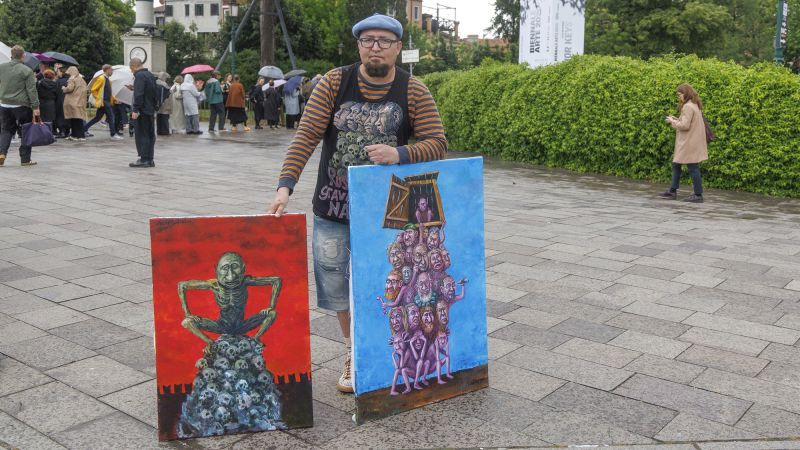
Table of Contents
The death of Semyon Skrepetsky, a 44-year-old Russian artist and fierce critic of Vladimir Putin, marks a chilling escalation in the targeted violence facing the Russian diaspora in Europe. In a suspected execution-style attack on Monday morning, Skrepetsky was shot five times in a parking lot in Biała Podlaska, a town strategically located near the border between Poland and Belarus. The precision of the attack and the rapid arrest of two Belarusian nationals near the Belarusian Consulate suggest a level of coordination that transcends simple street crime.
- Targeted Execution: Semyon Skrepetsky was shot twice initially, then three more times after falling, indicating a deliberate assassination attempt.
- Geopolitical Context: The crime occurred in Biała Podlaska, Poland, near the Belarusian border, where two Belarusian citizens were subsequently detained.
- The Victim’s Profile: Known as Robert Kuzovkov, Skrepetsky used psychedelic and iconographic art to satirize the Kremlin, depicting Putin and other global leaders in grotesque forms.
- Broader Implications: The killing highlights the phenomenon of transnational repression, where authoritarian regimes target dissidents living outside their borders.
The Mechanics of the Attack in Biała Podlaska
According to Marcin Kozak, spokesperson for the Polish Prosecutor’s District Office in Lublin, the killing was not a random act of violence. The evidence suggests a calculated hit. The assailant approached Skrepetsky and fired two initial shots from a handgun. After the artist collapsed, the gunman stepped closer to deliver three final shots to the head and chest, ensuring the target’s death before fleeing the scene.
The speed of the subsequent police response led to the detention of two Belarusian men, aged 37 and 33, in the vicinity of the Belarusian Consulate. While the Polish authorities have not yet officially charged the men with the murder, their proximity to the consulate at the time of the shooting has raised significant questions about the involvement of foreign intelligence services.
The Strategic Geography of the Border Region
The location of the attack is not incidental. Biała Podlaska serves as a transit point for many fleeing the oppressive regimes of Minsk and Moscow. For dissidents, the border regions of Poland often represent a fragile sanctuary—close enough to their homelands to maintain connections, but vulnerable to the reach of agents operating from across the border. The proximity to the Belarusian Consulate provides a potential logistical hub for operatives conducting clandestine activities on foreign soil.
Art as a Weapon: The Work of Robert Kuzovkov
To the world, he was Semyon Skrepetsky; in legal documents, he was Robert Kuzovkov. His work occupied a unique intersection of traditional Russian Orthodox aesthetics and modern psychedelic surrealism. By utilizing the visual language of religious icons, Skrepetsky created a jarring contrast between the “sacred” and the “grotesque.”
His caricatures were not merely unflattering; they were systematic deconstructions of power. He frequently depicted Vladimir Putin with bovine features or entangled with swine, symbols intended to strip away the carefully curated image of the “strongman” leader. His reach extended beyond the Kremlin, targeting figures like Elon Musk, Donald Trump, and Xi Jinping, positioning the current global order as a collection of absurdities and authoritarian impulses.
A Complex Ideology of Dissent
Unlike many within the exiled Russian community, Skrepetsky was not a monolith of a single political movement. While he was vehemently anti-Putin—even burning his Russian passport in 2022 as a symbolic severance of ties—he was equally critical of the Russian opposition. He notably criticized the late Alexei Navalny, suggesting that Navalny’s approach had inadvertently damaged the broader opposition infrastructure.
This ideological independence often left him isolated. In the echo chambers of digital activism, those who criticize both the regime and the resistance often find themselves without a protective community, making them more vulnerable targets for state-sponsored violence.
Transnational Repression and the Digital Trail
The assassination of Skrepetsky is a textbook example of transnational repression—the act of a state reaching beyond its borders to silence, harass, or kill dissidents. This practice has evolved alongside the digital age. While the final act in this case was physical, the surveillance required to track a dissident to a specific parking lot in a Polish border town often begins with digital footprints.
Authoritarian regimes frequently utilize a combination of Pegasus-style spyware, social media monitoring, and networks of informants to track exiled citizens. The ease with which Skrepetsky was located in Poland suggests a high degree of intelligence gathering, likely facilitated by the seamless movement of operatives between Belarus and Russia.
| Method | Application in Dissident Tracking | Risk Level |
|---|---|---|
| Digital Surveillance | Tracking via GPS, IP addresses, and social media check-ins. | Critical |
| Informant Networks | Using embedded assets within the diaspora to report locations. | High |
| Diplomatic Cover | Using consulates as bases for intelligence operations. | High |
The Implications for the Russian Diaspora
This killing sends a clear message to the thousands of Russians who fled their country after 2022: geographic distance is not a guarantee of safety. The use of Belarusian nationals in a Polish operation highlights the tight security integration between the Lukashenko and Putin administrations, effectively extending the Kremlin’s “kill zone” into the European Union.
For artists and digital activists, the risk is amplified. Their work is public by nature, often posted on platforms that allow regimes to map their network of associations and physical locations. The transition from a digital caricature to a physical threat happens faster than many expect.
What This Means for International Security
The event puts pressure on the Polish government to tighten security around the Belarusian border and re-evaluate the immunity and activities of diplomatic staff at the Belarusian Consulate. If it is proven that the Consulate was used to coordinate the hit, it would constitute a severe violation of the Vienna Convention on Diplomatic Relations and an act of aggression on NATO soil.
Furthermore, it underscores the need for specialized protection for high-profile dissidents. The “self-reliance” model of security—changing passwords and using VPNs—is insufficient when facing state-sponsored hit squads. There is a growing need for institutional asylum protections that include physical security details for those whose work actively undermines the stability of authoritarian regimes.
Frequently Asked Questions
Who was Semyon Skrepetsky?
Semyon Skrepetsky (born Robert Kuzovkov) was a Russian dissident artist and satirist who lived in exile in Poland since 2021. He was known for his psychedelic, icon-style paintings that mocked Vladimir Putin and other global power brokers.
Where did the attack take place?
The attack occurred in a parking lot in Biała Podlaska, a town in eastern Poland located near the border with Belarus.
Who are the suspects in the case?
Polish authorities arrested two Belarusian men, aged 33 and 37, shortly after the shooting. They were detained near the Belarusian Consulate, though their exact roles are still under investigation.
What is transnational repression?
Transnational repression refers to the efforts of governments to silence or eliminate dissidents, critics, or political opponents who have fled their home country and are living abroad.
Why was Skrepetsky considered a target?
His art was highly critical of the Putin regime and was widely distributed, making him a visible symbol of resistance. His willingness to publicly burn his Russian passport further signaled his total rejection of the state.
Is Poland safe for Russian dissidents?
While Poland provides asylum and support to many, this event demonstrates that state actors from Russia and Belarus can still operate within EU borders to target specific individuals.
The Silence of the Satirist
The death of Semyon Skrepetsky is a stark reminder that in the current geopolitical climate, a paintbrush can be as threatening to a dictator as a political manifesto. By stripping the “strongman” of his dignity through art, Skrepetsky committed a crime that the Kremlin often finds unforgivable. As the investigation in Biała Podlaska continues, the international community must reckon with the fact that the border between safety and danger for dissidents is becoming increasingly porous.